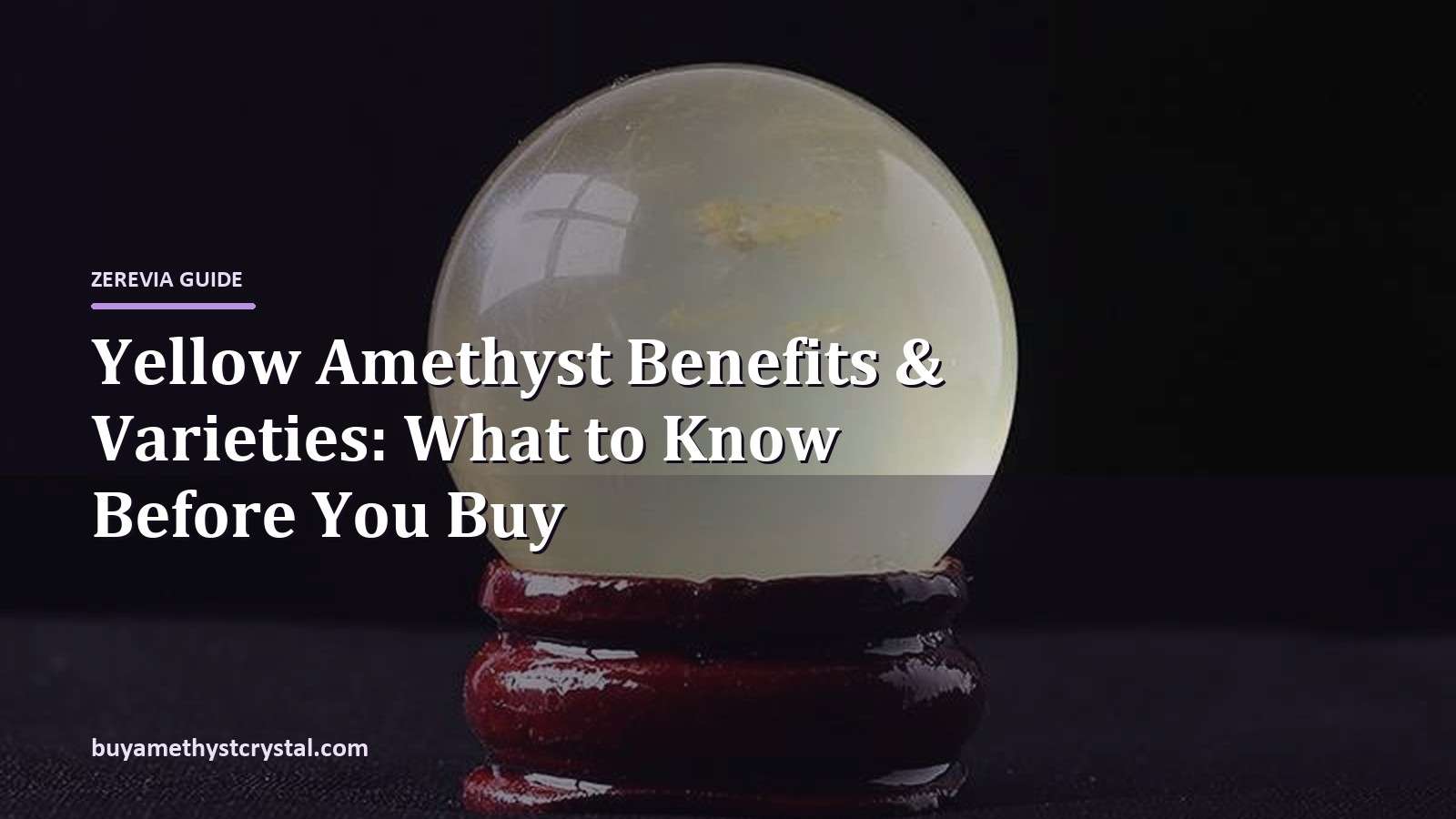

Yellow Amethyst Benefits & Varieties: What to Know Before You Buy
If you searched for yellow amethyst benefits, you probably have a specific stone in mind—or at least a color you’re hoping to find. Here’s what I want you to know before you spend any money: the term “yellow amethyst” covers more ground than most buyers expect, and some of what’s sold under that name isn’t quite what it claims to be. This guide walks through yellow, titanium, smoky, rainbow, red, Rose de France, rutilated, and rose quartz-amethyst combinations so you can choose with clear eyes.
Why “Yellow Amethyst” Isn’t Quite What You Think
Amethyst is silicon dioxide (SiO₂) with trace amounts of iron—specifically Fe³⁺, or ferric iron—locked inside its crystal lattice. Natural radiation over millions of years activates that iron, and the result is purple. Not yellow. Not orange. Purple.
When amethyst turns yellow, one of two things has usually happened. Either the stone was heated (a common treatment that converts the purple iron state into a golden-yellow one, effectively creating citrine), or the stone was citrine to begin with and simply mislabeled. The natural boundary between amethyst and citrine is blurry in trade language but firm in mineralogy: same species of quartz, different color-causing conditions.
None of this means yellow quartz is worthless. Heat-treated amethyst produces attractive golden tones, and natural citrine has its own following. But if you’re shopping for “yellow amethyst” expecting a naturally occurring purple stone with yellow properties, that expectation needs adjusting. For a deeper look at what drives amethyst color and value, see our amethyst healing properties guide, and for grading specifics, the amethyst quality and value guide covers what actually separates one stone from another.
Titanium Amethyst: Lab-Created Color & Its Appeal
“Titanium amethyst” is a name that gets attached to several different products. Most commonly, it refers to quartz—often prasiolite (green amethyst) or clear quartz—that has been coated or infused with a thin layer of titanium through a process called vacuum deposition. The result is a vivid, metallic iridescence: purples, greens, golds shifting across the surface depending on the angle of light.
It is a treated stone. The titanium coating is applied in a lab, not formed in the earth. This doesn’t make it bad or fake—it makes it an enhanced piece, and it should be priced and described accordingly. The aesthetic is genuinely striking. Those rainbow-sheen surfaces make for eye-catching display pieces and are popular in jewelry for people drawn to bold, color-shifting stones.
In traditional crystal practice, titanium-coated stones are sometimes associated with creativity and optimism, largely because the visual effect feels energetic and playful. That’s a symbolic association, not a medical claim. If you’re drawn to the look, buy the look. Just ask the seller whether the titanium coating is permanent or subject to wear—some thin coatings can scratch or dull over time. For more on how crystal shapes affect display and use, our amethyst forms and shapes guide may help you decide what form suits your space.
Smoky Amethyst (“Smoky Quartz with Purple”)
Smoky amethyst is one of the more genuinely natural varieties you’ll encounter. It features bands of smoky brown-grey and purple within the same crystal, sometimes in dramatic layers, sometimes in subtle gradients. The two colors come from related processes: natural irradiation acting on aluminum impurities creates the smoky tone, while the same irradiation acting on iron creates the purple. When both are present, you get that distinctive earthy-meets-royal palette.
The color zoning in smoky amethyst is a sign of natural formation. You’ll see uneven patches—some areas darker, some lighter, sometimes with translucent zones between them. That variation is the point. If the color is perfectly uniform across the stone, it’s worth asking whether heat treatment was involved.
People who collect smoky amethyst often describe being drawn to its weight and warmth. It feels grounded—literally dense in the hand, visually anchored in those brown-grey tones. For decorative specimens, the layered coloring makes each piece distinct. For jewelry, it offers a more muted, wearable alternative to bright purple. The tradition around smoky quartz generally centers on stability and calm, while amethyst associations lean toward clarity and reflection. Whether you connect with that language or simply like the color, the stone holds visual interest either way. If you’re curious about where different amethyst varieties originate, our amethyst geological origins page covers the major sources.
Rainbow Amethyst: The Beauty of Natural Inclusions
Rainbow amethyst gets its shimmer from internal fractures or thin layers of iron oxide and hematite inclusions that catch light and split it into spectral colors. This is a natural phenomenon—the quartz itself is still purple, but tiny internal surfaces act like prisms. Hold the stone under a lamp and tilt it slowly: you’ll see flashes of gold, pink, green, or blue sliding across the interior.
This is different from titanium amethyst, where the color is applied externally. In rainbow amethyst, the effect is geological—a happy accident of how the crystal fractured and healed during its formation. No treatment is needed, and the rainbow won’t wear off.
The appeal is almost entirely visual, and it’s substantial. A good rainbow amethyst sphere on a windowsill or desk catches light throughout the day in changing ways. Raw specimens with visible rainbow inclusions are prized by collectors because no two display the same pattern. In some traditional practices, rainbow inclusions are seen as symbols of hope or joy—connected to the visual impression of seeing color emerge from inside stone.
One care note: because rainbow amethyst relies on internal fractures, these stones can be more vulnerable to sharp impacts than solid, fracture-free specimens. Handle with the same common sense you’d use for any crystalline display piece, and keep them out of direct sunlight to prevent UV-related fading.
Red & Rose de France Amethyst: Understanding the Color Range
Rose de France is a pale lavender-pink variety of amethyst—think the lightest end of the purple spectrum, with a blush tone that leans pink. It’s real amethyst, just at the low saturation end. Sources include Brazil and certain African deposits. The color is soft and romantic, which makes it popular in jewelry, especially rings and pendants where the stone can sit close to skin without overwhelming the design.
Truly red amethyst is extremely rare in nature. Most of what’s marketed as “red amethyst” on the retail market is either amethyst that has been heat-treated to shift toward red-brown tones, or quartz with significant hematite inclusions that give a reddish cast. Neither is necessarily bad—both can be attractive stones—but neither is the same as a naturally occurring red-purple amethyst specimen.
The buying rule here is the same one that applies to every colored variety: ask. Ask whether the stone has been treated, ask where it comes from, and ask for photos that show the color under natural light, not just studio lighting. A reputable seller will answer these questions without hesitation. Rose de France’s traditional associations tend toward gentle affection and self-compassion; reddish-toned stones are sometimes linked to grounded passion and physical presence. These are symbolic frameworks, not prescriptions. Buy the color that speaks to you.
Rose Quartz and Amethyst Combinations: Meaning & Pairing
Rose quartz (pink SiO₂, colored by trace titanium, iron, or manganese) and amethyst (purple SiO₂, colored by iron) are both quartz varieties. They sit together naturally—same mineral family, complementary colors, similar hardness (both around 7 on the Mohs scale). This makes them practical to pair in jewelry sets, display arrangements, and personal crystal grids.
The traditional pairing links rose quartz with themes of love and tenderness and amethyst with themes of calm and clarity. When someone puts the two together in a grid or on a nightstand, the intention is usually something like “I want to feel both gentle and clear.” That’s a meaningful personal ritual. It’s not a proven synergy—it’s a symbolic one, and there’s nothing wrong with that framing.
Visually, the combination works because pink and purple are adjacent on the color wheel. A rose quartz sphere next to an amethyst cluster on a shelf creates a soft gradient that feels intentional without being matchy. In jewelry, the pairing is common in Valentine’s and February birthstone pieces—rose quartz for its pink warmth, amethyst as February’s official birthstone. I once had a conversation with someone who asked me whether crystals “really work,” and my honest answer was that when I place something real on my nightstand—something with weight, with a documented origin, with a color that took millions of years to form—I pause for a moment before bed instead of reaching for my phone. That pause is the benefit I can speak to. Whether you assign deeper meaning beyond that is entirely your call.
Rutilated Amethyst: Needle Inclusions & Unique Patterns
True rutilated amethyst—purple quartz with natural golden rutile (titanium dioxide) needles running through it—is genuinely rare. What you’ll mostly find sold under this label is one of two things: rutilated quartz (clear or smoky) that has been irradiated or heat-treated to turn purple, or amethyst with goethite or other dark needle-like inclusions that mimic the rutilated look.
The distinction matters because it affects both price and authenticity expectations. Natural rutile needles in amethyst are a geological rarity; treated purple quartz with golden needles is a manufactured product that happens to be beautiful. Both have buyers, but they shouldn’t be priced the same way.
The visual effect of needle inclusions inside purple stone is genuinely arresting. Each piece is different—the needles fan, cross, cluster, or float in patterns that no human hand designed. In polished spheres and cabochons, rutilated amethyst creates an almost painterly effect. For raw specimens, the contrast between dark matrix, purple quartz, and golden threads is enough to stop someone mid-scroll.
When buying, ask specifically: Are the needles natural rutile, goethite, or a product of treatment? Is the purple color natural or induced? Sellers who know their inventory will answer directly. For more on what inclusions tell you about a stone’s authenticity and character, the amethyst quality and value guide breaks this down in practical terms.
How to Choose: Practical Considerations Over “Benefits”
After reading through all these varieties, you might notice that the word “benefits” starts to feel less useful than the word “characteristics.” Each colored amethyst variety has a distinct look, a distinct formation story, and a distinct set of trade realities. Here’s how to narrow your choice:
- Start with use case. A raw amethyst stone on a shelf serves a different purpose than a polished pendant at your collarbone. Raw specimens show color zoning, matrix rock, and natural form—they’re chosen for their unaltered, geological character. Polished pieces prioritize color consistency and wearability.
- Ask about treatments. This is the single most important question for any colored amethyst variety that isn’t classic purple. Heat treatment, titanium coating, irradiation—these processes change the stone’s nature and should change the price.
- Budget honestly. Natural, untreated fancy amethyst (deep Rose de France, true rutilated, rainbow-rich specimens) commands higher prices. Treated stones offer vivid color at lower cost, which is fine if you know what you’re buying.
- Protect from sunlight. UV fading applies to all amethyst varieties. The Fe³⁺ that creates purple color can be permanently altered by sustained UV exposure—the purple fades and doesn’t come back. I learned this the hard way when a buyer sent me a photo of her crystal cluster, originally deep purple, now lavender, after months on a south-facing windowsill. Store any amethyst away from direct sun.
- Pick what you’ll actually look at. The stone you notice on your shelf every day will do more for your routine than the one that theoretically has the right “benefits” but sits in a drawer.
Frequently Asked Questions
What are the benefits of a raw amethyst stone?
Raw amethyst stones show natural formation—color zoning, matrix rock, uneven surfaces, and the specific way crystals grew over millions of years. They’re chosen by people who value geological authenticity over polished uniformity. A raw specimen on a desk or shelf offers visual texture that a tumbled stone can’t replicate. The “benefit” is appreciation of something unaltered: what you see is what the earth made. For care, the same UV-fading rules apply—keep raw specimens out of direct sunlight.
Do rose quartz and amethyst have special benefits when combined?
In traditional practice, rose quartz and amethyst are paired for intentions around love and inner calm. The combination is symbolic, not a proven enhancement of either stone’s properties. Visually, pink and purple complement each other well, which is why the pairing shows up in jewelry sets, crystal grids, and decorative arrangements. The real benefit is personal meaning—if the pairing resonates with your intention, it’s a useful anchor for that focus.
Is yellow amethyst natural?
Truly natural yellow quartz is typically citrine, a separate color variety of the same mineral (SiO₂). What’s sold as “yellow amethyst” is usually amethyst that has been heat-treated to shift from purple to golden, or citrine that has been mislabeled. Neither is necessarily a bad purchase, but they should be described and priced accurately. Ask the seller directly: is this natural citrine, or heat-treated amethyst?
Are rainbow amethyst and titanium amethyst natural?
Rainbow amethyst is generally natural—the rainbow effect comes from internal fractures or iron oxide inclusions that split light into spectral colors. No treatment is required. Titanium amethyst, by contrast, is typically a treated stone: quartz coated with a thin layer of titanium through vacuum deposition. The iridescent color is applied, not grown. Reputable sellers disclose treatments. If a listing doesn’t say whether the stone is treated, that silence is worth a direct question.
Ready to explore documented-origin amethyst? Browse our amethyst collection to find the right stone for your space.
 Crystal Cluster
 Crystal Tower
 amethyst crystal ball
 Amethyst Caves for Sale
 Amethyst Bracelets
 Amethyst Earrings
 Amethyst Necklaces
 Amethyst Rings
 amethyst crystal healing
 Amethyst Beauty & Wellness
 Crystal Home Decor
 Spiritual & Divination Tools