Choosing an Amethyst Crystal for Anxiety: A Practical, Grounded Guide
When people search for an amethyst crystal for anxiety, they usually want one of two things: a natural, physical object they can hold when the world feels too loud, and honest guidance on whether that desire makes any sense. This guide answers both.
I’ll be direct: amethyst is not a medical treatment for anxiety. No crystal is. But it can be a meaningful part of a personal ritual—a concrete object that gives your hands something to do and your mind something to notice when everything else feels unmanageable. I know this because a $12 amethyst specimen did exactly that for me during one of the worst stretches of my life. It didn’t cure anything. It gave me something to look at on my nightstead instead of my phone at 2 a.m., and that small pause mattered more than I expected.
If you’re here trying to figure out which form of amethyst to buy, how to actually use it, and what to realistically expect, keep reading. I’ll walk you through the decisions that matter.
Why Amethyst and Anxiety? Separating Tradition from Hype
Amethyst has been associated with mental clarity and calm for centuries. The ancient Greeks wore it believing it promoted sobriety of thought—a tradition that traveled through medieval Europe and eventually into modern crystal practice, where it’s commonly used in rituals for stress relief and emotional grounding. You can read more about what we mean by amethyst’s traditional uses on our dedicated page.
But tradition is not proof. The long history of people using amethyst in calming rituals tells us something about human behavior and the comfort of repetition, not about the stone possessing a medical property that reduces cortisol or treats a clinical condition.
What I can tell you from my own experience—after buying that first imperfect specimen with the handwritten label, and after years of studying mineralogy and talking to buyers—is that the value people find in amethyst comes from the ritual built around it. The act of pausing. The weight of something real in your hand. The two minutes of looking at something that existed for millions of years before you picked it up.
That’s not nothing. But it’s not medicine, either. It’s a practice.
How to Choose the Right Amethyst Form for Your Anxiety Ritual
The first question isn’t “which crystal is best for anxiety.” It’s “how do you want to interact with it?” Your answer determines the form you should buy.
Do you want something to hold? A raw crystal or crystal point fits naturally in your palm. The weight and uneven texture give your hands something to focus on during a breathing exercise or a quiet moment at your desk.
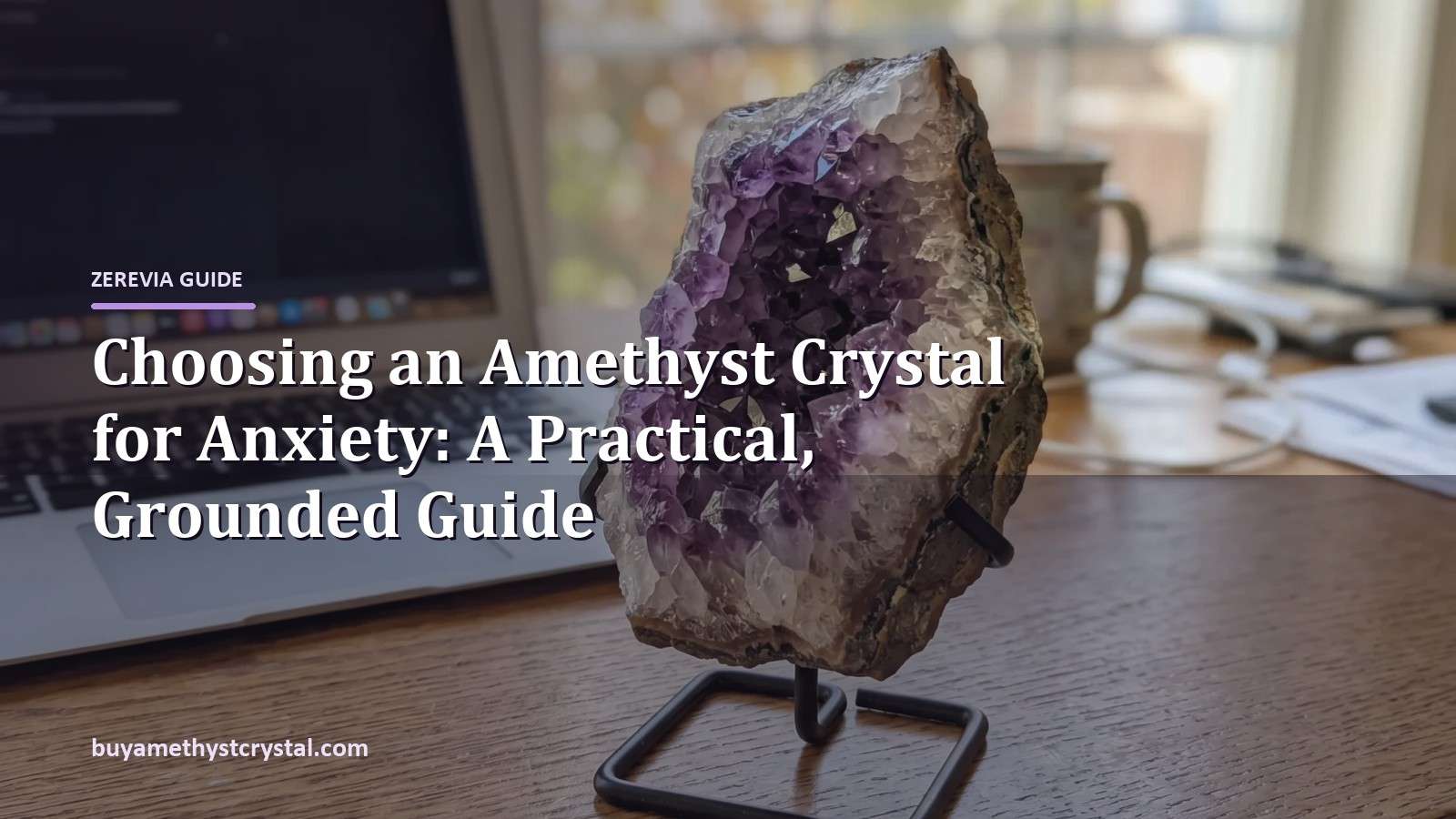
Do you want something to see? A geode or cluster placed on a shelf or nightstand creates a visual anchor—a specific place your eyes land when you need to come back to the present. A larger piece works well here.
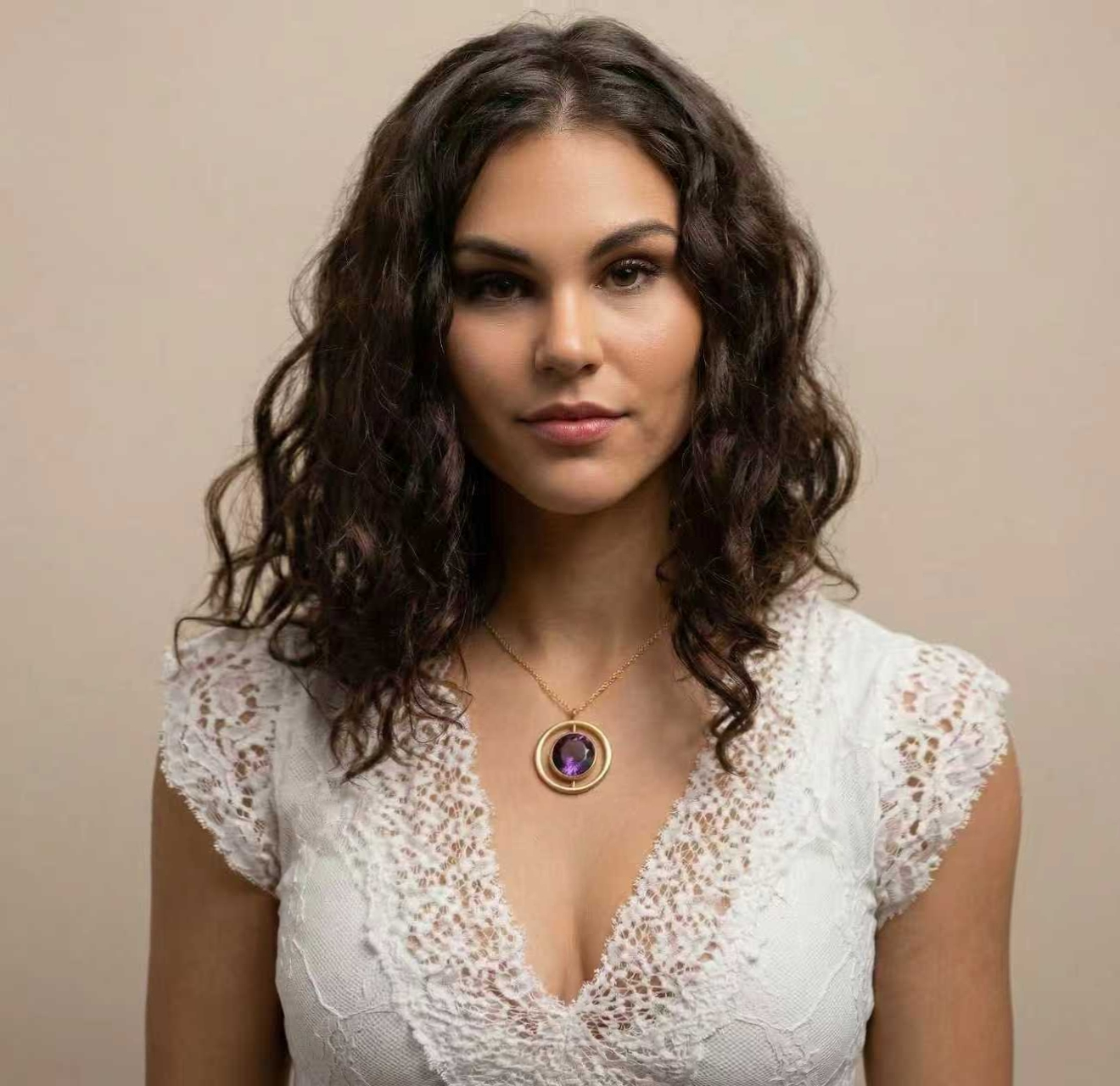
Do you want something to wear? A ring or pendant made with 100% natural amethyst and 925 sterling silver gives you a portable, discreet reminder that stays with you through the day. Sterling silver is nickel-free, so it won’t cause skin reactions or leave a green mark on your finger.
Two less common forms you might encounter: an amethyst wand crystal, sometimes used for directed focus during meditation (holding it and pointing it toward a specific area of tension), and an amethyst crystal healing mat, which involves lying on a mat embedded with small crystals. The wand is a niche but reasonable addition to a focused practice. The mat is uncommon and expensive, and I’d suggest starting with something simpler.
For a deeper look at shapes and their different uses, our guide to amethyst forms and shapes covers this in detail.
| Form | Best For | Feel | Placement |
|---|---|---|---|
| Raw Crystal | Holding, tactile grounding | Natural weight, uneven texture | Nightstand, desk, pocket |
| Crystal Point | Directed focus, meditation | Smooth or raw, pointed tip | Desk, altar, shelf |
| Geode / Cluster | Visual anchor, room presence | Heavy, dramatic interior | Living room, entryway |
| Jewelry (Ring / Pendant) | All-day carry, subtle reminder | Light, wearable | On your body |
| Wand | Meditation direction | Elongated, smooth grip | Meditation space |
Raw, Point, or Jewelry? Key Differences for Your Practice
Amethyst Raw Crystal
An amethyst raw crystal is unpolished and retains its natural form—the matrix rock it grew from, the irregular edges, the color zoning that makes each piece distinct. This is the form I started with, and it’s the one I recommend most often for someone beginning a calming practice.
Why: the imperfection is the point. Holding a raw stone, you feel its weight (real quartz is noticeably heavier than glass or plastic), its uneven surface, and its temperature against your skin—a natural stone feels cool at first contact, then slowly warms. These sensory details pull your attention into the present moment, which is the actual mechanism behind any benefit you might notice.
Every raw crystal we sell is photographed individually—what you see is what you get. The color depth, shape, and size shown are exactly what arrives at your door.
Amethyst Crystal Point
An amethyst crystal point is typically a natural or lightly polished piece with a defined tip and a flat base. Some people like the symbolic aspect of the point—directing attention or intention toward a specific thought or concern. Whether or not you subscribe to that framework, the point is a clean, visually simple form that sits well on a desk or shelf.
Points also work well for the nightstand. If you’re exploring the idea of amethyst crystal for sleep, a small point placed where you can see it as you wind down can serve as a visual cue that the day is ending. It won’t force sleep—no object can—but it can become part of a consistent bedtime routine that signals your body to relax. Consistency, not the stone, is what does the work.
Amethyst Jewelry
For something you carry without thinking about it, a ring or pendant in 925 sterling silver with a natural amethyst setting is the most practical option. It’s discreet. It doesn’t draw questions. And because sterling silver is nickel-free, you can wear it daily without skin irritation.
All three forms are 100% natural amethyst. For raw crystals and points sourced from documented origins—typically Brazil or Uruguay—you can verify the origin on the product page. Jewelry pieces use natural amethyst but may not have a specific mine attribution.
One important care note that applies to every form: UV light fades amethyst. The purple color comes from Fe³⁺ (iron ions) in the crystal structure, and sustained sunlight reverses that coloring permanently. I learned this the hard way through a buyer who placed her crystal on a south-facing windowsill. The deep purple turned lavender over a few months, and that change is irreversible. Keep your amethyst out of direct sunlight. A shelf, a desk, or a nightstand with indirect light is ideal.
For more on how quality and origin affect the stone you’re buying, see our amethyst quality and value guide.
Setting a Simple, Grounded Anxiety-Relief Ritual with Amethyst
Here’s the practice I suggest to buyers who ask how to use amethyst crystal for anxiety. It’s four steps, takes about five minutes, and requires nothing beyond the stone itself.
Step 1: Cleanse. If you want to know how to clean raw amethyst crystal, the safest methods are moonlight and sound. Place the stone on a windowsill overnight during a full moon, or hold it near a singing bowl while you strike it. These methods don’t risk damage. Avoid soaking your crystal in water for extended periods—while amethyst is durable (7 on the Mohs hardness scale), prolonged water exposure can affect the matrix rock. And never use sunlight to “cleanse” or “charge” it; UV fading is a real, documented phenomenon, not a theory.
Step 2: Set an intention. This doesn’t require any special knowledge. Hold the stone and ask yourself one specific question: What is making me anxious right now? Name it. The value is in the naming, not in any energy transfer.
Step 3: Hold it for two to three minutes. Focus on the physical texture. Feel its weight. Notice the temperature against your palm. Breathe slowly. This is a grounding exercise—the crystal is a focal point, nothing more, nothing less. The amethyst crystal healing benefits people describe come from this intentional pause, not from a chemical property of the stone.
Step 4: Place it where you’ll need it. Put the crystal where you’re most likely to feel stressed—your work desk, your nightstand, your kitchen counter. The goal is for it to be a visual reminder of the pause you practiced, not a hidden object you forget about.
I had a conversation once with someone who told me he didn’t believe crystals had any special properties. I told him I wasn’t sure they did either—but that having a real, documented-origin stone on my nightstand meant I spent one or two minutes before bed looking at something that wasn’t a screen. He said, “Okay, that I can accept.” I didn’t push further. That pause is the whole practice.
A Note on ‘Evidence’ and Managing Expectations
You may have searched for amethyst crystal sunlight water energy benefits scientific evidence, or something similar. Here’s the honest answer.
There is no peer-reviewed scientific research demonstrating that amethyst crystals have chemical healing properties that reduce anxiety, improve sleep, or treat any medical condition. If someone tells you otherwise, they’re either misinformed or selling something harder than a rock.
What science does explain clearly is this: amethyst’s purple color comes from trace amounts of Fe³⁺—iron in its ferric state—within the quartz crystal structure, activated by natural background radiation over millions of years. That’s a verifiable, well-documented geological fact. When I first read about this in my GIA coursework, I found it strangely comforting. Not because it was mystical, but because it was specific. There’s a real reason this stone is purple, and it has nothing to do with intention or vibration. It’s chemistry and time.
Similarly, the scientific research on sunlight and amethyst is clear: UV radiation reduces Fe³⁺ to Fe²⁺, which permanently changes the purple color to a lighter shade. This is not reversible. So while some traditions suggest “charging” crystals in sunlight, doing so with amethyst will fade it.
The benefit people report from using amethyst in a calming ritual is real—but the mechanism is mindfulness, sensory focus, and the creation of a consistent pause. These practices are well-supported by broader psychological research on anxiety management. The stone is a tool for creating that pause. It’s the pause that helps.
For more on how amethyst gets its color and where it comes from, see our guide to amethyst geological origins.
FAQ: Your Questions About Amethyst for Stress Answered
Can amethyst cure my anxiety?
No. Amethyst is not a medical treatment. It can be part of a personal ritual that creates space for a mindful pause, which some people find helps them manage stress. If you’re experiencing persistent or severe anxiety, please speak with a healthcare professional.
How do I clean my raw amethyst crystal safely?
Use moonlight (place it on a windowsill overnight) or sound cleansing (a singing bowl or tuning fork). Avoid leaving it in direct sunlight, which causes irreversible UV fading. Avoid soaking it in water for long periods, which can affect the base rock.
Can I put amethyst in my water to drink?
We don’t recommend it. There’s no scientific evidence that crystal-infused water provides any health benefit, and minerals from the stone can leach into the water. Amethyst is natural silicon dioxide with trace iron—neither of which you want to ingest in uncontrolled amounts.
Will amethyst help me sleep?
Not directly. A small crystal placed on your nightstand can become part of a consistent bedtime routine—something you look at, something you hold for a minute, something that signals to your brain that it’s time to wind down. The routine helps with sleep. The crystal is an anchor for that routine.
Where should I place my amethyst?
Where you’ll see it when you need a moment of calm. That might be your desk, your nightstand, your entryway table, or your pocket. There’s no single correct answer. Experiment with placement and notice where it feels most useful.
Ready to begin? Browse our collection of raw amethyst crystals, points, and clusters—each photographed individually, with documented origin and real dimensions listed, so you know exactly what you’re getting.
 Crystal Cluster
 Crystal Tower
 amethyst crystal ball
 Amethyst Caves for Sale
 Amethyst Bracelets
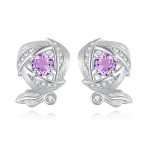 Amethyst Earrings
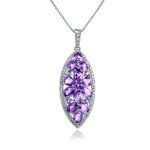 Amethyst Necklaces
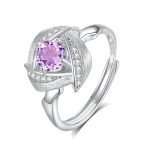 Amethyst Rings
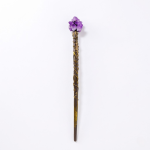 amethyst crystal healing
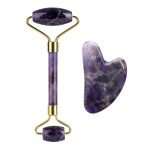 Amethyst Beauty & Wellness
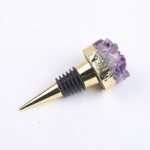 Crystal Home Decor
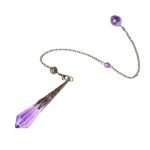 Spiritual & Divination Tools