February Meaning Birthstones: Amethyst Symbolism, History & Buying Guide
If you were born in February—or you’re shopping for someone who was—you’ve probably noticed that the February meaning birthstones conversation almost always starts and ends with one stone: amethyst. That deep purple quartz has held the February birthstone title for centuries, and understanding what it represents can help you choose a piece that actually means something to the person receiving it.
This guide covers what February birthstones symbolize, where those traditions come from, and the practical decisions that matter when you’re buying an amethyst crystal or piece of jewelry. Because knowing the meaning is the easy part. Knowing how to pick a good one? That takes a little more attention.
Introduction to February Birthstones
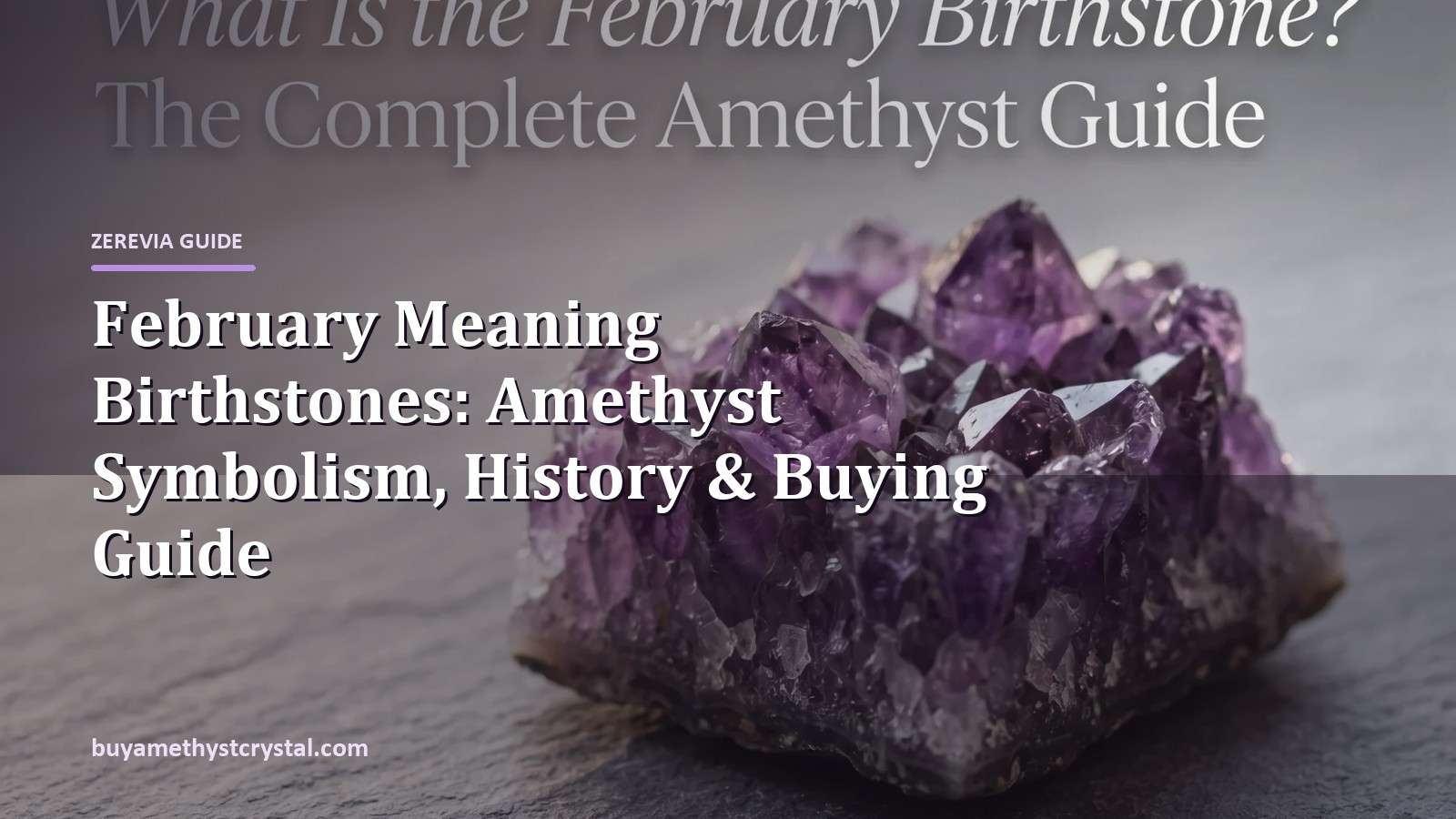
Amethyst is the official February birthstone—a purple variety of quartz (SiO₂) colored by trace amounts of iron. Specifically, Fe³⁺ ions sit within the quartz crystal structure and, over millions of years of natural radiation, produce the purple color that ranges from pale lavender to deep, near-black violet. That color isn’t dyed or painted on. It grew there, slowly, which is part of why amethyst has fascinated people for so long.
The February birthstones meaning tradition connects amethyst with clarity of mind, sobriety, and a certain calm steadiness. Whether you hold to those associations or not, the stone’s real appeal comes down to three things: it’s genuinely beautiful, it’s available in forms ranging from palm-sized tumbled stones to cathedral geodes taller than your hip, and it carries enough cultural history to make a meaningful gift.
I came to amethyst sideways. A few years ago, I bought a small, not-particularly-pretty amethyst for twelve dollars at a local shop. The label was handwritten in purple ink: amethyst — for calm nights — $12. I wasn’t sure I believed the claim, but I took it home, set it on my nightstand, and that night was the first time in months I slept without waking at three in the morning. That doesn’t prove anything. But it sent me down a path of studying amethyst healing properties, Fe³⁺ color mechanics, UV fading, and eventually GIA gemology coursework. The more I learned, the more I wanted to help other people choose well.
The Meaning and Symbolism of February Birthstones
The February meaning birthstones tradition centers on a handful of symbolic associations that have remained remarkably consistent across centuries and cultures. Here’s what amethyst has traditionally represented:
- Sobriety and clear thinking. The ancient Greek word amethystos roughly translates to “not intoxicated.” The stone was carried or worn as a safeguard against excess—not as a medical intervention, but as a physical reminder.
- Calm and composure. In modern crystal traditions, amethyst is associated with a settled mind and a steadier emotional baseline. Some people hold a stone during stressful moments; others keep one nearby as a grounding object.
- Protection. Historically, amethyst was believed to guard against negative influences. This is a tradition, not a guarantee—but many buyers describe feeling a sense of comfort from having a stone nearby.
- Spiritual connection. In chakra traditions, amethyst is linked to the third eye (Ajna) and crown (Sahasrara) energy centers—the points associated with intuition and expanded awareness. These associations come from Indian philosophical systems and are part of a living ritual practice, not clinical evidence.
When someone asked me once whether I really thought stones had “powers,” I told them I wasn’t sure about that word. But I knew that having something real—from an actual place, with an actual chemistry—on my nightstand changed how I spent my last few minutes before sleep. Instead of scrolling, I’d look at it. That pause had value for me. Whether that’s symbolism or just a useful habit, I leave to the individual.
You can explore more about amethyst meaning and uses in our dedicated guide, where we go deeper into traditional associations and personal ritual ideas.
Cultural and Historical Background of February Birthstones
The practice of assigning gemstones to birth months has roots in ancient traditions. The earliest references trace back to the Book of Exodus and the Breastplate of Aaron, which featured twelve stones representing the twelve tribes of Israel. Over centuries, these became linked to the twelve months of the year, and by the 15th and 16th centuries in Poland, the modern birthstone system was taking shape.
Amethyst’s connection to February is well established, but its cultural significance extends far beyond any single calendar:
- Ancient Greece and Rome. Amethyst was carved into drinking vessels and worn as jewelry by the elite. Both cultures valued it for its association with moderation and mental clarity. Roman soldiers sometimes carried amethyst, believing it would keep them level-headed in battle.
- Medieval Europe. The stone became closely associated with the Catholic clergy. Bishops wore amethyst rings as symbols of piety and celibacy. The purple color aligned with ecclesiastical authority and spiritual devotion.
- Russian royalty. Deep-purple amethyst—sometimes called “Siberian” amethyst, though the finest material now comes primarily from South America—was prized by the Russian imperial court. Catherine the Great was a notable collector.
- Chinese and East Asian traditions. Amethyst appears in feng shui practices as a stone that supports clarity, wealth positioning, and a calm domestic environment. It’s commonly placed in the wealth corner (southeast) of a home or workspace.
- Aquarius guardian stone. In addition to its February birthstone role, amethyst is considered the guardian stone for Aquarius (January 20–February 18), which further strengthens its association with the early months of the year.
For a fuller exploration of amethyst’s place in history and feng shui, see our guide on amethyst feng shui and history.
How to Choose February Birthstones: A Buying Guide
Understanding the February birthstones meaning is the easy part. Choosing the right piece—whether it’s a raw crystal, a geode, or a ring—requires a few practical decisions. Here’s what I’d suggest focusing on.
Origin: Brazilian vs. Uruguayan Amethyst
When someone asks me the difference between Brazilian and Uruguayan amethyst, I usually start with a question: “Do you want something bigger, or something darker?”
Brazilian amethyst tends to be larger, with a wider color range from lavender to medium purple. It’s more accessible in price and works well when you want a visually striking piece—say, a geode for a living room or a cluster for a shelf. The main producing region is Ametista do Sul in southern Brazil.
Uruguayan amethyst is different. The crystals are smaller but denser, and the color runs deeper—sometimes into a rich, near-blue imperial purple that you almost never find in Brazilian material. You pay more, but if you set a same-sized Uruguayan and Brazilian piece side by side, the color difference is apparent within seconds.
| Feature | Brazilian Amethyst | Uruguayan Amethyst |
|---|---|---|
| Typical size | Larger specimens available | Smaller, denser crystals |
| Color range | Lavender to medium purple | Deep purple to imperial purple |
| Crystal structure | Broader, sometimes less defined | Fine-grained, well-formed points |
| Price point | More accessible | Higher per comparable size |
| Best for | Statement decor, large geodes, gifts on a budget | Collectors, deep-color jewelry, high-impact small pieces |
Color Depth and Quality
You’ll sometimes see amethyst graded with letters—A, AA, AAA, AAAA. Here’s what I wish someone had told me earlier: those grades are not standardized. There is no international gemological body that defines what “AAAA” means for amethyst. Every seller defines it differently, and some sellers mark all their products AAAA because no one can dispute a made-up standard.
Instead of relying on letter grades, look at what the seller actually tells you: the stone’s origin, weight, dimensions, and how the color distributes. Real amethyst has natural color zoning—some areas deeper, some lighter, sometimes with white or transparent patches. Perfectly uniform purple across a large stone is unusual in nature and worth questioning.
Our amethyst quality and value guide covers these evaluation criteria in more detail.
Forms and Use Cases
The right form depends on what you want the stone to do in your life. Here’s a quick breakdown:
- Geodes and cathedral geodes. Best for home decor, feng shui placement, and making a visual statement. Geodes are hollow rocks lined with amethyst crystals inside—they catch light beautifully and work well in living rooms, entryways, or meditation spaces.
- Clusters. Multiple crystals sharing a common base. Good for display and as a centerpiece. In some crystal traditions, clusters are used to “cleanse” other stones placed on top of them.
- Towers and obelisks. Polished to a flat base and pointed top. Popular for desks, nightstands, and altar spaces.
- Spheres. Perfectly round, symbolizing wholeness in traditional use. They require a stand but look striking on a shelf or table.
- Tumbled and palm stones. Small, smooth, portable. The most accessible price point—good for first-time crystal buyers or as stocking-stuffer gifts.
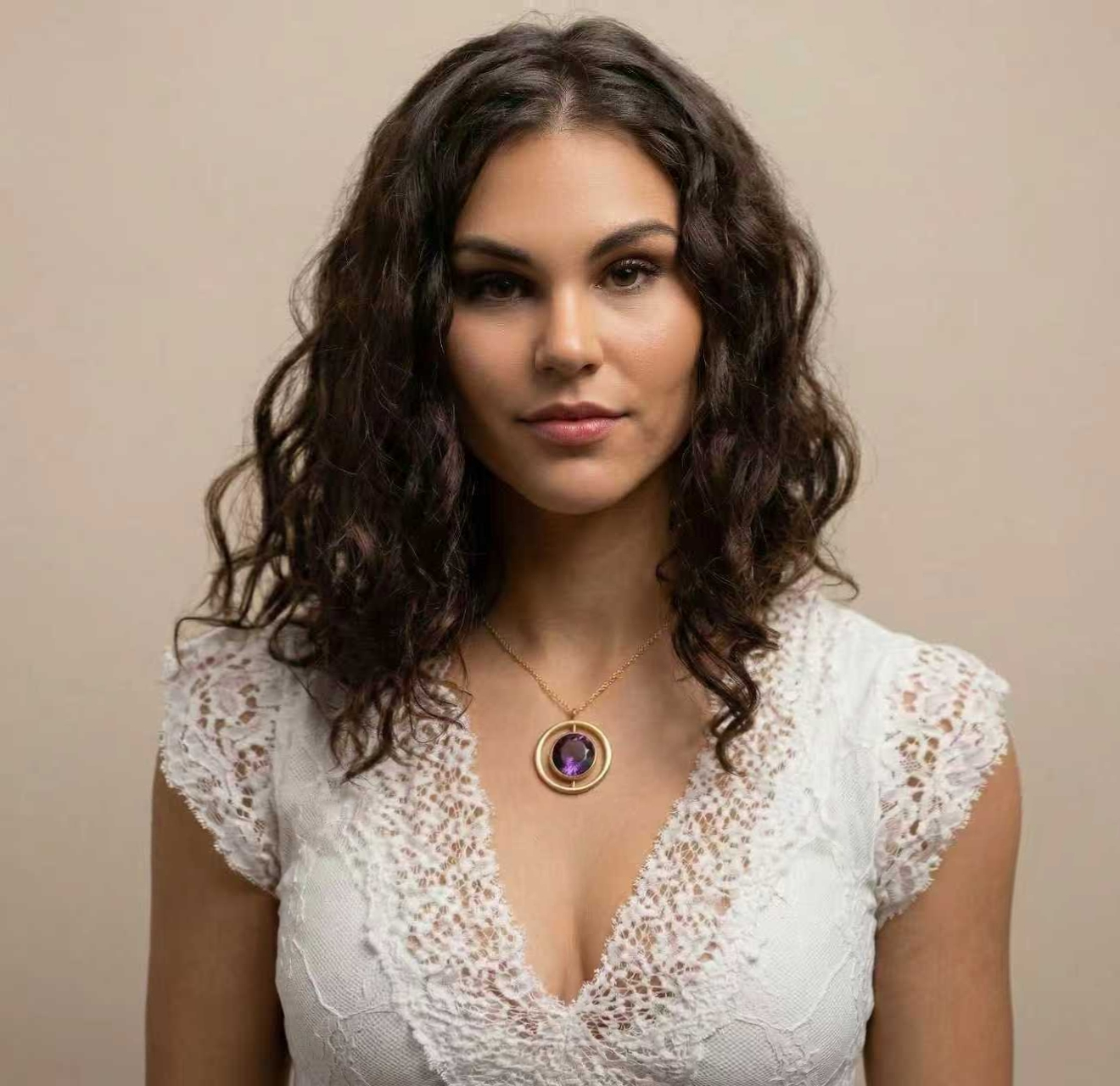
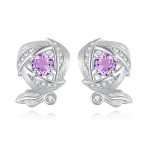
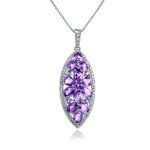
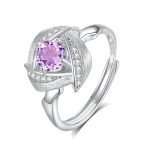
- Jewelry. Amethyst rings, necklaces, bracelets, and earrings made with 100% natural amethyst and set in 925 sterling silver are wearable ways to carry the February birthstone meaning with you daily. Look for pieces that specify nickel-free construction if you have metal sensitivities.
For a complete guide to all the shapes and forms available, see our amethyst forms and shapes guide.
Buyer Checklist
Before you buy, ask yourself—or ask the seller—these questions:
- Does the seller show the exact item I’ll receive (WYSIWYG / one-of-a-kind photo)?
- Is the origin documented (Brazil, Uruguay, or specific region)?
- Are weight and dimensions clearly listed?
- Is the color described specifically, not just “purple” or “deep”?
- For jewelry: is it 100% natural amethyst, and is the metal 925 sterling silver?
Caring for Your February Birthstone
Amethyst is a durable stone—Mohs hardness 7, meaning it can scratch glass and resists most everyday wear. But it has one real vulnerability that every buyer should know about before they place it on a sunny windowsill.
UV fading is real and irreversible. I learned this the hard way—not with my own stone, but when a buyer messaged me to say her crystal had lost color. She’d placed it on a south-facing bedroom windowsill where it got direct afternoon sun for about two hours daily. The Fe³⁺ ions that create amethyst’s purple color can be permanently reduced by sustained ultraviolet exposure. Her deep imperial purple had shifted to a muted lavender. The stone was still genuine, still beautiful to some—but that original color was gone for good.
Here’s how to keep your February birthstone looking the way it did when you brought it home:
- Avoid direct sunlight. Display amethyst away from windows that get strong afternoon sun. Indirect light is fine. A bookshelf, mantel, or bedside table away from the window is ideal.
- Clean gently. Use lukewarm water and a soft cloth. Avoid ultrasonic cleaners, harsh chemicals, and steam cleaning—these can damage the surface or loosen settings in jewelry.
- Store separately. Harder stones (like sapphire at Mohs 9 or topaz at Mohs 8) can scratch amethyst. If you store it in a box or pouch, keep it away from other gems.
- For jewelry, remove before heavy activity. Sterling silver can bend, and amethyst can chip if struck at the right angle. Take rings off before gardening, exercising, or cleaning with chemicals.
Frequently Asked Questions About February Birthstones
What does a February birthstone symbolize?
In tradition, amethyst symbolizes sobriety, clear thinking, calm composure, and spiritual awareness. These associations stretch back to ancient Greece and have been carried through Roman, European, and East Asian cultural practices. Many modern buyers appreciate amethyst as a grounding object—a tangible reminder to slow down—not as a medical tool. The February birthstones meaning is rooted in centuries of cultural use, not clinical proof.
Why is amethyst the birthstone for February?
Amethyst’s assignment to February developed through centuries of birthstone tradition, likely influenced by its long association with spiritual clarity, its connection to the Aquarius zodiac sign (January 20–February 18), and its historical status as a stone valued by clergy and royalty. The modern birthstone list was formalized by the Jewelers of America in 1912, and amethyst has held the February position in most Western systems since.
How do I choose a meaningful February birthstone gift?
Start with the recipient’s life, not the stone’s supposed powers. Do they want something to wear daily? A 925 sterling silver pendant or ring with natural amethyst is practical and personal. Do they want a visual statement for their home? A geode or cluster from documented Brazilian or Uruguayan origin makes a memorable housewarming or birthday gift. For a first crystal, a tumbled stone or palm stone is accessible and low-pressure. Match the form to the use case, and prioritize accurate photography so what arrives matches what was shown.
Can February birthstones fade over time?
Yes. Amethyst’s purple color comes from Fe³⁺ ions that can be permanently altered by sustained UV exposure. If your stone gets hours of direct sunlight every day, you may notice the color lightening over weeks or months—and this change cannot be reversed. The best prevention is simple: display your amethyst away from direct sunlight. Moonlight, lamplight, and indirect daylight won’t cause fading. If you’d like to use a cleansing ritual, moonlight exposure overnight is the safest method and aligns with traditional crystal care practices.
How can I tell if my amethyst is natural?
A few signs can help. Natural amethyst has uneven color distribution—deeper patches, lighter zones, sometimes white or translucent areas within the same stone. It feels heavier than glass or plastic of the same size. Real amethyst is cool to the touch initially, then warms slowly against your skin. And reputable sellers document the stone’s origin and provide accurate, unfiltered photography. If a stone looks perfectly uniform in color across a large surface, that’s worth questioning.
Choosing What the February Birthstone Means to You
The February birthstones meaning has layers—historical, cultural, personal. Amethyst has been a symbol of clarity for the ancient Greeks, a mark of piety for European clergy, a collector’s treasure for Russian royalty, and a quiet companion on a nightstand for someone who just wanted to stop waking up at three in the morning.
What matters most is not whether the stone does something mystical. It’s whether the piece you choose is real, accurately described, and suited to how you or your gift recipient will actually use it. A documented-origin geode for the living room. A sterling silver ring for daily wear. A small tumbled stone for the bedside table. Each of these can carry meaning—practical, personal, or traditional—depending on what you bring to it.
If you’d like to explore further, start with our guide to amethyst meaning and uses, where we cover traditional associations, personal ritual ideas, and the practical details that help you choose well.
 Crystal Cluster
 Crystal Tower
 amethyst crystal ball
 Amethyst Caves for Sale
 Amethyst Bracelets
 Amethyst Earrings
 Amethyst Necklaces
 Amethyst Rings
 amethyst crystal healing
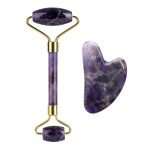 Amethyst Beauty & Wellness
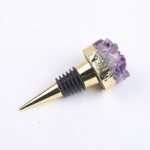 Crystal Home Decor
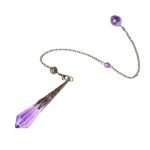 Spiritual & Divination Tools