Amethyst Healing Crystals for You: Properties & Care Guide
Amethyst Healing Crystals for You: A Practical Guide to Properties, Forms, and Care
If you’re searching for amethyst healing crystals for yourself, you’ve probably already noticed something: there is a lot of information out there, and most of it sounds either too vague to trust or too mystical to take seriously. This guide is for the middle ground—for the person who wants to know what is actually verified about amethyst, what is traditionally believed, and how to choose a form that fits your real life.
For a deeper look at the full range of traditional associations, start with our detailed guide on amethyst healing properties. This article focuses on helping you make a grounded decision.
What People Mean by ‘Amethyst Healing Properties’
When someone searches for amethyst healing properties, they are usually asking one of two things. The first is practical: what is this stone actually made of, and what can I reasonably expect from it? The second is personal: will this specific crystal do something meaningful for me?
Both questions deserve honest answers.
Amethyst is a natural silicon dioxide mineral (SiO₂) with a hardness of 7 on the Mohs scale. That’s a verified, measurable fact—the same kind of fact that lets it scratch glass. Its purple color comes from trace amounts of iron (Fe³⁺) in the quartz crystal structure, activated by natural radiation over millions of years. That is the scientific baseline.
What people also mean by healing properties—the emotional, the spiritual, the personal—is different. Those claims come from centuries of tradition, personal ritual, and buyer experience. They are not medical proof, and this article will not pretend otherwise.
I came to amethyst through a $12 stone with a handwritten label that said “for calm nights.” I didn’t believe it would do anything. I bought it anyway because I was tired and the purple was pretty and it cost twelve dollars. That stone did not cure my sleeplessness, but it started a chain of curiosity—about what makes amethyst real, how to tell the genuine article from glass, and why this particular mineral has held people’s attention for centuries. That curiosity led to GIA gemology coursework and eventually to building Zerevia.
Amethyst is not a medical treatment. It does not replace professional care. But if you are choosing one, understanding what is verified and what is tradition will help you pick something you’ll actually value.
The Science We Know: Color, Hardness, and Light
Before you choose an amethyst based on what it might do for your mood, it helps to understand what the stone physically is. This is the part that cannot be faked with good marketing language.
How Amethyst Gets Its Purple
The purple in amethyst comes from iron—specifically, Fe³⁺ ions trapped in the quartz crystal lattice. Natural gamma radiation from surrounding rock activates these iron atoms, producing the color. This is not a dye, not a coating, not something added in a lab. It is a chemical event that happened inside the earth over geological time.
I remember reading this for the first time during GIA coursework and feeling something close to relief. There was a real, specific, verifiable reason this stone was purple—not a vague story about cosmic forces, but a mechanism I could write down on paper. The color is in the structure itself.
That color can also leave. Fe³⁺ is sensitive to ultraviolet light, and prolonged UV exposure causes an irreversible chemical reduction. The iron changes state. The purple fades. Once it happens, it does not come back. This is not a matter of opinion or belief—it is photochemistry, and it is the single most important thing to know before you place an amethyst anywhere in your home.
More on that in the care section below.
Hardness and Durability
Amethyst sits at 7 on the Mohs hardness scale. It is harder than steel (5–6.5), softer than topaz (8), and roughly the same as all other quartz varieties. This matters practically: it means amethyst is durable enough for everyday jewelry and display, but it can be scratched by harder minerals and should be stored separately from diamonds or sapphires.
Where It Comes From
Origin affects appearance. Brazilian and Uruguayan origins produce the majority of the world’s amethyst, and they look meaningfully different. Brazilian amethyst tends toward larger formations with a wider color range, from pale lavender to medium purple. Uruguayan amethyst typically has denser crystals and deeper color—sometimes a violet so dark it leans toward blue, a shade often called emperor purple. Neither is automatically “better.” It depends on whether you want size and variety or depth and intensity.
Traditional and Spiritual Associations: A Ritual, Not a Remedy
Now we arrive at the part most people are actually searching for when they look up amethyst healing properties: the spiritual side.
Amethyst has been associated with calm, clarity, and intuition across multiple cultures and centuries. In Hindu and yogic traditions, it is linked to the Ajna (Third Eye) chakra, located between the eyebrows, which is associated with insight and inner knowing. Some practitioners also connect it to the Sahasrara (Crown) chakra at the top of the head, relating to awareness and perspective. These are established parts of a philosophical system, not clinical findings.
The Greek word amethystos means “not intoxicated,” and ancient Greeks carried the stone believing it promoted sobriety of mind. Medieval European soldiers wore amethyst for clarity in battle. Buddhist traditions associate it with peaceful meditation. These are traditions—stories people have told and retold because they found meaning in them.
Many buyers use amethyst as part of a personal ritual. They set an intention—something specific, like “I want to feel less scattered in the evenings”—and place the stone somewhere they will see it regularly. The crystal becomes a physical anchor for that intention. It does not perform magic. It serves as a reminder.
I once had a conversation with someone who asked me directly: “You really think stones do anything?” I told him the truth. I don’t know if stones have what some people call energy. What I know is that having a real, beautiful, documented-origin piece of amethyst on my nightstand means I spend a quiet moment looking at it before bed instead of scrolling through my phone. That shift is real. It is also not the same as a medical claim.
The amethyst healing properties benefits that people describe—calm, focus, emotional steadiness—are best understood as part of a personal ritual practice, not as guaranteed outcomes.
Choosing Your Form: Geodes, Clusters, Jewelry, and More
Finding the right amethyst healing crystals for you starts with asking what you actually want the stone to do in your life. The answer changes which form makes sense.
| Form | Best For | Practical Notes |
|---|---|---|
| Geode / Cathedral | Statement display, Feng Shui “wealth corner,” living room focal point | Large, dramatic, heavy. Requires a stable surface. Choose WYSIWYG photos so you see the exact piece. |
| Cluster | Shared spaces, desk display, a common resting place for other small crystals | Multiple points growing from one base. Visually busy—in a good way. |
| Tower / Obelisk | Focused display, intention-setting anchor, shelf or altar | Polished, geometric, bottom-flat-top-point shape. Clean lines. |
| Tumbled / Palm Stone | Pocket carry, first-time buyers, gift add-ons | Affordable, smooth, easy to hold. Good entry point. |
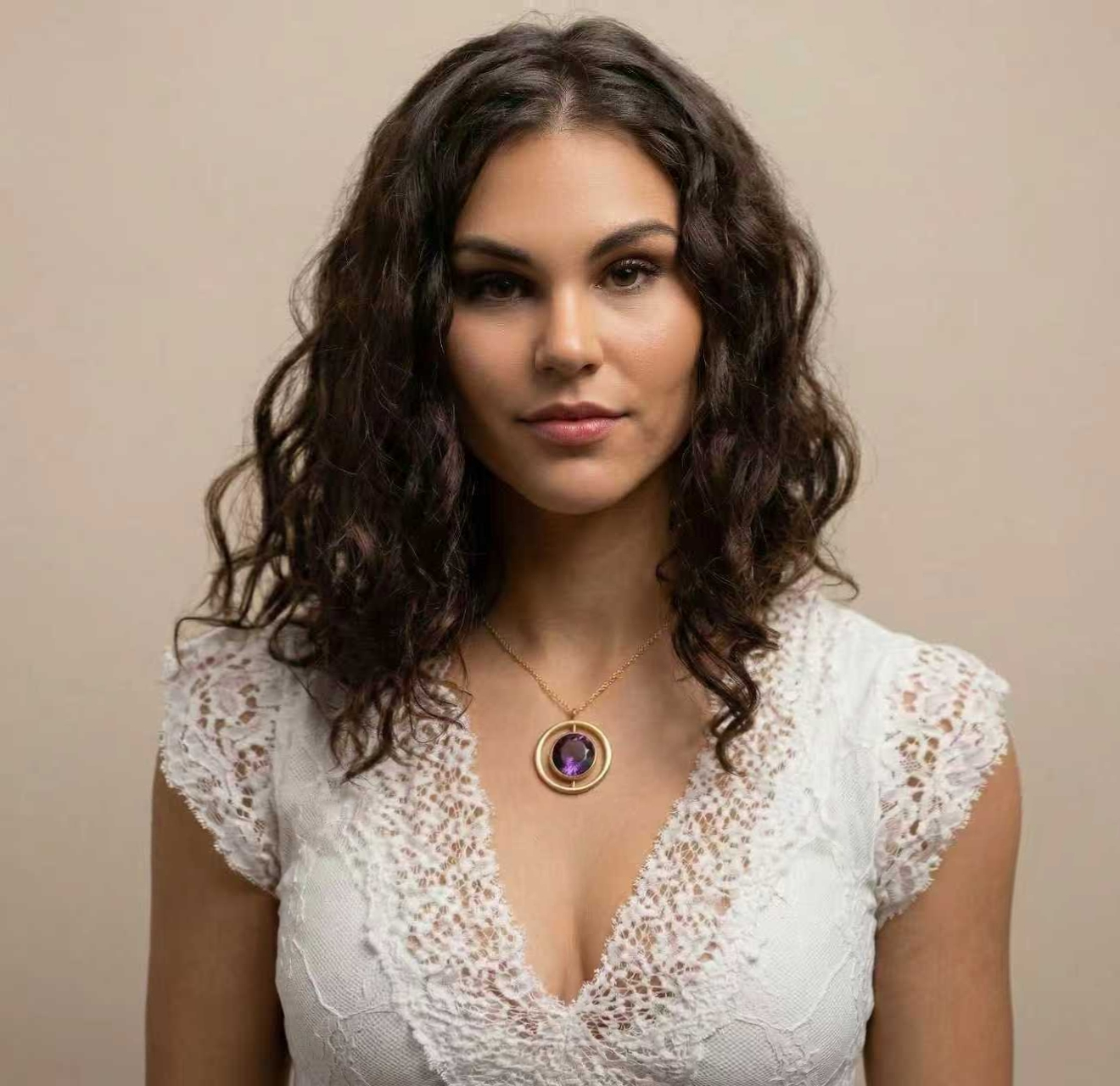
| Jewelry (ring, pendant, earrings) | Wearable daily use, personal meaning, gifting | Look for 100% natural amethyst and 925 sterling silver. Adjustable rings solve sizing worries. |
| Crystal Sphere | Meditation focus, display piece, gift | Smooth, round, symmetrical. Often polished from a single rough stone. |
Some varieties come up in searches specifically. Vera Cruz amethyst, for example, is a distinct variety from Mexico—typically smaller, paler, and more translucent, with a different crystal habit than Brazilian or Uruguayan specimens. Chevron amethyst shows alternating bands of amethyst and white quartz, creating a distinctive V-shaped pattern. These are not marketing inventions; they are geologically real differences that affect appearance and, for some buyers, personal resonance.
For raw crystals and geodes, look for WYSIWYG listings—what you see is what you get. This means the photo shows the exact piece you will receive, not a stock image. It is the simplest way to know you are getting what you expect. For a fuller breakdown of shapes and which ones work best for different spaces, see our guide to amethyst forms and shapes.
For jewelry, the key markers are material: 100% natural amethyst (not glass or synthetic) set in 925 sterling silver (which is nickel-free and unlikely to cause skin reactions). These are specific, verifiable claims. “Healing crystal bracelet” on its own tells you nothing about what you’re actually getting.
How to Care for Your Amethyst: Keeping It Real
Care matters more than most buyers realize, because the most common damage to amethyst is invisible until it’s too late.
The Sunlight Problem
I learned this the hard way—not with my own stone, but with a buyer’s. She wrote to say her crystal point had faded from a deep violet to a pale lavender. She had placed it on a south-facing windowsill, where it received direct afternoon sun for about two hours a day. That was enough. UV radiation had reduced the Fe³⁺ ions in the crystal, and the color was gone. Irreversibly.
Since then, every product description at Zerevia includes this note: avoid direct sunlight. A shelf away from windows, a display case, or a room with indirect light will keep the color intact for years. This is the most important care instruction for any amethyst, and it applies whether the stone cost $12 or $1,200.
Cleaning
A quick rinse under lukewarm water with mild soap is safe for raw, polished, and tumbled amethyst. Pat dry with a soft cloth. For jewelry, check that the setting is secure before wetting, and avoid submerging pieces with adhesives or delicate closures.
When buyers ask about amethyst in water and healing properties, the physical answer is straightforward: brief contact with water is fine, but prolonged soaking is not recommended for any crystal. Water can work into small fractures over time, and for jewelry, it can loosen settings or tarnish components that are not pure silver.
Ritual Cleansing
If you follow a cleansing practice as part of your personal ritual, the safest method is moonlight. Place your amethyst on a windowsill on a clear night—not in direct sun the next morning—and retrieve it the following day. Sound cleansing with a singing bowl or tuning fork is another gentle option. Brief smoke cleansing with sage or palo santo works for those who practice it, though it should be done briefly and in a ventilated space.
For a complete care reference, including what to do with different forms, see our full amethyst care and cleansing guide.
What to Look for When Buying (Beyond the Buzzwords)
The crystal market is full of language designed to make you feel like you’ve found something special. Some of that language is meaningful. Most of it is not.
Why ‘AAAA’ Doesn’t Mean What You Think
Before I started studying gemology seriously, I assumed AAAA was a recognized grading standard—something like diamond grading, with clear definitions and independent verification. It isn’t. Amethyst has no internationally standardized grading system. A, AA, AAA, AAAA are informal, seller-defined terms. One seller’s AAAA might be another seller’s AA. Some sellers label everything AAAA because there is no authority to challenge them.
At Zerevia, we don’t use that term. We describe what we actually see: color depth in plain language, crystal density, visible inclusions, weight in grams, dimensions in centimeters. You can make your own judgment with real information. It is your money.
What Actually Matters
- Documented origin. A seller who can tell you whether a raw crystal came from Brazil or Uruguay—and ideally, from which region—is a seller who knows their supply chain. For jewelry, origin is less commonly documented, so focus on materials instead.
- Accurate photography. WYSIWYG photos for raw pieces. No heavy filters, no misleading color saturation. What arrives should match what you saw online.
- Specific measurements. Weight, height, width. Not “large” or “medium”—actual numbers.
- Material quality for jewelry. “925 sterling silver” should be stamped or explicitly stated. “100% natural amethyst” means not glass, not synthetic, not dyed. “Nickel-free” protects sensitive skin.
- Honest description of limitations. Color zoning is normal. Natural inclusions are part of the stone. A seller who mentions these things is a seller who is paying attention.
Red flags include descriptions heavy on “supercharged,” “perfect for everyone,” or “healing crystal” without any mention of origin, dimensions, or material. If the listing reads like a horoscope instead of a product description, you may be paying for adjectives rather than the stone itself.
For a deeper breakdown of how quality and value connect, see our amethyst quality and value guide.
FAQ: Quick Answers for Your Amethyst Questions
What is the difference between Chevron Amethyst and regular amethyst?
Chevron amethyst is a natural banded variety that alternates layers of purple amethyst and white or gray quartz, often forming a distinctive V-shaped or chevron pattern. The healing properties of chevron amethyst are traditionally described as similar to regular amethyst—associated with calm and clarity—but buyers often choose it for its unique visual pattern rather than any difference in composition. It is still amethyst (SiO₂ with Fe³⁺), just in a specific natural arrangement.
Are amethyst healing properties scientifically proven?
The physical properties are verified: the color mechanism (Fe³⁺ activated by natural radiation), the hardness (Mohs 7), and the UV sensitivity are all scientifically established. The traditional associations—calm, intuition, clarity of mind—are part of personal and spiritual practice. They are not clinically proven outcomes. Use amethyst as part of a ritual you find meaningful, not as a substitute for professional support.
Can I put my amethyst in water to cleanse it?
A brief rinse under lukewarm water is safe. Prolonged soaking is not recommended for any crystal, and especially not for jewelry with settings, adhesives, or non-silver components. For ritual cleansing, moonlight or sound cleansing are safer methods that don’t risk water damage over time.
Where is a good place to put an amethyst geode at home?
Traditional placement suggestions include the living room as a focal display, a bedroom for a calming visual presence, or the southeast corner of a room (the “wealth corner” in Feng Shui tradition). The one non-negotiable rule: keep it out of direct sunlight to prevent irreversible UV fading.
Is amethyst good for sleep?
Amethyst has been traditionally associated with calm and a quieting of mental activity. Some buyers place a small tumbled stone or crystal point on their nightstand as part of a bedtime ritual. This is a personal practice—not a guaranteed sleep aid. If it helps you create a moment of stillness before rest, that is a real benefit. It is not a replacement for addressing the actual causes of sleeplessness.
Finding the Right Amethyst for Your Space and Life
The question behind “amethyst healing crystals for you” is not really about which stone has the most energy or the deepest purple. It is about fit.
Choose based on what you will actually do with it. A large geode makes sense if you want a visual anchor in a living room. A tumbled stone works if you want something small enough to carry. Jewelry works if you want to wear it daily. A tower or cluster fits well on a desk or shelf where you sit regularly. Each form serves a different purpose, and the right one depends on your space, your habits, and how much care you want to commit to.
What we offer at Zerevia is straightforward: documented-origin crystals photographed accurately, described honestly, and shipped with care guidance. No inflated grading. No mystical promises. Just real amethyst, from places we can name, shown exactly as it is.
When you are ready to choose, browse our collection of amethyst crystals and use what you have learned here—origin, form, care needs, and what matters to you personally—to find the right one.
 Crystal Cluster
 Crystal Tower
 amethyst crystal ball
 Amethyst Caves for Sale
 Amethyst Bracelets
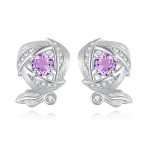 Amethyst Earrings
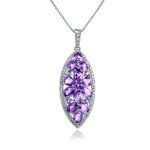 Amethyst Necklaces
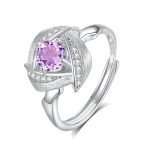 Amethyst Rings
 amethyst crystal healing
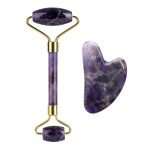 Amethyst Beauty & Wellness
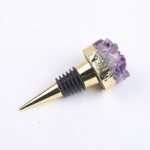 Crystal Home Decor
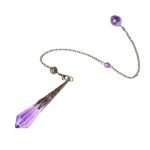 Spiritual & Divination Tools