Amethyst Gifts for Him: Guide to Meaningful Choices
Gift Guide
Amethyst Gifts for Him: A Practical Guide to Meaningful Stones
Choosing a thoughtful amethyst gift isn’t about gender; it’s about matching a real, documented-origin stone to his space, interests, and personality. Here’s how to get it right.
When you start searching for amethyst gifts for him, it’s easy to get caught in a loop of generic men’s jewelry or crystals that feel a bit too mystical for your recipient. The better question isn’t “what’s a man’s crystal?” but “what does this particular person appreciate?” Is it a physical object with weight and history? A striking piece of natural color for his desk? A personal token with a clear story? The success of the gift hinges on answering that first, not on the crystal’s gender association.
Amethyst’s real appeal lies in its tangible qualities: a purple that ranges from soft lavender to deep imperial, a substantial weight in the hand, and a geologic origin story that’s specific and verifiable. This guide focuses on those practical criteria to help you find a gift that resonates, not just decorates. For a broader look at choosing crystals, our amethyst crystals suitability guide offers a foundational framework.
Gift Categories: From Desk Accents to Personal Tokens
Think of the gift not as a “crystal for a man” but as a functional object, a collector’s piece, or a personal item. The categories below map to different uses and sensibilities. Our forms and shapes guide is a good companion for this section.
I once spent twenty minutes at a mineral show listening to a dealer explain the difference between a Brazilian geode and a Uruguayan one. The Brazilian piece was large, with a lavender color that filled the whole cave. The Uruguayan cluster, smaller and denser, had crystals so deep purple they were nearly black at the base. “You’re paying for color saturation,” he said, tapping the latter. “Some people want the show. Others want the depth.” That conversation is a useful lens for understanding geological origins and choosing between categories.
Matching the Gift to His Personality & Space
Once you have a category in mind, align it with who he is and where the piece will live. This moves you from general options to a specific, thoughtful choice.
For the Minimalist
A single, clean object. Think a polished sphere on a simple stand, a raw point with a clean break, or a heavy bookend. The focus is on form and color. Choose a piece with documented origin—a sphere from a known Brazilian deposit, for instance—and let its natural color variation be the only ornamentation.
For the Collector or Geology Buff
This person appreciates the “how” and “where.” A geode slice that shows the crystalline interior, a raw cluster with visible matrix rock (the basalt it grew in), or a deep-colored Uruguayan cathedral piece will be valued for its specificity. The story is the gift. Be ready to share details about its origin, which you can learn more about in our quality and value guide.
For the Professional with a Home Office
A desk-sized object that serves as a visual anchor. A small cathedral geode, a polished obelisk, or a heavy sphere fits the bill. Size and weight matter here—it should have presence without being clutter. A piece with strong, natural color zoning can be a subtle conversation starter during video calls.
For the February Birthstone Gift
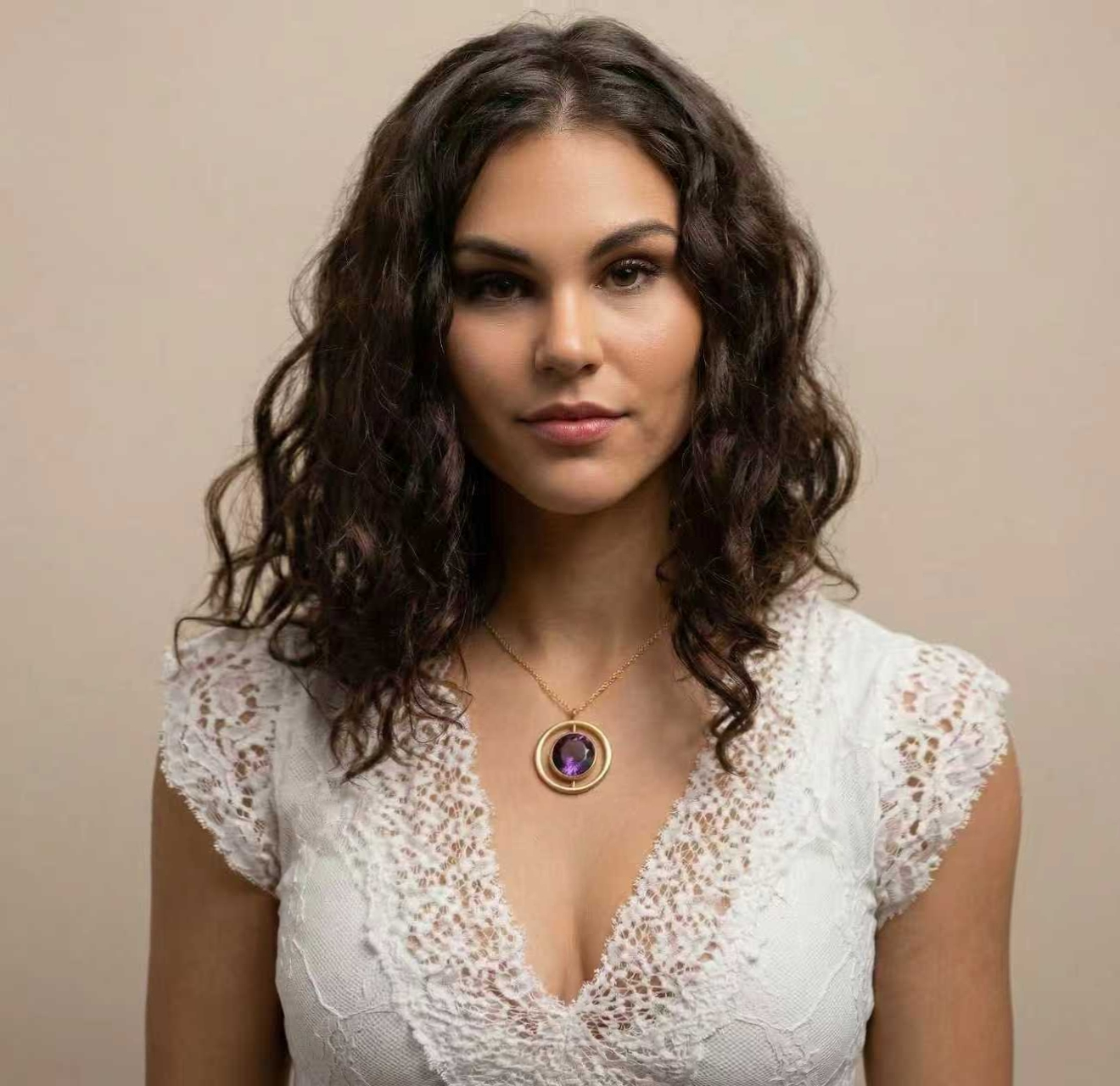
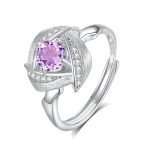
Amethyst is the official birthstone for February, making it a meaningful personal gift. For this, simplicity works well. An adjustable ring in 925 sterling silver with a 100% natural amethyst cabochon, or a small raw stone presented with a note explaining the birthstone connection, turns a nice object into a commemorative one.
Someone once asked me, “You really think stones are useful?” I told him, “I think real things have value.” I don’t know if amethyst has the mystical power some claim. But I know that having a specific, beautiful object from a known place on my desk changes how I pause during the day. That pause is the utility. The gift can be framed the same way: not as a magic talisman, but as a real, chosen object for his space.
What to Look For (And What to Skip)
Building trust in the gift means looking past marketing fluff and focusing on verifiable details. Here’s a quick checklist.
- Look for accurate photography. The product photo should be of the exact item you’ll receive (WYSIWYG). This is non-negotiable for avoiding disappointment, especially with unique specimens.
- Prioritize documented origin for raw pieces. Sellers should be able to tell you if a geode is from Brazil or Uruguay. This isn’t just a marketing term—it affects size, color character, and price.
- Check dimensions and weight. “Desk-sized” is vague. “5 inches tall, 3 inches wide, 1.2 lbs” is useful. It helps you visualize the object in his space.
- Embrace natural variation. Color zoning—where purple is darker in some areas and lighter in others—is a sign of a natural stone, not a flaw. It adds to the object’s uniqueness.
- Frame traditional meanings carefully. Amethyst is often traditionally associated with clarity or calm. It’s fine to mention this as a traditional belief or a personal ritual context, but it’s not a medical guarantee. The gift’s value is in its reality as a beautiful, specific object.
Skip sellers who rely on vague, unsupported grading terms or push “energy” claims as scientific fact. The best gift comes from a seller who answers specific questions about weight, origin, and condition—and who shows you the exact stone you’re buying. This aligns with a straightforward approach to understanding amethyst’s properties beyond hype.
Presenting the Gift: A Note on Meaning
How you frame the gift matters, especially if your recipient is skeptical of crystal culture. You don’t need to sell him on “energy.” Focus on the tangible and the personal.
- Lead with the fact. A simple note that says, “This is a natural amethyst geode from Uruguay. Its color is created by iron reacting to natural radiation over millions of years,” grounds the gift in geology and time, not mystery.
- Connect it to a shared interest. “I know you like interesting objects for your shelf,” or “This reminded me of our conversation about geology,” makes it a personal extension of something you already share.
- Emphasize the choosing. The gesture is in selecting something real, specific, and durable. That act of thoughtful curation is the core of the gift. You chose a heavy, purple piece of the earth’s history for him. That’s enough.
Frequently Asked Questions
Ready to find the right piece?
Browse our collection of documented-origin amethyst, where every geode, cluster, and jewelry item is photographed individually. You’ll see exactly what you’re getting.
 Crystal Cluster
 Crystal Tower
 amethyst crystal ball
 Amethyst Caves for Sale
 Amethyst Bracelets
 Amethyst Earrings
 Amethyst Necklaces
 Amethyst Rings
 amethyst crystal healing
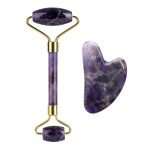 Amethyst Beauty & Wellness
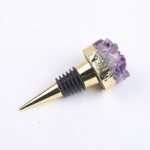 Crystal Home Decor
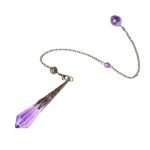 Spiritual & Divination Tools