Amethyst Cave vs Geode: What’s the Difference (And Which to Buy)?

Most people who search for “amethyst cave” and “amethyst geode” are looking for the same thing. The terminology is genuinely confusing — and most sellers don’t help by using both terms interchangeably without explanation.
Here’s what the terms actually mean, where the distinction matters, and how to make a decision you won’t second-guess once it’s sitting on your shelf.
First, Let’s Clear Up the Terminology
In everyday retail use, “amethyst cave” and “amethyst geode” refer to the same basic formation: a hollow cavity lined with inward-facing amethyst crystals, cut open to reveal the interior.
The word “cave” gained traction in feng shui and wellness communities — it describes the experience of looking into the piece, the sense of depth and enclosure created by crystals growing inward from the walls. “Geode” is the geological term for the same structure.
Where the distinction does matter is in shape:
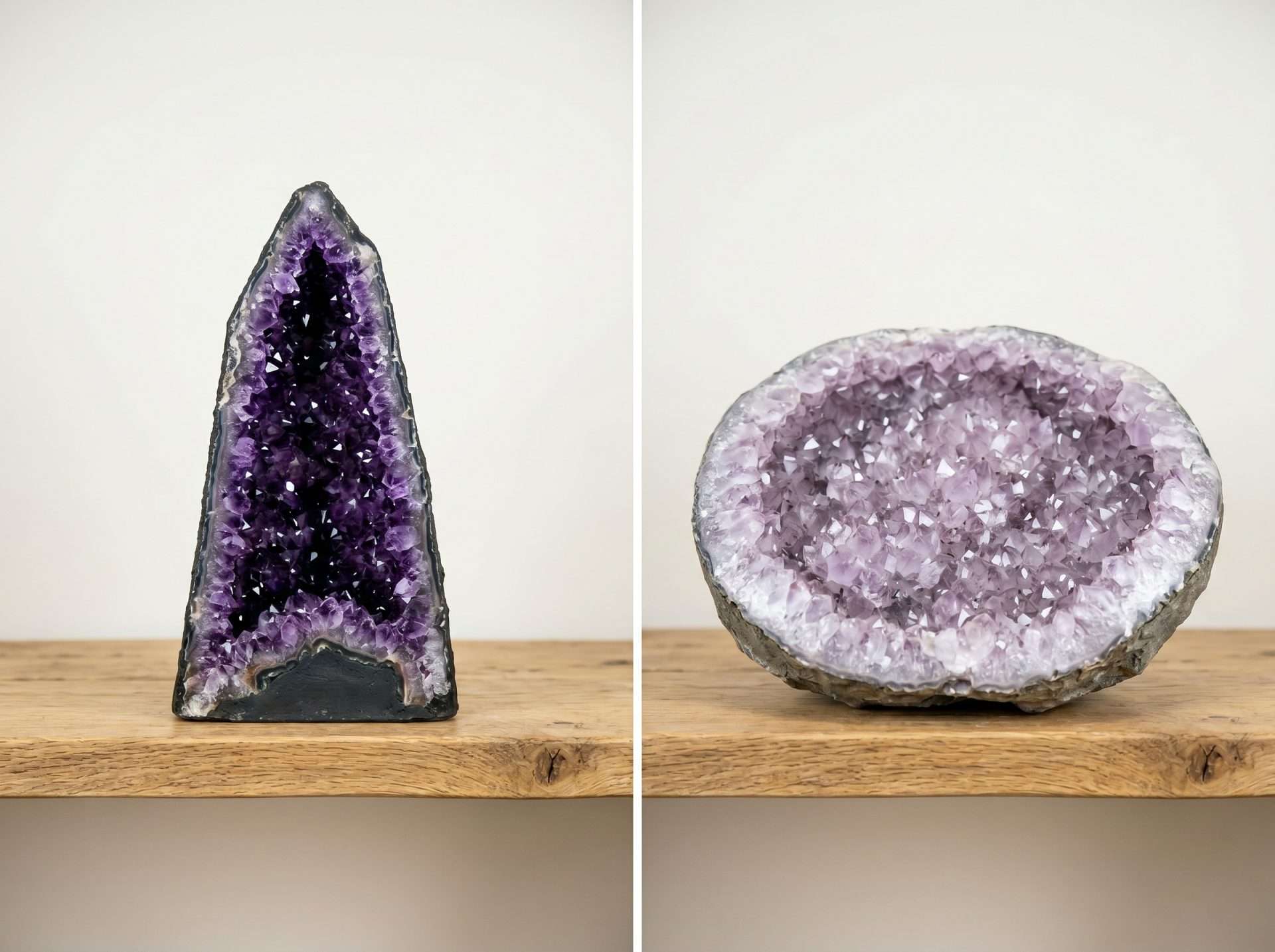
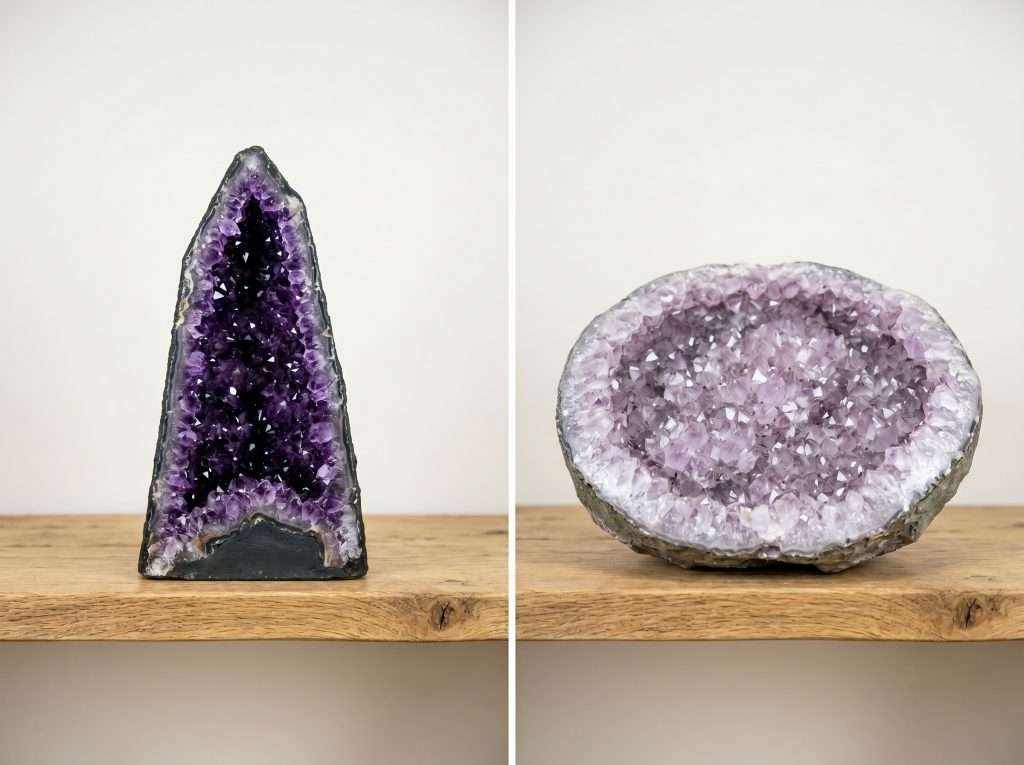
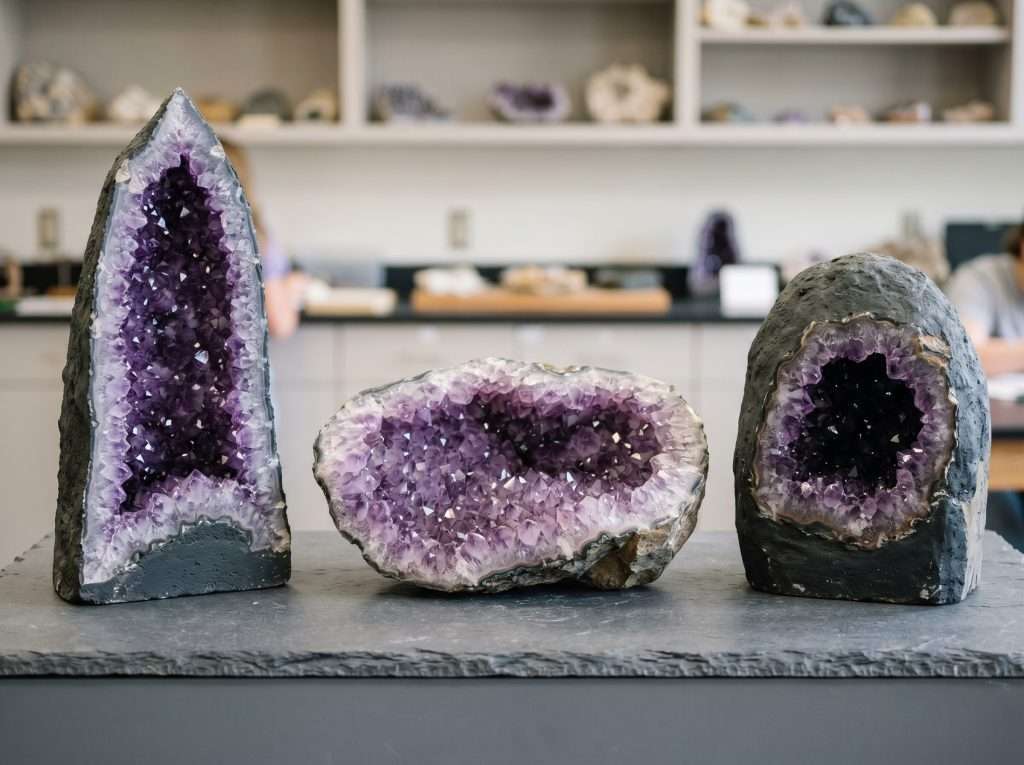
- Cathedral geode (sometimes called a cathedral cave): Tall, narrow, with a pointed or arched top. The shape resembles a Gothic cathedral window. These are the dramatic floor-standing pieces you’ve seen in crystal shops — the ones that stop you mid-step.
- Half geode / geode cave: Lower and wider, with a more open interior. Less vertical drama, more of the crystal face visible from a seated or eye-level view. Better for shelves, desks, and spaces where the piece will be seen from above or at an angle rather than straight-on.
- Freestanding cave: A fully or mostly enclosed formation with a single opening, designed to self-stand without a cut base. Less common, tends toward smaller sizes, often used in feng shui placement.
If a listing says “amethyst cave” without specifying shape, it’s worth asking — or finding a seller who photographs the actual piece you’ll receive.
How an Amethyst Cave (Geode) Actually Forms
Amethyst caves start as gas bubbles trapped in ancient lava flows — some of the basalt rock in southern Brazil and Uruguay formed during the Triassic and Jurassic periods, over 200 million years ago. As those flows cooled, silica-rich water moved into the hollow cavities. Over millions of years, quartz crystals grew inward from the walls. The purple color came from iron impurities (Fe³⁺) activated by natural radiation.
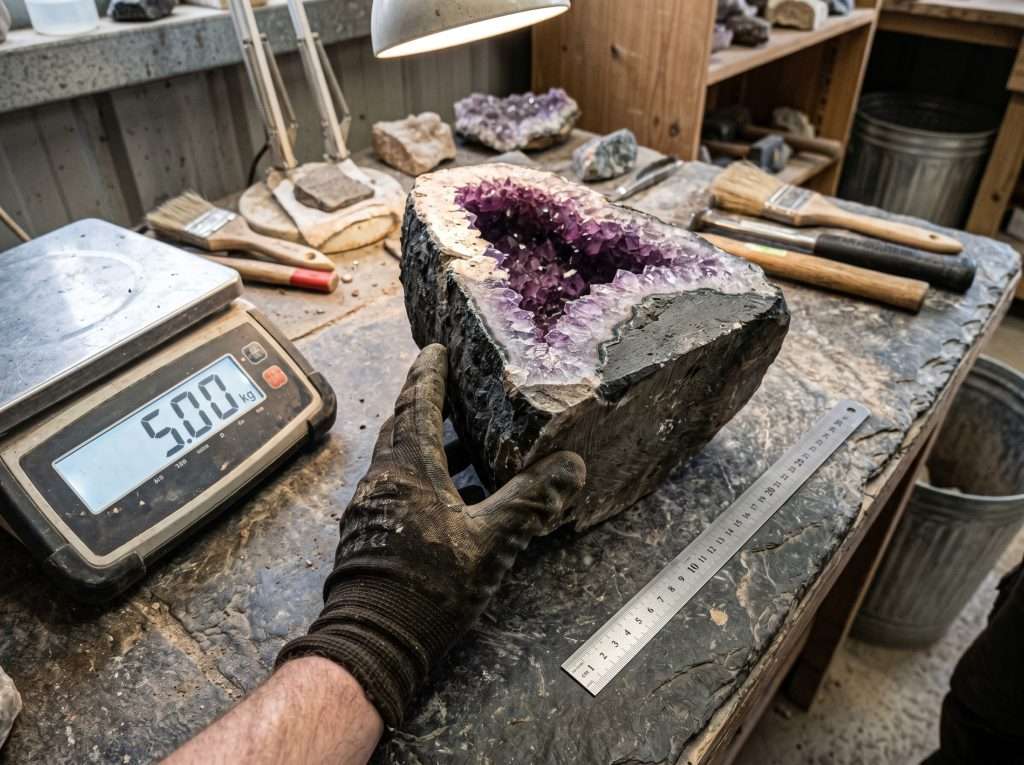
What you’re looking at when you see an open cave is a cross-section of that process: the dark basalt exterior is the original lava rock, the white agate rim is an intermediate mineral layer, and the purple crystals are the final stage of growth. Each layer took thousands to millions of years to form.
The crystal points you see growing inward are still attached to the cavity wall. Nothing has been glued, added, or assembled. The interior is exactly as it was when the rock was first opened.
For a detailed look at where these formations come from and how origin affects quality, see our full guide to amethyst mining origins.
The Main Amethyst Cave Shapes — and What Each One Means for Your Space
Understanding the shape options makes the buying decision significantly less abstract. For a broader overview of non-geode formats, you can also explore other amethyst crystal forms and shapes.
Cathedral / Tall cave Height typically ranges from 30cm to over a meter for large specimens. The narrow, pointed profile means it works best with vertical space: a corner, a fireplace mantle, a floor position against a wall. The crystals at the interior peak tend to show the deepest color, because the crystal growth at the terminations concentrates the Fe³⁺ saturation.
I remember walking the floor at a major mineral show when a specific cathedral cave stopped me in my tracks. It stood about waist-high, and the interior wall was such a deep purple it almost read as black from a distance. But as I got closer, I saw that the termination point of every single crystal was gem-clear. Under the booth’s lighting, it looked as if the piece was glowing from the inside out. I stood in front of that single formation for a solid fifteen minutes just studying the crystal structure. That is the kind of vertical drama a high-quality cathedral shape brings to a room.
Half geode / Open cave Wider and lower — the interior is more fully visible from a normal viewing angle. If the piece will sit on a bookshelf at eye level, or on a coffee table where people look down into it, the open cave format shows more of the crystal face. Brazilian specimens in this format tend to offer more size for the price; Uruguayan half-geodes in deep saturation are harder to find and priced accordingly.
Freestanding / enclosed cave Less common in US retail. The opening is smaller relative to the overall size of the piece, creating more of the “cave” experience — you’re looking into something, not just at it. Typically heavier per inch of visible crystal, because more of the rock is intact exterior. Worth considering if placement stability matters (no cut base to manage) or if you want something that reads as sculpture rather than specimen.
Brazil vs Uruguay: Where Your Cave Comes From Matters
The majority of amethyst caves in the US market come from two regions: Rio Grande do Sul in southern Brazil, and the western amethyst belt of Uruguay. Both produce genuine, natural amethyst geodes. The differences are real and worth understanding before you spend $200 or more.
Brazilian caves tend toward larger sizes and a wider color range — from pale lavender to mid-purple. The scale of Brazilian production means more options at accessible price points, and the best Brazilian specimens can be genuinely impressive. The challenge is variability: “Brazilian amethyst” covers a lot of ground, and without seeing the actual piece, you’re taking a risk on color depth.
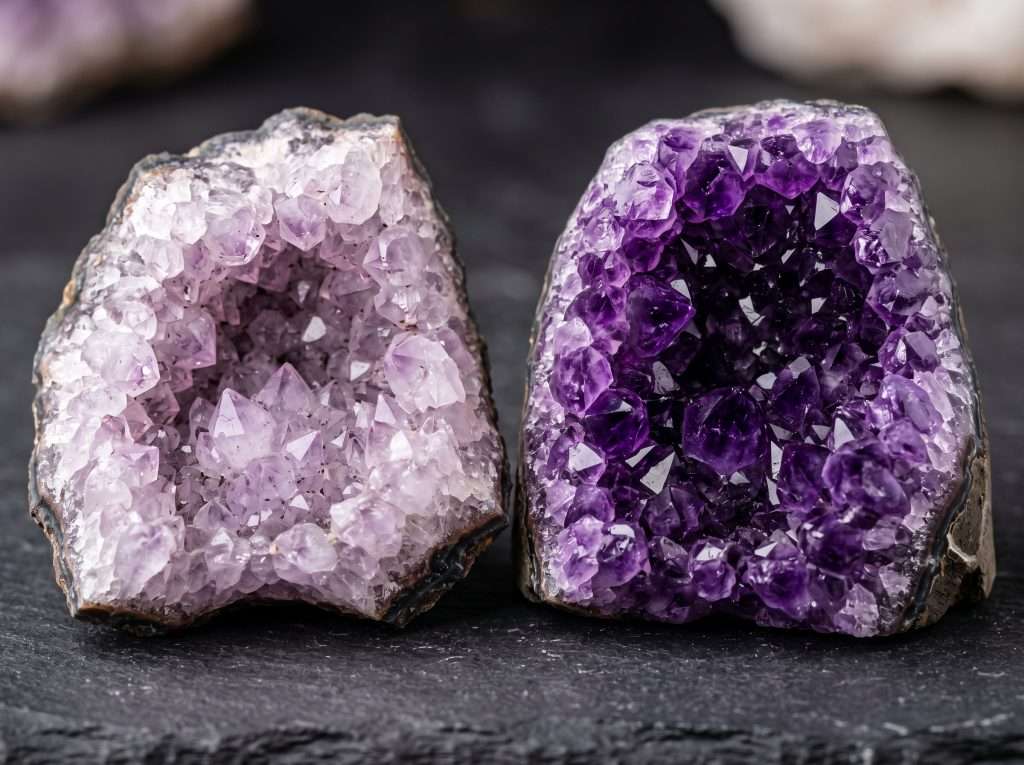
Uruguayan caves are typically denser in crystal structure and deeper in color saturation. The dark, almost blue-tinged purple that collectors call “deep Siberian” appears most consistently in Uruguayan material. Supply is smaller, prices are higher — typically 30 to 80 percent above comparable Brazilian pieces — and the quality ceiling is higher.
During a recent sorting of a new shipment, one specific Uruguayan piece—which we cataloged as NA-047—perfectly illustrated this difference. The crystals on the interior wall were incredibly uniform, and the color was a specific type of deep purple I only see occasionally. It wasn’t just dark or opaque; it had an immense depth, where looking into the crystals felt like looking into deep water. When I negotiate with suppliers, I have a strict baseline: the color depth can be no lighter than medium purple, even at the crystal bases, which I verify using a 10x loupe. If you place a standard Brazilian cave next to a premium Uruguayan one under the exact same lighting, the difference is immediate. The Uruguayan piece holds its dense, velvety color, while the edges of the Brazilian piece will often look washed out or gray by comparison.
When I’m sourcing, the first filter is always color depth under consistent lighting — not the listing photo, but the actual specimen under the same lamp. A mid-purple Brazilian cave at the right price is a better purchase than a pale Uruguayan piece at a premium. Origin is a starting point, not a guarantee.
What to Actually Look at Before You Buy
Most buyers focus on size and price. Here’s what experienced buyers look at instead.
- Color depth at the center, not the edges. The rim and outer edges of any cave will be lighter — that’s normal. What matters is the saturation at the crystal tips toward the interior center. If the center looks washed out in the listing photo, it will look more so in person. To better assess this, read about what color depth actually indicates.
- Crystal density and uniformity. Sparse crystals with large gaps between points are a sign of a lower-quality cavity. You want the interior wall covered — not necessarily in tiny crystals, but without large bare patches of white matrix showing through.
- Base stability. Caves are heavy. A piece without a level cut base or an attached stand will need to be propped, and anything over 3–4kg that isn’t stable is a liability on a shelf. Ask the seller specifically how the piece stands, or look for clear photos of the base.
- Actual weight and dimensions. A photo cannot tell you how large something is. A 2kg cave and an 8kg cave can look identical in a listing image if the photographer didn’t include a scale reference. Sellers who don’t list weight and dimensions in centimeters are making a choice — and it’s not in your favor.
At Zerevia, every cave is individually photographed, weighed to the gram, and measured before listing. The piece in the photo is the piece that ships.
Amethyst Cave Meaning — What People Say It’s For
This is the part where most crystal guides either go all-in on metaphysical claims or skip the subject entirely. We’ll do neither.
In traditional feng shui practice — particularly in Chinese and Southeast Asian communities — the amethyst cave is associated with the prosperity star (Flying Star #8) and is commonly placed in the wealth sector of a home or office, or positioned behind a seated work position as a symbolic “mountain of support.” These are longstanding traditional beliefs with real cultural weight, even if the mechanism isn’t something a geologist could measure.
Many people who place an amethyst cave near their sleep space report that the ritual of having something intentional and visually grounding in the room affects how they settle at night. We can’t tell you that’s the amethyst doing something measurable. What we can tell you is that the ritual is real, and the stone is genuinely from the ground.
For centuries, people have also used larger geode cavities to store and “cleanse” other crystals — placing smaller pieces inside the cave when not in use. Whether or not you believe in energetic cleansing, keeping smaller crystals inside a larger geode is a reasonable way to store them without scatter.
If you want the traditional associations, they’re there. If you want a genuine piece of geological history that looks like nothing else on a shelf, that’s also there. Both are true at the same time.
So Which Should You Buy?
A quick decision framework:
- If you want a statement piece for a living room, entryway, or corner with vertical space → Cathedral / tall cave, Brazilian or Uruguayan depending on budget. Aim for at least 4–6kg for visual presence.
- If you want something for a shelf, desk, or bedroom → Half geode / open cave format, 1–3kg range. Pay more attention to color depth than size.
- If color depth matters most to you → Uruguayan, and be prepared to pay the premium. The difference is visible.
- If budget is the primary constraint → A well-selected mid-purple Brazilian cave beats a pale Uruguayan piece at any price. Don’t let origin override what your eyes tell you.
- If you’re buying as a gift → Err toward size over depth. A larger piece reads as more generous even if the color is lighter, and most recipients won’t have a reference point for Uruguayan vs Brazilian saturation.
Ready to see what’s currently in stock? Our amethyst cave collection is individually photographed — what you see is what ships.
You might also find it useful to read how to choose an amethyst geode for a deeper look at size, weight, and what to expect when your piece arrives.
Frequently Asked Questions About Amethyst Caves
What is the difference between an amethyst cave and a geode?
In most retail contexts, amethyst cave and amethyst geode refer to the same formation — a hollow cavity lined with inward-facing amethyst crystals. “Cave” is a descriptive term common in feng shui and wellness communities; “geode” is the geological term. The distinction matters more in shape: cathedral, half-geode, and freestanding cave formats each suit different spaces.
Is a Brazilian or Uruguayan amethyst cave better?
Neither is categorically better. Brazilian caves offer larger sizes and more accessible prices, making them ideal for statement pieces. Uruguayan caves tend toward deeper color saturation at a 30–80% premium. The right choice depends on your priorities: size and budget favor Brazil; maximum color depth favors Uruguay.
Where is the best place to put an amethyst cave in a house?
Where is the best place to put an amethyst cave in a house? For traditional feng shui, the best placement is often the wealth sector (usually the far-left corner from the main entrance) or behind a desk as a “mountain of support.” Visually, tall cathedral caves work best in corners or on the floor, while half-geodes are ideal for eye-level display on bookshelves or coffee tables.
How heavy is an average amethyst cave?
Weight varies dramatically by shape and wall thickness. A small shelf-sized open cave might weigh 1 to 3 kilograms (2.2 to 6.6 lbs), while a floor-standing cathedral cave can easily weigh 15 to 30 kilograms (33 to 66 lbs) or more. Always check the specific weight in the listing before buying to ensure your furniture can support it.
About this article Written by Serena Delaney, Founder of Zerevia · GIA Gemology Graduate. Content is based on hands-on specimen assessment, GIA gemology coursework, direct supplier sourcing, and questions collected from our customers. Where conclusions are based on personal observation rather than third-party testing, this is noted in the text. Last reviewed: April 2026
 Crystal Cluster
 Crystal Tower
 amethyst crystal ball
 Amethyst Caves for Sale
 Amethyst Bracelets
 Amethyst Earrings
 Amethyst Necklaces
 Amethyst Rings
 amethyst crystal healing
 Amethyst Beauty & Wellness
 Crystal Home Decor
 Spiritual & Divination Tools