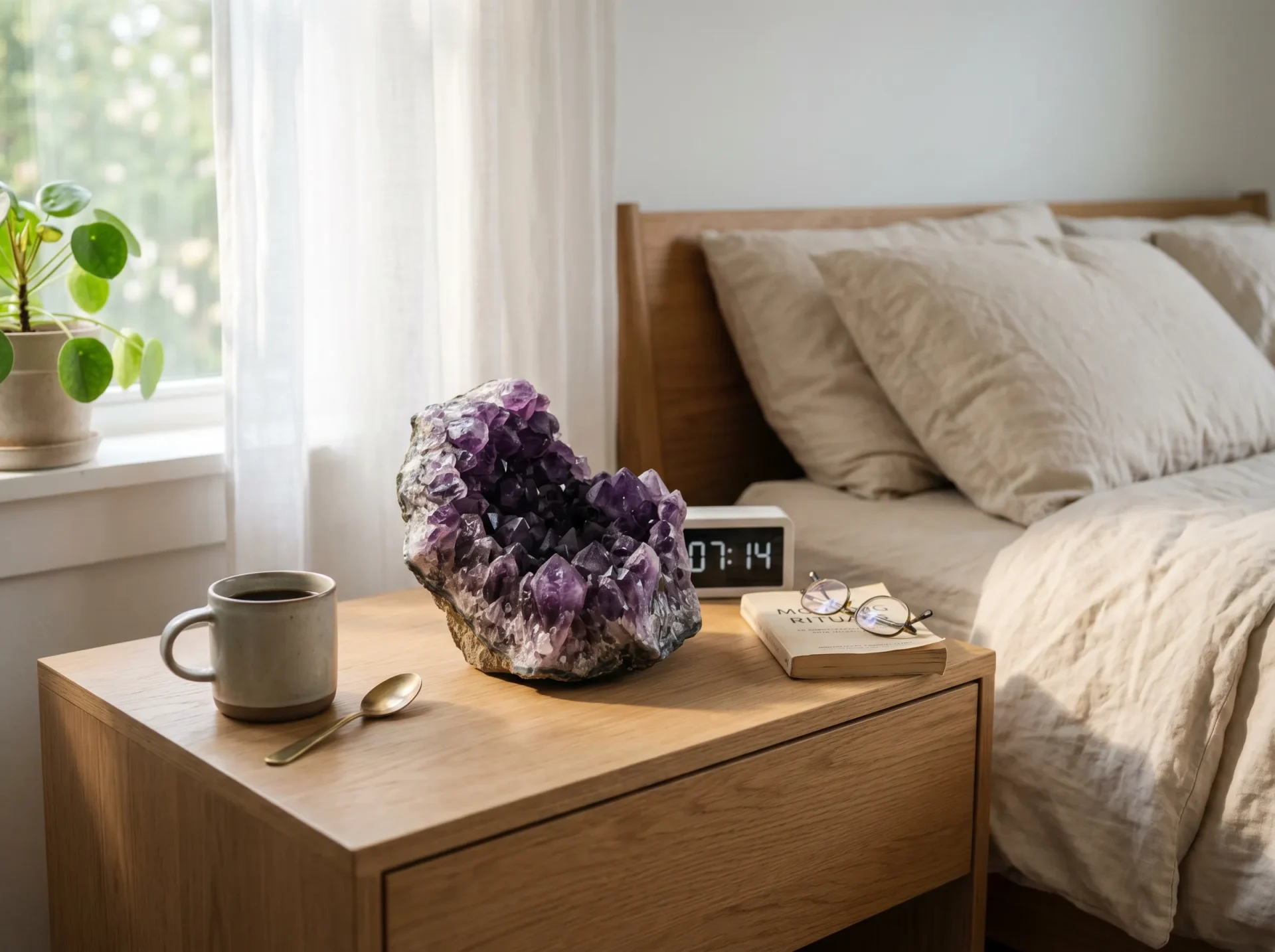
Amethyst Birthstone: The Complete February Guide to Crystal Meaning, Zodiac Power & How to Use It
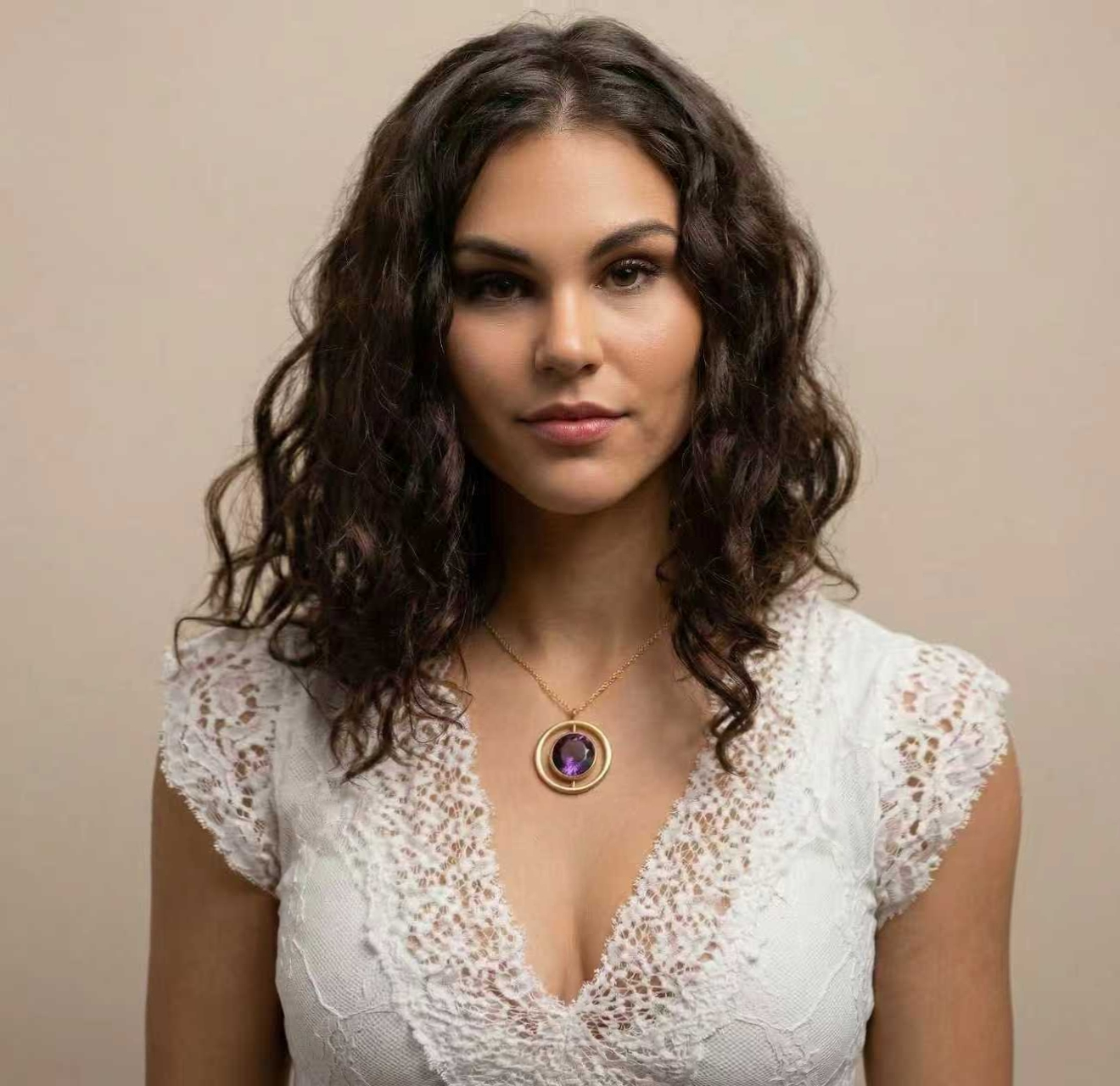
“After completing GIA gemology coursework, I learned to identify amethyst by its Fe³⁺ trace elements and Mohs hardness of 7 — but when a February-born client holds one of our Uruguayan raw clusters for the very first time, something shifts in them that no spectrometer can explain. They get quiet. They get still. I’ve seen it more times than I can count. The amethyst birthstone isn’t just a tradition handed down from ancient calendars. It’s a direct geological match to the energy that February-born souls are already carrying inside them.”
If you were born in February—or if someone you love was—then you already have a meaningful ally waiting for you in the mineral kingdom.
The amethyst birthstone is one of the most beloved gems in the world, and for good reason. It is one of the few stones where ancient tradition, modern crystal healing, and hard gemological science all point in exactly the same direction: this purple quartz is genuinely extraordinary. Whether you are searching for the spiritual meaning behind your birth month, trying to understand why you feel so magnetically pulled toward amethyst, or simply looking for the perfect February birthday gift, this guide is your complete answer.
We’re going to cover everything—the history, the geology, the amethyst meaning, the amethyst zodiac sign connection, how to wear it, and most importantly, how to use my gemological training to choose a piece that is authentically natural rather than a heat-treated imitation.
1. What Is the February Birthstone? A Quick Answer First
The official February birthstone is amethyst—a deep violet variety of quartz that has held this distinction for centuries. It is recognized universally by the American Gem Society, the Gemological Institute of America (GIA), and virtually every major birthstone calendar worldwide.
There is no dispute here, no alternative stone fighting for February’s crown. Amethyst owns this month completely. Its color ranges from a delicate pale lilac all the way to a commanding, saturated “Siberian” purple so deep it can appear nearly black in shadow.
2. The History Behind the Amethyst Birthstone Tradition
2.1 From Ancient Greece to the Modern Calendar
The tradition of assigning specific gemstones to birth months has roots stretching back to at least the first century. However, long before birthstones became a jewelry category, the amethyst crystal carried enormous cultural weight.
According to the Roman historian Pliny the Elder in his monumental work Natural History, amethyst was highly prized for its unique coloration and supposed powers. The name comes from the ancient Greek amethystos—meaning “not drunk” or “not intoxicated.” Greek and Roman nobles wore amethyst amulets with genuine conviction that the stone would keep their minds clear.
2.2 Why February Specifically?
February sits at a unique energetic crossroads. In the Northern Hemisphere, it is the final full month of winter—the time of deepest introspection. Many ancient cultures associated this threshold month with purification rituals (the word “February” derives from the Latin februum, meaning purification). Amethyst, a stone classically associated with clearing the mind and elevating consciousness, is a perfect energetic match for this in-between season.
3. Amethyst Meaning: What Does This Stone Actually Represent?
The amethyst meaning consistently circles back to three core themes:
3.1 The Stone of Sobriety and Clarity
Today, the ancient idea of “sobriety” refers to mental and emotional clarity. Amethyst is considered the ultimate antidote to overthinking and digital overstimulation.
A real-world example: We’ve heard versions of this from more than a few customers: place the cluster on the nightstand, and the brain quiets down by a degree. We can’t promise it’ll work for you — but we can tell you the pattern shows up often enough to be worth trying.
3.2 The Stone of Spiritual Protection
Across global traditions, amethyst is consistently regarded as a protective stone. It is believed to form an energetic field around its owner that filters out psychic interference and environmental stress. Many of our customers place our large amethyst geodes near their front doors specifically for this protective function.
3.3 The Stone of Inner Wisdom
Amethyst is traditionally associated with the Third Eye (Ajna) and Crown (Sahasrara) chakras. For highly intuitive February-born individuals, working with amethyst as your February birthstone acts less like a new addition and more like returning home.
4. Amethyst and the Zodiac: Which Signs Does It Serve Best?
4.1 The Primary Amethyst Zodiac Sign Connection: Aquarius and Pisces
February covers two zodiac signs, and both have a deep traditional relationship with amethyst’s energy.
- Aquarius (Jan 20 – Feb 18): Ruled by Uranus, Aquarians are intellectually brilliant but often buzz with so many ideas that grounding becomes difficult. Amethyst is a perfect counterpart: it captures and clarifies all that brilliant mental energy, translating it from chaotic thought into focused intention.
- Pisces (Feb 19 – Mar 20): Ruled by Neptune, Pisces are deeply empathic and psychically open. Amethyst is traditionally believed to provide a protective energetic boundary that allows Pisces to thrive without absorbing every emotion in the room.
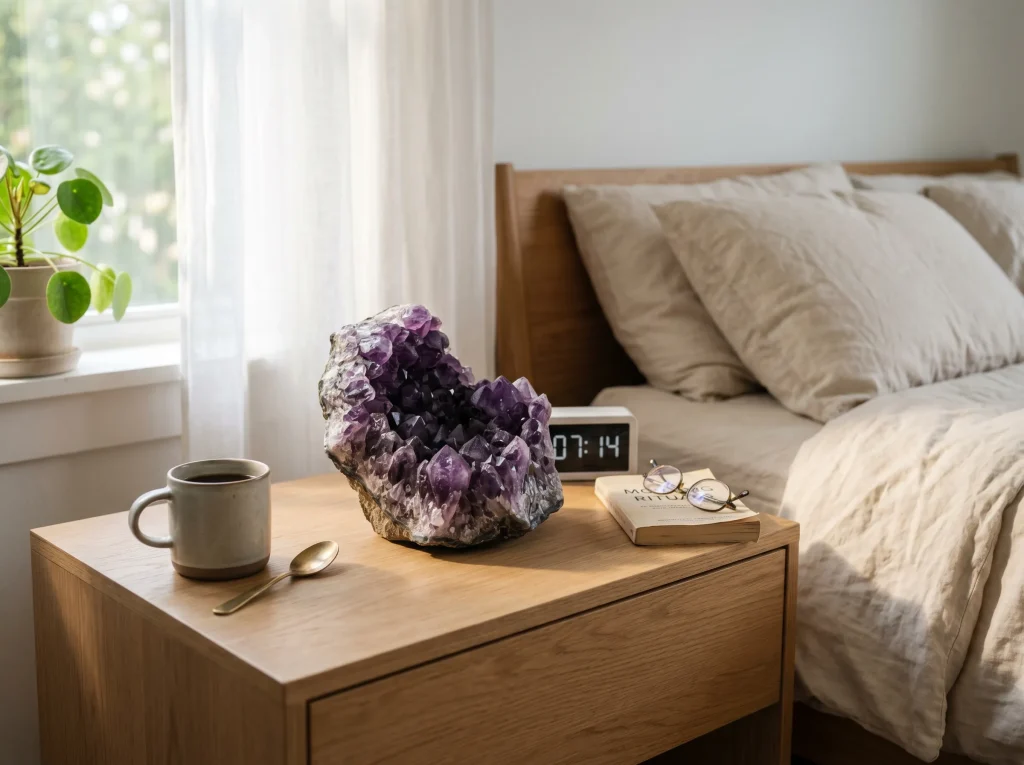
5. The Gemology Behind the Color: Why Is Amethyst Purple? (An Expert’s View)
This is where the science becomes genuinely fascinating. In my time studying these stones, I look for very specific markers that separate natural amethyst from fakes.
The violet color of amethyst is the result of trace amounts of iron incorporated into the silicon dioxide (SiO₂) crystal lattice. Specifically, it requires between 0.2 and 0.5 parts per million of iron (Fe³⁺) reacting to natural gamma irradiation over millions of years within volcanic rock.
Not all origins are equal:
- Uruguayan Amethyst: Known for pristine, deep saturation with highly concentrated purple tips. (This is primarily what we stock).
- Brazilian Amethyst: Tends to be lighter in color, forming in massive geodes, excellent for daily jewelry.
- Zambian Amethyst: Often features fascinating “color banding” (chevron patterns) alongside white quartz.
6. How to Choose Your Amethyst Birthstone: A Buyer’s Guide from the Warehouse
Not all amethyst on the market is authentic. The most heartbreaking mistake I see customers make is spending $30 on a “perfectly purple” amethyst on Amazon, only to watch it fade to a dull grey within three months because it was artificially irradiated.
A story from our warehouse: Last Tuesday, we were unboxing a new shipment directly from our established wholesale partners in Artigas, Uruguay. I pulled out a 2.3kg geode, and our shipping assistant immediately pointed out a rust-colored oxidation line near the basalt matrix and suggested we discount it as “flawed.” I stopped him immediately. After completing GIA gemology coursework, I know that specific iron-oxide inclusion is the ultimate proof of geological authenticity—it’s the result of millions of years of chemical reaction between the host rock and the quartz. We highlighted that “flaw” on our product page, and it was the first piece to sell out that day!
When buying, look for:
- Natural Matrix: The rock it grew on should still be attached.
- Color Zoning: Authentic stones have a natural gradient of purple intensity. If it’s perfectly uniform, it’s likely dyed glass.
- Sourcing: Always ask where it came from. We proudly trace our stones directly to Artigas, Uruguay and Rio Grande do Sul, Brazil.
7. How to Use Your Amethyst Birthstone: Daily Rituals That Actually Work
7.1 The Desk Placement
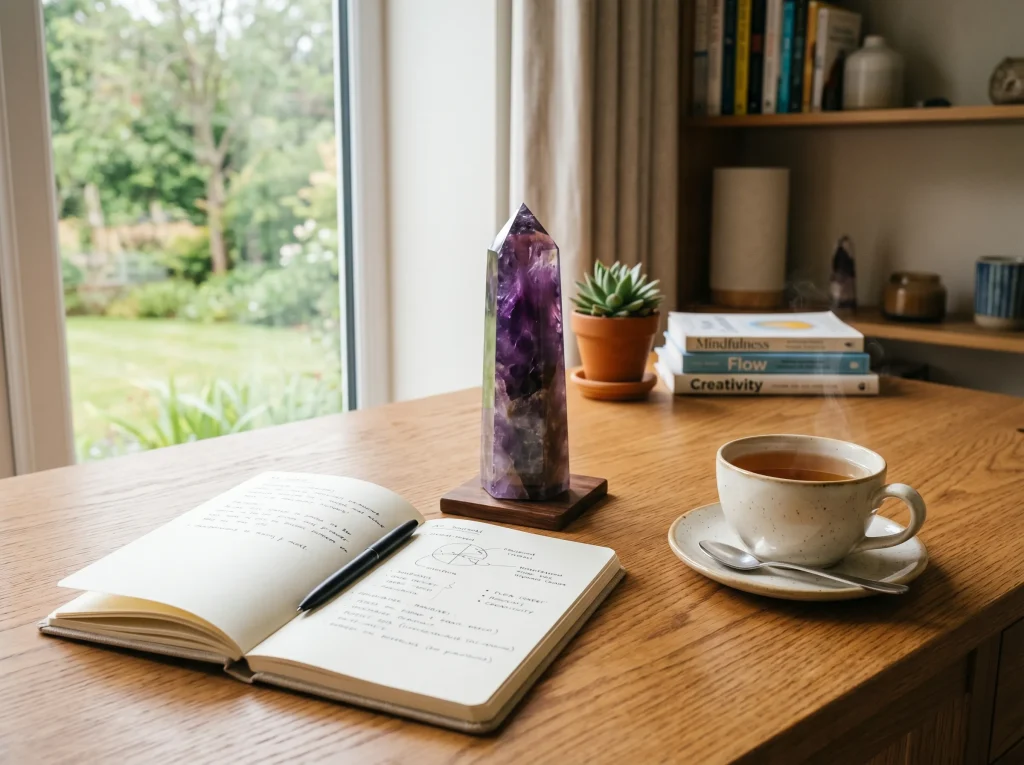
An amethyst tower on your work desk gives your eyes a natural resting point between screens — something to look at that isn’t emitting light back at you.
7.2 The Moonlight Cleanse (A Crucial Warning)
Because amethyst absorbs energy, it needs cleansing. However, never leave your amethyst in direct sunlight. Last summer, our team ran an in-house test: we left one natural amethyst in direct window sunlight and an identical piece in a shaded corner. After 30 days, the sun-exposed piece had lost about 15% of its color saturation. The UV light literally bleaches the iron-based color. Always cleanse your amethyst under moonlight.
8. 2026 Amethyst Birthstone Gifts: Ideas for February Birthdays
For 2026, we are seeing a massive trend shift: people are moving away from generic, mass-produced jewelry and heavily favoring raw, untouched statement pieces for gifting. You are giving them a one-of-a-kind piece of the Earth.
Top gift ideas from our collection:
- A raw Uruguayan amethyst cluster for their desk (completely one-of-a-kind).
- An amethyst birthstone bracelet in sterling silver for daily aura protection.
- A polished amethyst tower for their bedroom.
All of our pieces ship with documented origin — sourced from established wholesale partners in Ametista do Sul, Brazil, and Artigas, Uruguay.
Final Thoughts: Your Birthstone Is Waiting
The amethyst birthstone is not just a beautiful purple gem assigned to February by tradition. It is a 200-million-year-old piece of the earth that carries within its crystal lattice everything February represents—purification, clarity, and protection.
Explore our full collection of documented-origin natural amethyst crystals at Zerevia. Every piece is directly sourced, naturally authentic, and waiting to find its person.
 Crystal Cluster
 Crystal Tower
 amethyst crystal ball
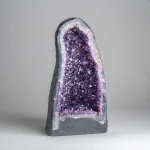 Amethyst Caves for Sale
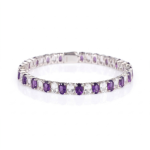 Amethyst Bracelets
 Amethyst Earrings
 Amethyst Necklaces
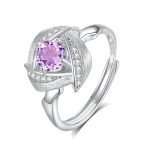 Amethyst Rings
 amethyst crystal healing
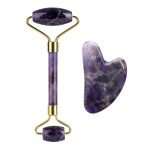 Amethyst Beauty & Wellness
 Crystal Home Decor
 Spiritual & Divination Tools