Amethyst Bracelet Guide: Styles, Meanings & How to Choose
When shopping for an amethyst bracelet, most people rely entirely on visual appeal. They see a purple stone they like and click buy. But a bracelet sits on one of the most active parts of your body. It hits the desk when you type, gets exposed to water when you wash your hands, and catches on sleeves.
After completing GIA gemology coursework and evaluating how different jewelry constructions perform in real life, I’ve found that picking the right piece requires balancing aesthetic preferences with practical reality.
This guide breaks down exactly what you should be looking for—and what you need to know before you make a decision.
Why Most People Choose the Wrong Amethyst Bracelet
There is a significant gap between how a piece looks in a photograph and how it behaves on a moving wrist. This is why many people end up with an amethyst bracelet they rarely wear. They might buy a rigid metal cuff when they type on a keyboard all day, or a delicate chain when their daily routine requires heavy hand use.
The primary functional difference usually comes down to the structural material: elastic cord versus a metal chain. Buyers frequently ask whether elastic bracelets hold up with daily wear — the honest answer is: it depends entirely on the cord quality and how often it is exposed to water and soaps. A solid silver chain, on the other hand, offers different security but requires a much more precise fit.
Amethyst Bracelet Types — A Practical Breakdown
Amethyst bracelets come in several distinct forms, each serving a different lifestyle.
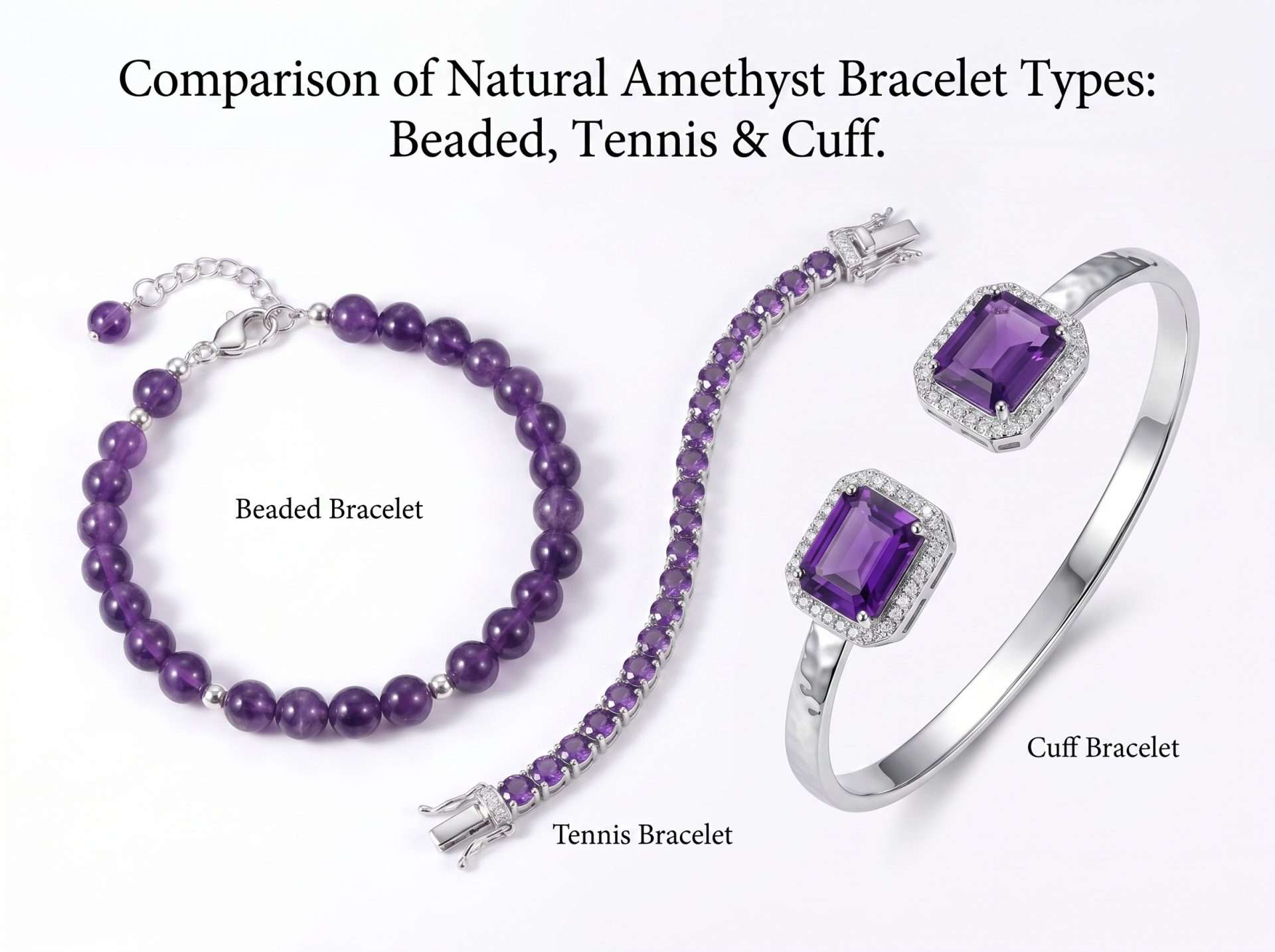
- The Beaded Bracelet (Elastic): Smooth, polished amethyst beads strung on a flexible cord. These are highly practical. They slip on effortlessly, lack metal clasps that can dig into the wrist, and are perfect for stacking.
- The Tennis Bracelet: A continuous line of faceted stones set in individual metal prongs or bezels. An amethyst tennis bracelet provides a more formal, structured look. It carries more weight and requires a traditional clasp, making it better suited for occasions where it won’t catch on heavy fabrics.
- The Cuff or Bangle: A rigid metal band, often featuring amethyst stones at the ends or flush-set into the metal. Cuffs hold their shape, but they offer zero flexibility. You must ensure the sizing is exact, or it will be uncomfortable against the wrist bone.
- The Charm Bracelet: A chain link bracelet featuring hanging amethyst pendants. Because the stones dangle, they are more prone to striking hard surfaces, requiring careful wear.
If you are trying to coordinate your jewelry, the structural rules that apply to your wrist wear are very similar to the principles we cover in our amethyst necklace guide and our amethyst ring guide.
Amethyst Bracelet Meaning — What People Actually Use It For
When discussing amethyst bracelet meaning, we look to history. For centuries, people have worn amethyst as a tool for clarity and groundedness. In many traditional practices, the wrist you choose matters: wearing the stone on the left wrist is traditionally associated with receiving calm energy, while wearing it on the right is associated with projecting clear boundaries outward.
We can’t promise a purple stone will alter your life, and it is not a medical treatment for anxiety or stress. However, many people report that simply having a cool, heavy, natural stone against their skin serves as a grounding physical anchor during a chaotic day. It is a tangible reminder of the intentions you set. For a deeper look at this history, you can explore the amethyst meaning.
Sizing Your Amethyst Bracelet Correctly
A poorly sized bracelet will either pinch your skin or slide frustratingly down your arm. Before you buy, measure your wrist at home using a flexible measuring tape or a piece of string (measure the string against a ruler afterward). Measure exactly where the wrist bone sits.
- 6.5 inches: Considered a standard “small” fit.
- 7 inches: The industry standard for an “average” women’s wrist.
- 7.5 inches: A “large” or looser fit.
If you are buying a chain bracelet with a clasp, you generally want to add half an inch to your exact wrist measurement so it has room to move. If you are buying an elastic beaded bracelet, you can order closer to your true size, as the cord will flex over your hand.
Metal, Stone Size & What the Price Difference Actually Means
You cannot fix a cheap base metal with a nice stone. If you want a piece that lasts, we strongly recommend 925 sterling silver. It provides a cool visual contrast to the purple quartz, is naturally hypoallergenic, and won’t turn your skin green the way cheap brass or copper alloys will.
You will also see gold-plated options. Keep in mind that plating on a bracelet wears off faster than on a necklace because your wrist constantly rubs against tables and clothing.
When evaluating price, look at the millimeter (mm) size of the stones and the weight of the silver. Be highly skeptical of sellers using terms like “AAAA grade” to justify a high price. As we note frequently at Zerevia, there is no internationally recognized A/AA/AAA/AAAA grading system for colored gemstones. It is a marketing term, not a gemological standard.
We keep our standards straightforward so you don’t have to guess: our jewelry pieces are crafted with 100% natural amethyst, 925 sterling silver.
Amethyst Bracelet as a Gift
Amethyst is the official birthstone for February. Giving an amethyst bracelet to someone born in that month is a deeply traditional gesture, but the logistics of gifting can be tricky if you don’t know their exact wrist size.
If you are buying a gift and cannot measure their wrist, an elastic beaded bracelet or a chain bracelet with an adjustable extender is the safest route. It completely removes the stress of sizing. Furthermore, a proper gift should feel intentional. We ensure our pieces arrive in proper packaging with a card explaining the stone’s history. You can read more about gifting this specific stone in our february birthstone guide.
Questions We Get Before Every Bracelet Order
Can I wear an amethyst bracelet every day? Yes. Amethyst has a Mohs hardness of 7, making it durable enough for daily wear. However, you should take it off before swimming in a chlorinated pool, applying lotions, or using harsh cleaning chemicals, as these will degrade both the silver setting and the elastic cord over time.
Will the elastic stretch out? Any elastic cord will eventually lose its memory over several years of continuous wear. To prolong its life, roll the bracelet gently over your hand rather than stretching it forcefully, and keep it out of the shower.
Does an amethyst bracelet help with anxiety? Among energy practitioners, it is believed that amethyst helps quiet an overactive mind. While there is no clinical science to prove a crystal cures anxiety, the tactile experience of tracing smooth, cold stones on your wrist is a recognized grounding technique used to break cycles of overthinking.
Finding the right piece means looking past the marketing and understanding how the materials actually function in your daily life. If you are looking for honest construction and documented materials, you can shop amethyst bracelets in our collection.
Products by Category
-

Enchanted Vine Natural Amethyst Bracelet in 925 Sterling Silver
$89.99 -
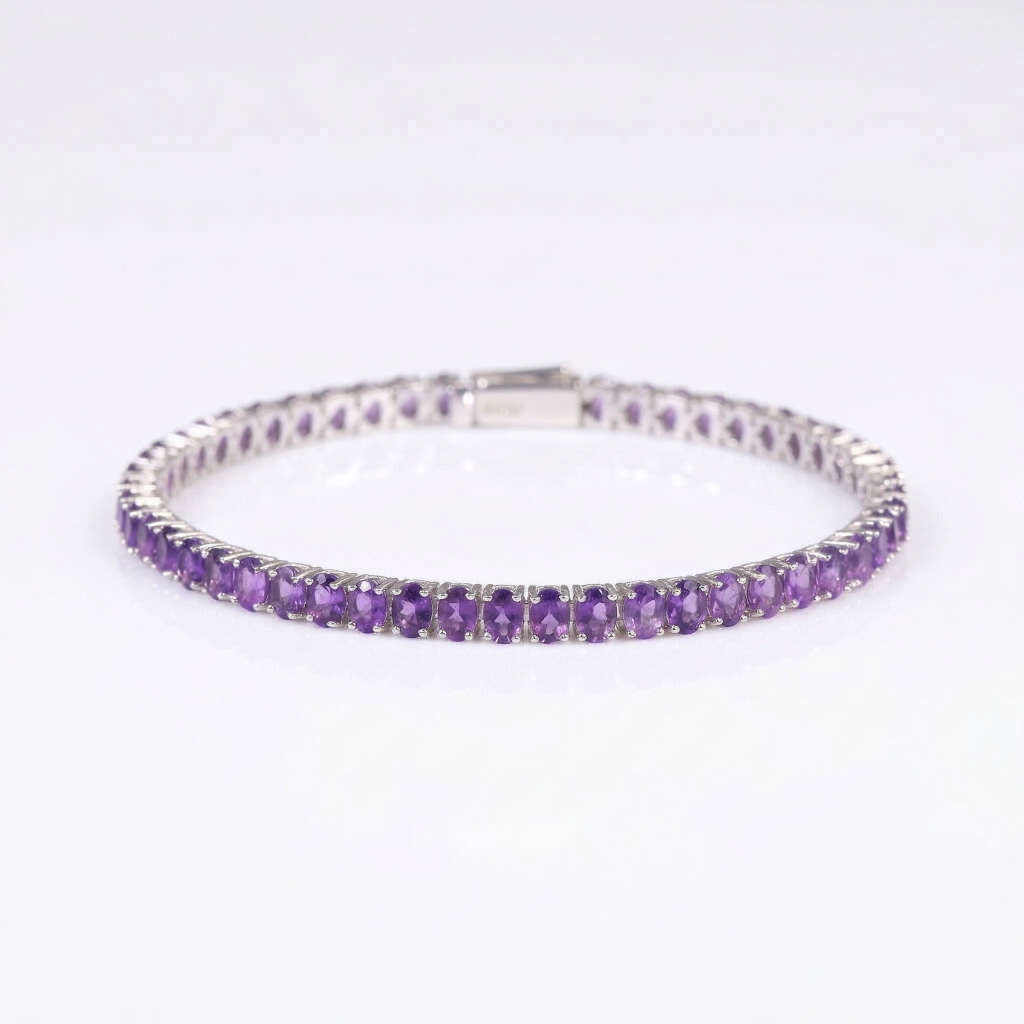
Eternal Sparkle Natural Amethyst Tennis Bracelet in 925 Sterling Silver
Price range: $319.99 through $439.99 -

Luminous Bloom Amethyst Double-Strand Beaded Bracelet in 925 Silver
$89.99 -
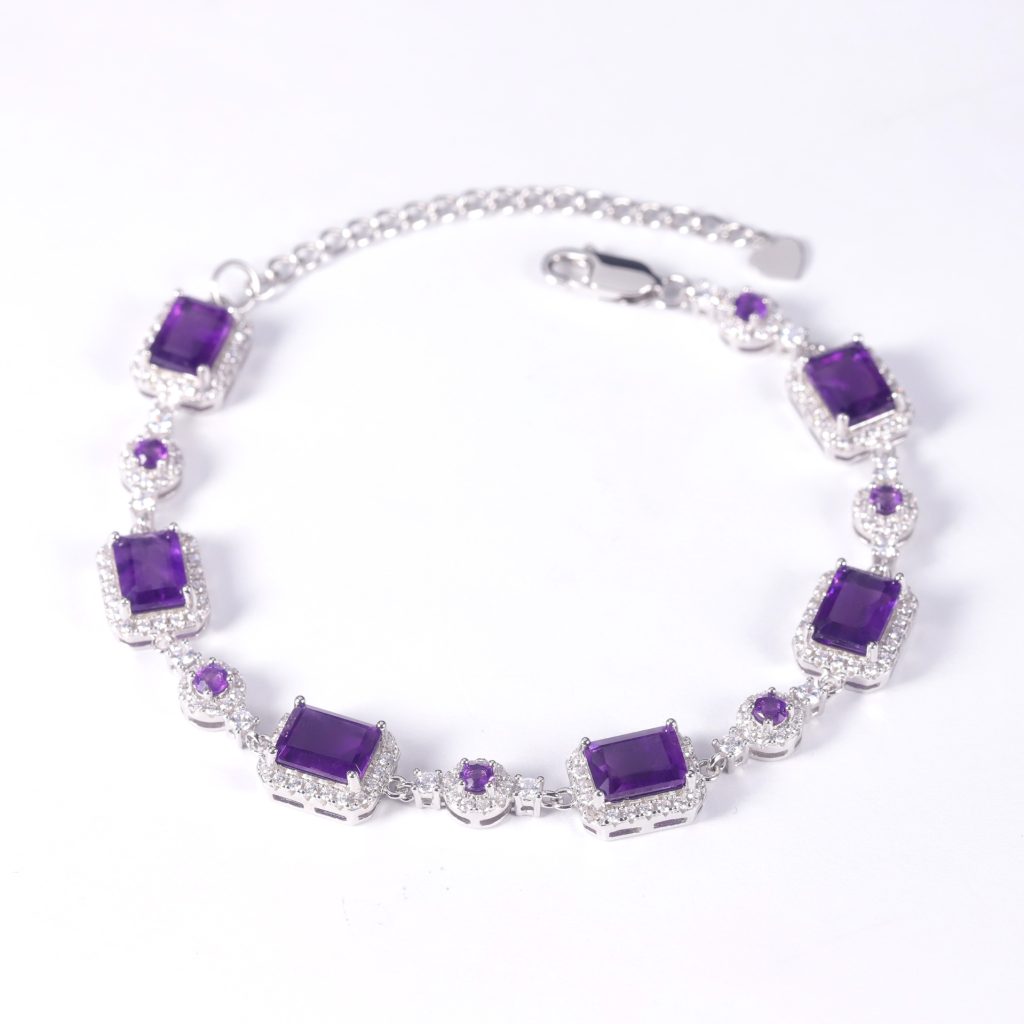
Natural Amethyst Bracelet in 925 Sterling Silver – 1.9ct Luxury Geometric
$188.99 -
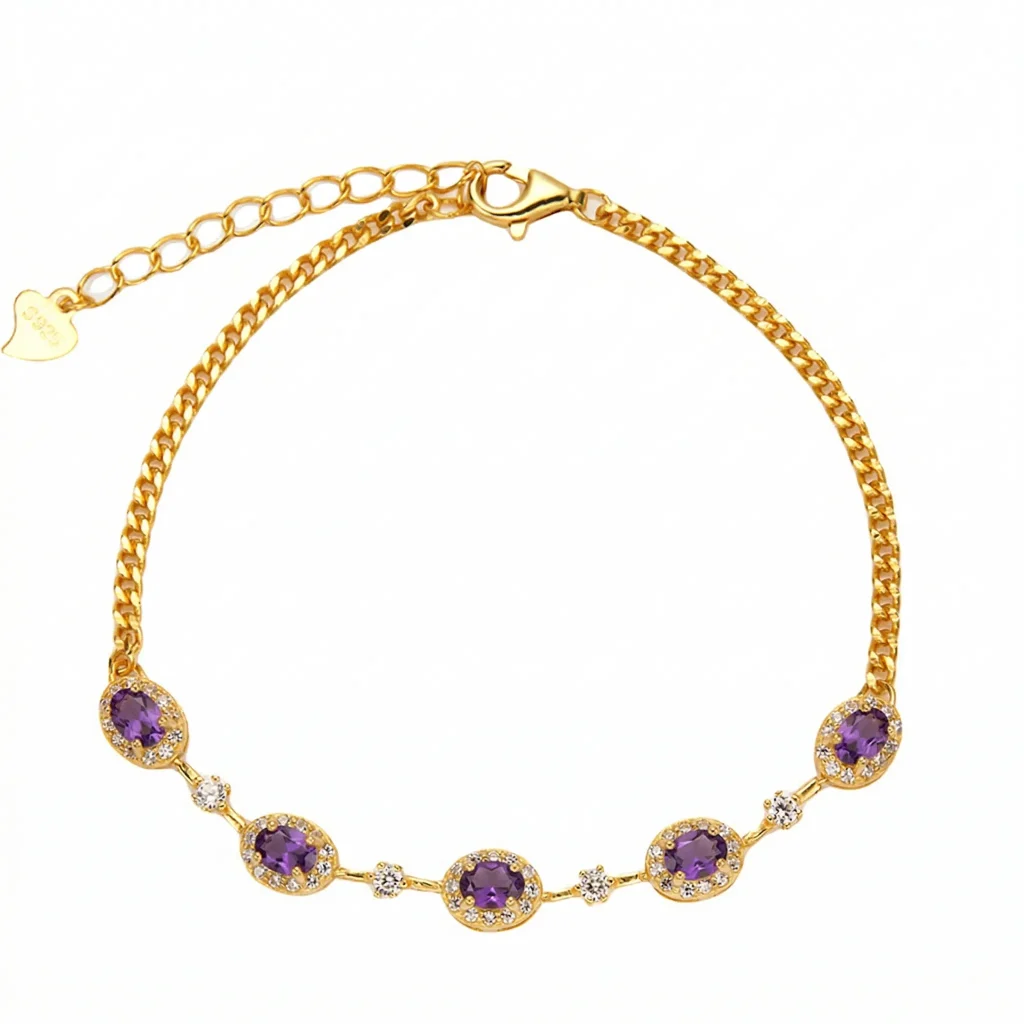
Natural Amethyst Gemstone Bracelet in 925 Silver – Colorful Crystal Stacking
Price range: $59.99 through $74.99 -
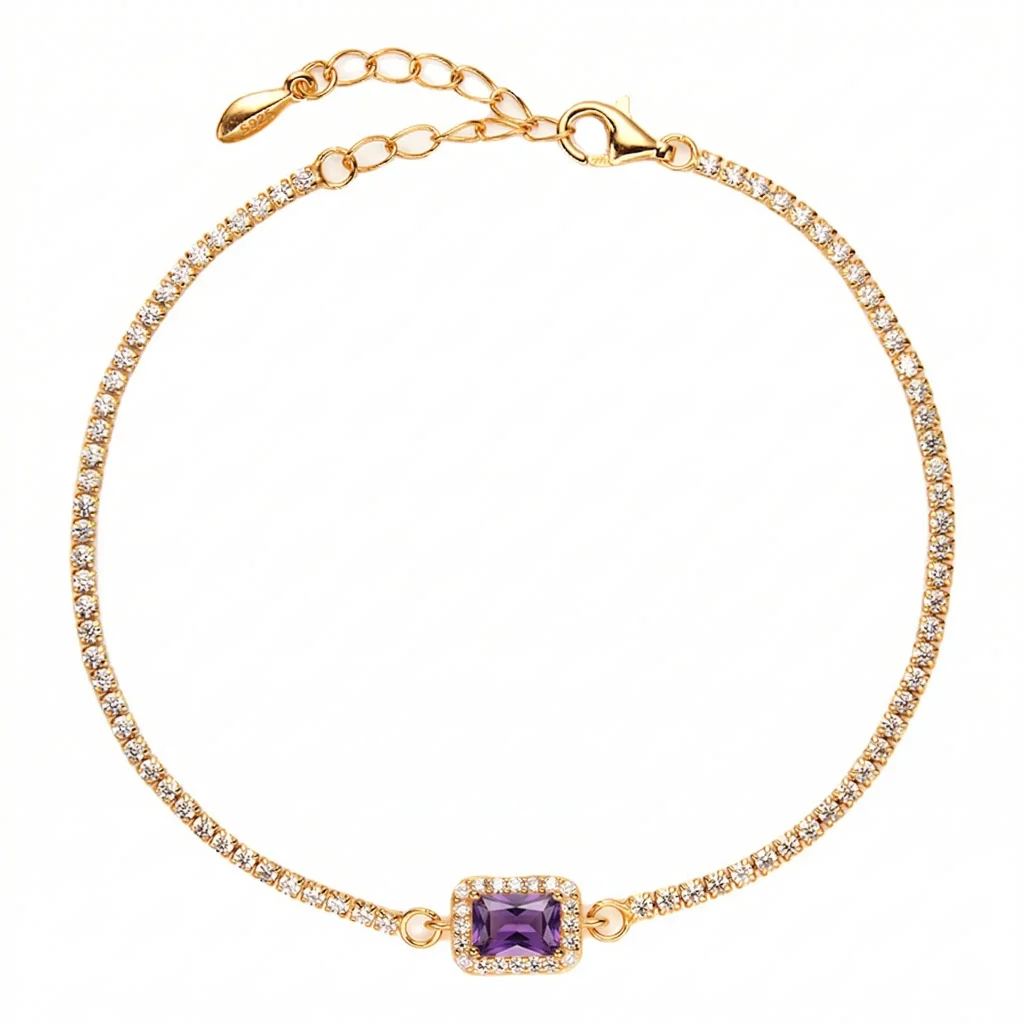
Natural Amethyst Geometric Bracelet in 925 Silver – Square Cut, Gold or Silver
Price range: $51.99 through $55.99 -
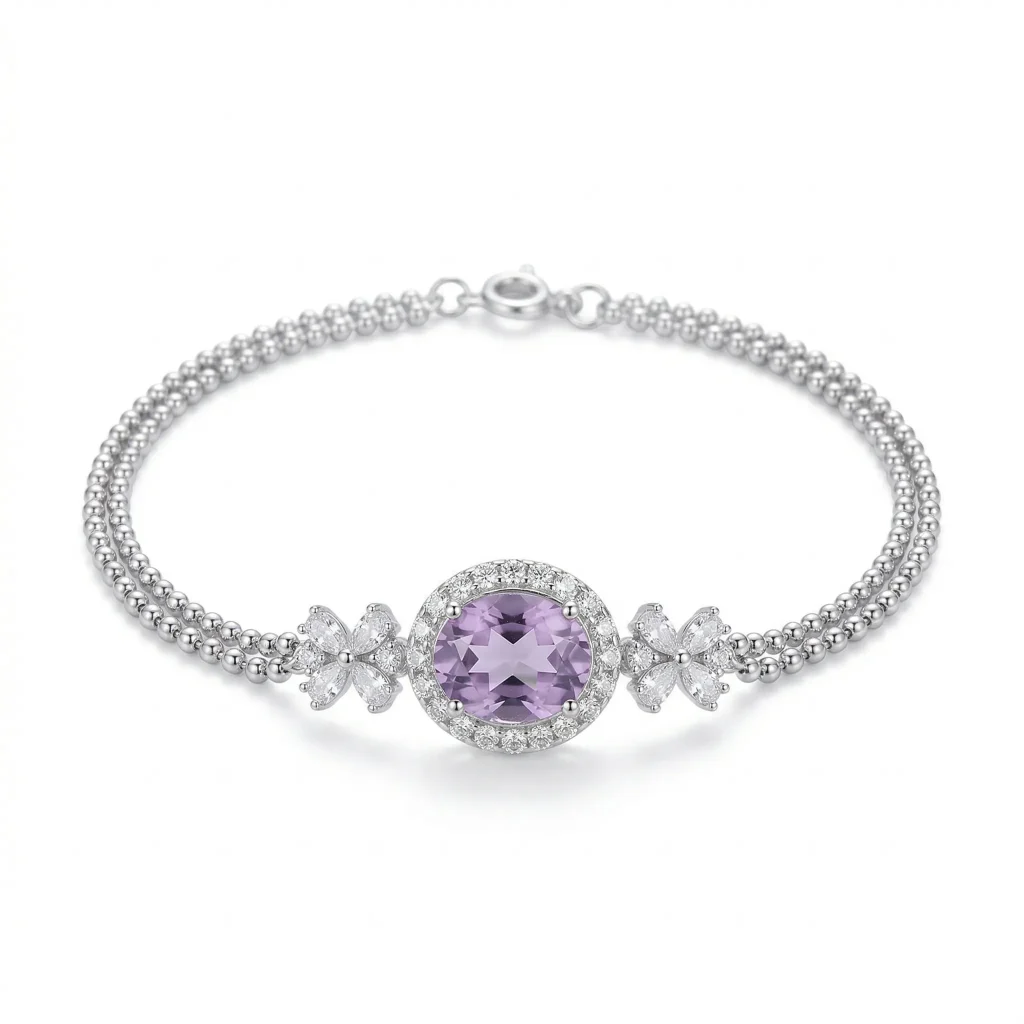
Natural Amethyst Leaf Bracelet in 925 Sterling Silver – Botanical Old Money Style
$63.99 -

Natural Amethyst Pave Bracelet in 925 Sterling Silver – Crystal Chain, 11.73g
$164.99
For current bead and silver styles, compare natural amethyst bracelets after checking wrist fit and materials.
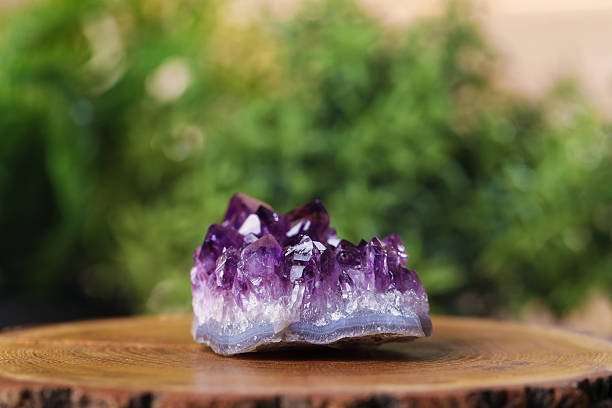
 Crystal Cluster
 Crystal Tower
 amethyst crystal ball
 Amethyst Caves for Sale
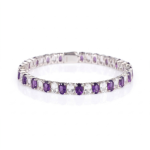 Amethyst Bracelets
 Amethyst Earrings
 Amethyst Necklaces
 Amethyst Rings
 amethyst crystal healing
 Amethyst Beauty & Wellness
 Crystal Home Decor
 Spiritual & Divination Tools