What Is Amethyst Spiritual Meaning? A Grounded Guide to Symbolism and Use
If you’ve been searching for what is amethyst spiritual meaning, you’re probably standing in front of a display of purple stones—or scrolling through product photos—wondering which traditions are real, which are marketing, and whether any of it matters when you’re just trying to pick something that feels right. That’s a reasonable place to be.
Amethyst has carried spiritual meaning for thousands of years, across cultures that never spoke to each other. The Greeks associated it with sobriety and clear thinking. Medieval European bishops wore it as a symbol of piety. In modern crystal practices, it’s linked to calm, clarity, and protection. These are traditional associations, not medical prescriptions—but for many people, tradition is enough.
This guide walks through those meanings honestly: where they came from, how they’re used today, and how to choose a piece that actually resonates with your intentions.
What Does Amethyst Represent Spiritually?
The most consistent thread in amethyst’s spiritual meaning, across centuries and continents, is calm without dullness. Not sedation. Not avoidance. A kind of steady clarity that lets you sit with difficult things without drowning in them.
In Greek tradition, the word “amethyst” comes from amethystos—”not intoxicated.” The belief was that wearing or drinking from amethyst vessels could prevent drunkenness. Over time, this expanded into a broader association: protection from excess, from clouded judgment, from losing yourself.
Modern crystal practitioners describe amethyst as traditionally associated with:
- Mental clarity — helping you see situations without the noise of anxiety or reactivity
- Emotional calm — not eliminating difficult feelings, but creating space around them
- Protection — historically worn as an amulet against negative influence
- Intuition — linked to the Third Eye and Crown chakras in Indian philosophical tradition
None of this is a guarantee. It’s a framework—a set of meanings that people have built rituals around, the same way someone might light a candle before writing or keep a photo on their desk. The value is in the practice, not in the stone doing something to you without your participation.
Historical and Cultural Roots of Amethyst Symbolism
To understand amethyst stone meaning spiritual, it helps to know that the purple color itself—caused by trace amounts of iron (Fe³⁺) in the quartz crystal, activated by natural radiation over millions of years—has always drawn human attention. Purple dye was expensive. Purple fabric was reserved for royalty. A purple stone, naturally occurring, carried that weight without anyone needing to invent it.
Ancient Greece and Rome
Greek soldiers carried amethyst for courage and sobriety. Romans believed it could ward off intoxication—Pliny wrote about it. These aren’t mystical claims; they’re what a culture decided about a stone they found beautiful and unusual. The tradition persisted because the stone kept being beautiful.
Medieval Europe
Catholic bishops wore amethyst rings as symbols of piety and spiritual wisdom. The stone appeared in royal crowns across Europe. It wasn’t just decorative—it carried meaning about the wearer’s relationship to power, faith, and self-control.
Modern Interpretation
Today’s wellness communities have inherited these layers and added new ones. Amethyst is now associated with meditation, sleep rituals, and emotional processing. These contemporary meanings are traditions in formation—not historical fact, but not meaningless either. When someone places an amethyst on their nightstand as a reminder to slow down before bed, that’s a personal ritual built on centuries of accumulated association.
You can read more about where amethyst comes from geologically in our amethyst geological origins guide.
Amethyst in Chakra Practices and Energy Work
The amethyst crystal healing meaning most commonly discussed today centers on two energy points from Indian philosophical tradition: the Third Eye Chakra (Ajna), located between the eyebrows, and the Crown Chakra (Sahasrara), at the top of the head.
The Third Eye is traditionally associated with intuition, insight, and inner knowing. The Crown is linked to broader awareness and connection beyond the self. Amethyst’s purple color places it in this region of the traditional chakra system—upper body, upper consciousness.
In practice, people use amethyst in these ways:
- Meditation focus — holding a stone or placing it nearby during quiet sitting, using it as a physical anchor for attention
- Intention setting — defining what you want clarity about before working with the stone, then returning to that intention each time you see it
- Bedside placement — keeping it where you’ll notice it during the transition between day and sleep, as a visual cue to slow down
- Cleansing rituals — moonlight baths, sound cleansing with singing bowls, or smoke clearing, done as a way to reset your own attention toward the stone
These are all personal practices, not medical treatments. I’ve found that the most honest way to describe this is: the stone doesn’t do the work. You do the work. The stone is a physical reminder that you’ve decided to do it.
For a deeper look at how meanings and uses connect, see our amethyst meaning and uses page.
Amethyst Jewelry and Placement: Bracelets, Rings, and More
One of the most searched questions in this space is what the amethyst bracelet on the right hand meaning actually is. The answer depends on which tradition you’re following.
Left Hand vs. Right Hand in Crystal Tradition
In many crystal practices, the left hand is considered the receiving hand—the one that takes in energy, intention, and influence from outside. The right hand is the giving hand—the one that projects your intention outward.
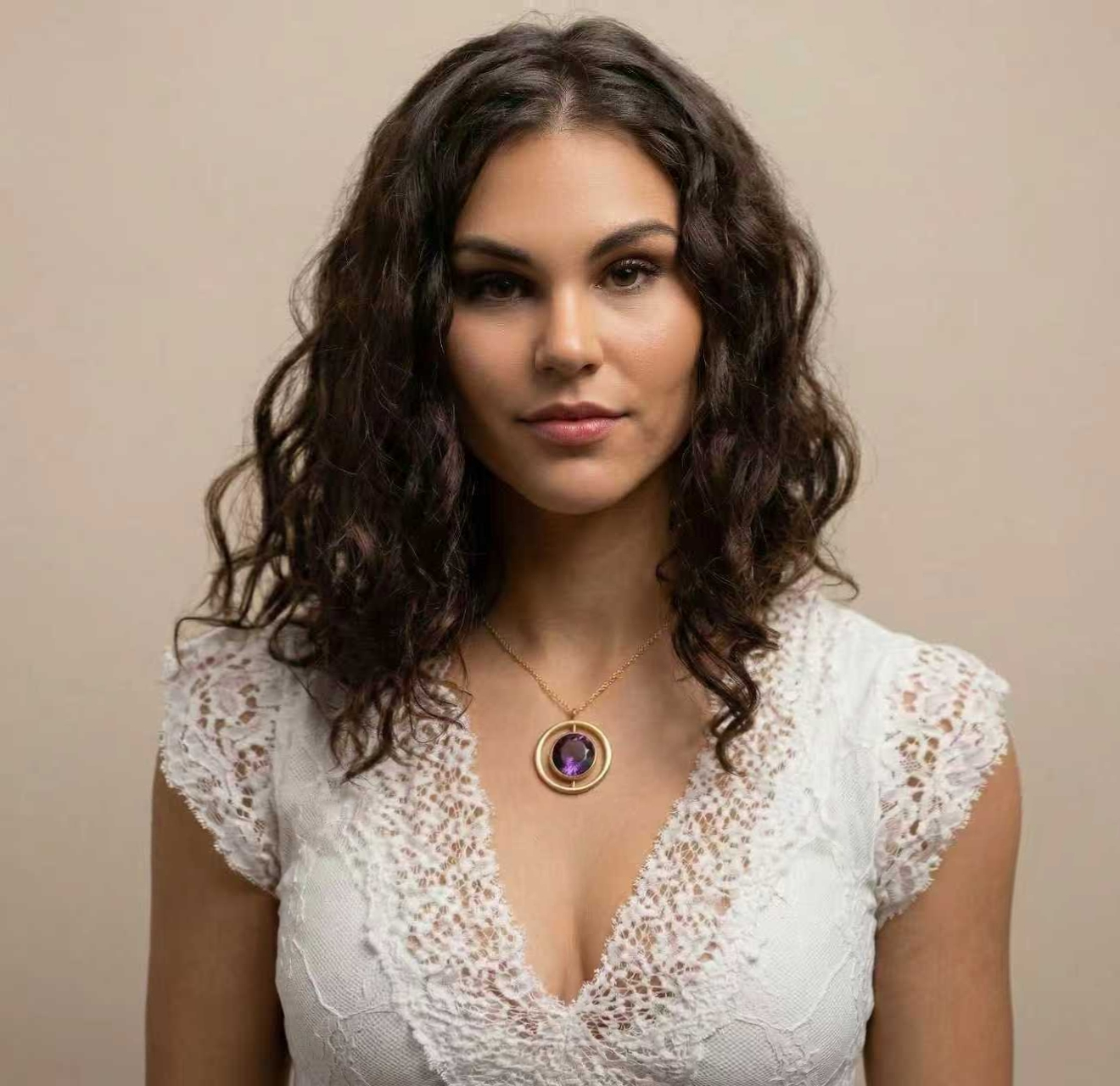
So the amethyst bracelet right hand meaning, in traditional practice, is about outward intention. You might wear it on your right wrist when you want to carry calm clarity into a meeting, a conversation, or a situation where you need to stay steady while engaging with others.
The amethyst bracelet right wrist meaning is essentially the same—placement matters more than the specific piece. If you’re wearing a ring, the same logic applies: right hand for giving, left hand for receiving.
This is tradition, not science. But it gives you a framework for choosing, and sometimes a framework is exactly what makes a ritual feel intentional rather than random.
Choosing Amethyst Jewelry
If you’re buying amethyst jewelry for spiritual use, a few practical things matter:
- Material — 925 sterling silver is the standard for quality amethyst jewelry. It’s nickel-free, which means no green fingers, and it holds up well with daily wear.
- Stone quality — Look for natural color zoning. Perfectly uniform purple is often a sign of dyed material. Real amethyst has depth variation.
- WYSIWYG photography — Buy from sellers who photograph each piece individually. You should see the exact stone you’ll receive.
- Care — Avoid direct sunlight. UV can fade amethyst permanently—this is a fact, not a tradition. The iron ions that create the purple are vulnerable to UV radiation.
For more details on different forms and which might suit your needs, our amethyst forms and shapes guide covers everything from bracelets to geodes.
Rutilated Amethyst and Special Varieties
Rutile inclusions—golden or copper-colored needle-like threads of titanium dioxide—sometimes appear inside amethyst, creating what’s called rutilated amethyst. These inclusions are natural, and they’re part of the stone’s formation story, not a flaw.
The rutilated amethyst spiritual meaning in traditional practice adds a layer to standard amethyst associations. Where regular amethyst is linked to clarity and calm, rutilated amethyst is sometimes described as combining that clarity with direction—the rutile threads are seen as pathways, channels, or amplifiers within the stone.
In practice, people who choose rutilated amethyst often describe it as feeling more “active” than standard pieces—useful for focused work like journaling, planning, or creative projects where you want both calm and momentum.
This is entirely traditional framing. Geologically, the rutile is just a mineral inclusion—beautiful, interesting, and a marker of natural formation. But if the visual of golden threads through purple stone speaks to you, that’s worth something. Personal resonance is a legitimate reason to choose one stone over another.
How to Choose Amethyst for Your Spiritual Needs
Here’s where the buying guide becomes practical. Spiritual meaning is personal, but choosing a physical stone has real criteria you can evaluate.
Factors to Consider
| Factor | What to Look For | Why It Matters |
|---|---|---|
| Color depth | Deep purple vs. lavender — darker stones from Uruguay, lighter from Brazil | Color affects both visual impact and how you connect with the piece |
| Origin | Brazilian (larger, varied color) vs. Uruguayan (denser, deeper purple) | Documented origin tells you what you’re getting |
| Form | Geode, cluster, tower, jewelry, tumbled stone | Match the form to where and how you’ll use it |
| Color zoning | Natural variation in purple intensity | Indicates real amethyst, not dyed quartz |
| UV care | Placement away from direct sunlight | Prevents irreversible color fading |
Choose by Use Case
If you want a stone for your nightstand, a small geode or a single crystal point might be enough—it doesn’t need to be large. If you want something for a living room or a space where you practice meditation, a larger cluster or geode gives you more visual presence. If you want something wearable, a bracelet or ring on 925 sterling silver gives you the stone close to your skin throughout the day.
For more guidance on evaluating quality, color grading, and what different price points actually get you, see our amethyst quality and value guide.
The $12 Question
When I bought my first amethyst—a $12 stone with a hand-written label that said “for calm nights”—I didn’t know any of this. I didn’t know about Fe³⁺ or chakras or Greek etymology. I just knew the stone was heavier than I expected, and that it was real, and that holding it for a few seconds before bed gave me something to focus on instead of my phone.
That’s still the most useful criteria I know: does this specific piece give you a reason to pause? If it does, the spiritual meaning is already working—not because the stone is doing something to you, but because you’ve decided to pay attention.
Frequently Asked Questions
What does amethyst represent spiritually?
Amethyst is traditionally associated with calmness, clarity, and protection. These meanings come from centuries of cultural use—from Greek beliefs about sobriety to modern meditation practices. They are traditional associations, not medical claims.
How is amethyst used in chakra practices?
In Indian philosophical tradition, amethyst is linked to the Third Eye Chakra (intuition) and Crown Chakra (awareness). People use it in meditation, intention setting, and cleansing rituals as a personal practice—not as a treatment.
What does it mean to wear an amethyst bracelet on the right hand?
In crystal tradition, the right hand is considered the “giving” hand. Wearing an amethyst bracelet on the right wrist is thought to project your intention outward—calm, clarity, or steadiness into the world around you. This is traditional belief, not scientific fact.
Is rutilated amethyst special spiritually?
Rutilated amethyst contains natural rutile inclusions—golden needle-like threads of titanium dioxide. In tradition, these are sometimes seen as pathways or amplifiers, adding direction and focus to standard amethyst’s clarity associations. Geologically, the inclusions are a natural formation feature.
How do I choose amethyst for spiritual purposes?
Consider color depth (deeper from Uruguay, lighter from Brazil), form (geode for display, jewelry for wear), and whether the stone feels right to you personally. Look for natural color zoning as a sign of authenticity, and keep any amethyst out of direct sunlight to prevent UV fading.
Ready to find amethyst that speaks to you? Explore our documented-origin crystals and jewelry.
 Crystal Cluster
 Crystal Tower
 amethyst crystal ball
 Amethyst Caves for Sale
 Amethyst Bracelets
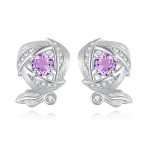 Amethyst Earrings
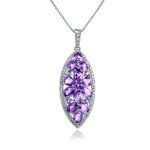 Amethyst Necklaces
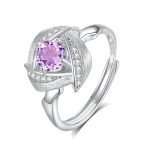 Amethyst Rings
 amethyst crystal healing
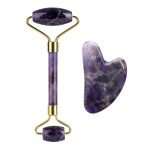 Amethyst Beauty & Wellness
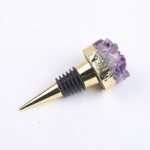 Crystal Home Decor
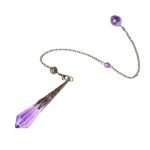 Spiritual & Divination Tools