
Using Amethyst for Sleep: A Practical Guide to Calmer Nights
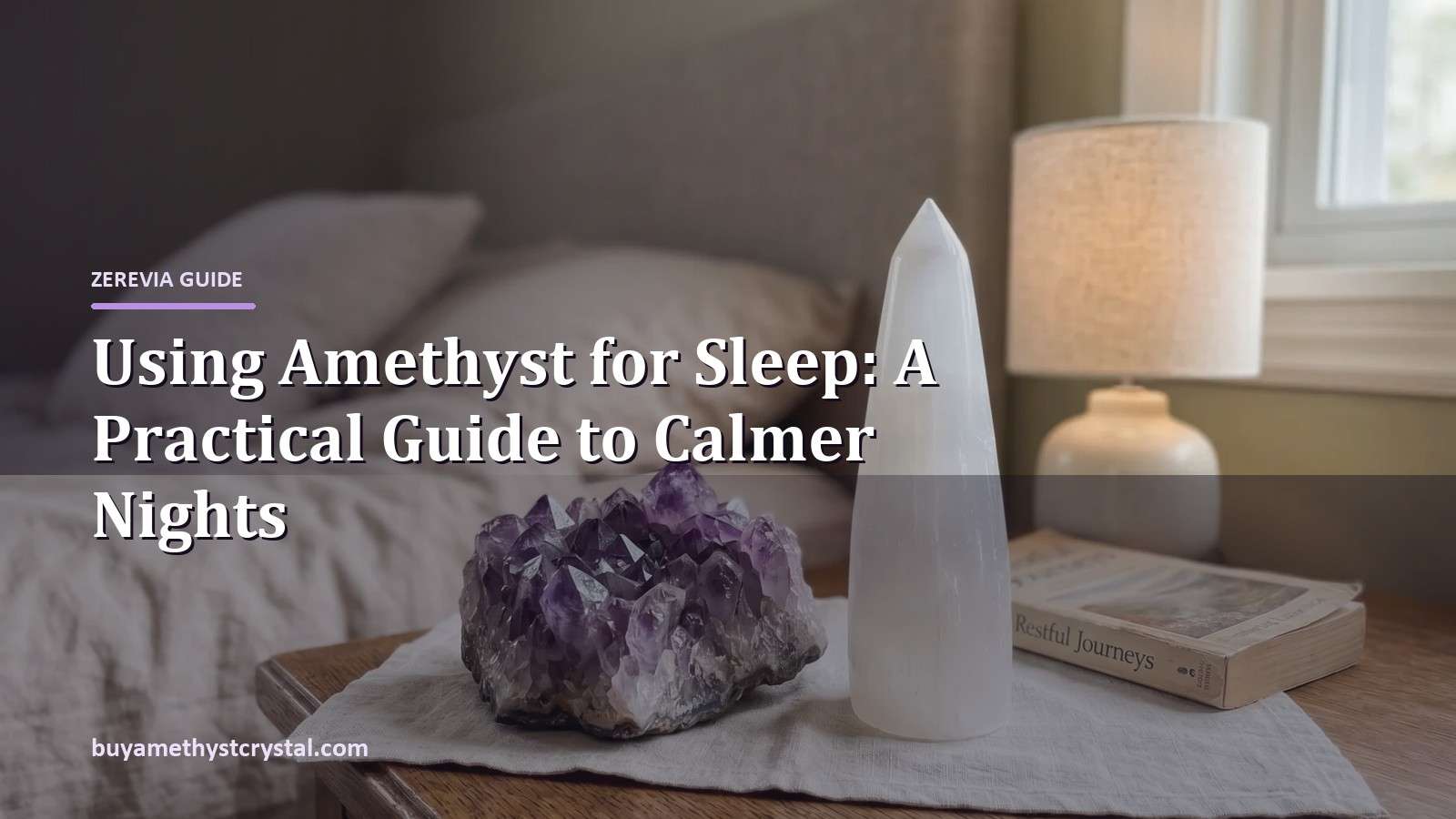
Using amethyst for sleep is one of the most common reasons people bring this purple stone into their homes for the first time. The idea is simple enough: place something beautiful and calming near your bed, and see if the ritual itself changes how you wind down at night. For some buyers, that means a raw crystal on the nightstand. For others, it means falling asleep with an amethyst necklace still on.
There is no clinical proof that amethyst cures insomnia or guarantees deeper rest. What there is—centuries of traditional association, a recognizable geological story, and a growing number of people who describe their bedside amethyst as part of a quieter nighttime routine. This guide covers how people actually use amethyst for sleep, what to consider when choosing a piece, and how to keep it looking the way it did the day it arrived.
If you want a broader look at how amethyst is understood across traditions and practices, our guide to amethyst healing properties covers that territory in more detail.
Why People Turn to Amethyst for Sleep
A few years ago, before I started studying gemology or thinking about sourcing logistics, I bought a small amethyst for twelve dollars. It was not particularly beautiful. The color was a bit pale, the matrix rock was grayish, and it sat in a wooden box at a secondhand shop like something someone had forgotten. The handwritten label said amethyst — for calm nights — $12.
I picked it up. It was heavier than I expected—real quartz usually is. I brought it home, set it on my nightstand, and that night was the first time in months I did not wake up at three in the morning.
That does not prove anything. I know that. But it started something—a line of inquiry into whether the stone was real, how to tell, what the color actually comes from chemically, and why people have associated this particular mineral with calm for far longer than the wellness industry has existed.
The short version: people turn to amethyst for sleep because the ritual of placing a specific, real object near the bed creates a pause. That pause—a moment of looking at something instead of scrolling, of touching something cool and solid before turning off the light—is where the change happens. The stone does not do something to you. You do something with the stone.
For a deeper look at why amethyst has been connected to intuition and stillness across cultures, the amethyst healing properties page covers that history.
The Tradition Behind Amethyst and Sleep
Amethyst’s association with calm and restful sleep goes back centuries. The ancient Greeks linked the stone to clarity and temperance—the name itself comes from amethystos, meaning “not intoxicated.” In crystal tradition, amethyst is connected to the third eye chakra (Ajna), the energy center associated with intuition, inner knowing, and the transition from waking thought into rest.
None of this is medical evidence. But it is a long tradition, and traditions tend to stick around for a reason—not because they are scientifically proven, but because enough people found something useful in the practice to keep passing it along.
What we can say with certainty is what amethyst actually is. It is a variety of quartz (SiO2), and its purple color comes from trivalent iron ions (Fe³⁺) within the crystal lattice, activated by natural background radiation over millions of years. That color is not painted on or added. It grew there. If you are curious about where specific deposits form and how origin affects color, the geological origins of amethyst guide explains the differences between Brazilian and Uruguayan specimens in practical terms.
In buyer experience, the amethyst sleep benefits people describe most often are not mystical transformations. They are quieter things: a reason to pause before bed, a tactile anchor for a pre-sleep ritual, a visual reminder that the day is ending. Whether you frame that as chakra alignment, intentional ritual, or simply “I like having it there,” the practical outcome is the same—you have created a moment of stillness at the end of a full day.
Practical Methods for Using Amethyst at Bedtime
There is no single correct way to use amethyst for sleep. The right method depends on your space, your comfort preferences, and whether you want something you hold, something you wear, or something that simply sits nearby. Here is how people actually use it:
Bedside Placement
Placing a raw crystal, geode, or cluster on your nightstand is the most common approach. It requires no special setup—just a stable surface and an awareness that your window lets in morning sun. Amethyst fades under prolonged UV exposure, so a nightstand away from direct sunlight is important. This method works well for people who want ambient presence without touching or wearing anything during sleep.
Under the Pillow or in a Sleep Mask
A small tumbled stone or palm stone tucked under a pillow or placed in a sleep mask pocket gives you something to hold as you fall asleep. The weight is slight—a typical tumbled stone weighs 15 to 30 grams—but it is enough to feel. Some buyers describe this as grounding in a literal sense: something cool and solid in your hand while your mind starts to quiet.
Wearing an Amethyst Necklace to Sleep
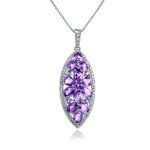
If you are wondering can you sleep with an amethyst necklace, the answer is: many people do, with a few practical considerations. A necklace made with 925 sterling silver and 100% natural amethyst is generally comfortable for overnight wear. Sterling silver is nickel-free, which reduces the chance of skin irritation. The main concerns are personal comfort—some people find a pendant shifts during sleep or catches on bedding—and chain safety. A shorter chain or a pendant with a smooth bezel setting tends to work best for overnight wear.
If you toss and turn or prefer nothing near your neck, a ring or a simple tumbled stone is a better fit. The goal is to add calm, not another thing to adjust at 2 a.m.
Comparison: Forms of Amethyst for Sleep
| Form | Best For | Considerations |
|---|---|---|
| Nightstand crystal or geode | Ambient presence; no contact needed | Keep away from direct sunlight; needs stable surface |
| Tumbled stone under pillow | Tactile grounding; portable | Small enough to lose in bedding; check size |
| Amethyst necklace | Wearable ritual; close to skin | Choose nickel-free sterling silver; consider chain length |
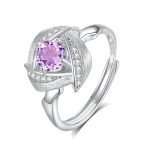
| Amethyst ring | Minimal-contact jewelry option | Adjustable sizing helps; remove if fingers swell |
| Crystal tower or point on nightstand | Directional presence; traditional placement | Base should be flat and stable |
For a full breakdown of each form—geodes, clusters, towers, spheres, and tumbled stones—see our guide to amethyst forms and shapes.
Choosing the Right Amethyst for Your Sleep Needs
Once you have decided on a method—bedside, wearable, or hand-held—the next question is which specific piece to choose. This is where concrete details matter more than marketing language.
Form and Lifestyle Fit
A bedside geode creates a visual focal point and takes up space intentionally. If your nightstand is already crowded, a tumbled stone or a pendant might be more realistic. If you travel frequently, a palm stone fits in a pocket or small pouch. Match the form to how you actually live, not to how you imagine your life looking in a styled photo.
Color Depth and Origin
Amethyst ranges from pale lavender to deep purple so dark it almost reads as black in low light. Brazilian amethyst tends toward larger crystals with a broader color range—lavender to medium purple—and is often the more accessible option for bedside pieces. Uruguayan amethyst has finer crystal structure and deeper color, including the deep violet sometimes called emperor purple. If color depth matters to you, Uruguayan pieces tend to deliver more saturation per square centimeter. There is no right answer; it depends on whether you want a large piece with softer color or a smaller one with deeper tone.
Quality Indicators
For raw crystals and geodes, look for:
- Natural color zoning—real amethyst is not uniformly purple. Variation in color is a sign of authenticity, not a flaw.
- Weight—quartz (Mohs hardness 7) is denser than glass or resin. A piece that feels surprisingly solid for its size is a good sign.
- Accurate photography—what you see in the product photo should match what arrives. Look for sellers who show individual pieces, not stock images.
For jewelry, the key indicators are 100% natural amethyst (not glass or synthetic), 925 sterling silver settings, and nickel-free construction. A gift box and meaning card are common additions but not quality indicators on their own.
Our amethyst quality and value guide covers what to look for—and what to ignore—when comparing pieces.
Caring for Your Amethyst to Preserve Its Presence
An amethyst piece on your nightstand will spend most of its time in low light, which is good. But care still matters, especially if you want it to look the same six months from now.
Avoid Direct Sunlight
This is the single most important care rule. The Fe³⁺ ions that create amethyst’s purple color can be permanently altered by prolonged UV exposure. The purple fades, and it does not come back. A buyer once contacted me about a crystal that had been sitting on a south-facing windowsill for a few months—the deep violet had become a washed-out lavender. The stone was still real, still amethyst, but that specific color was gone. Move amethyst away from windows that get direct afternoon sun.
Gentle Cleansing
For physical cleaning, a soft cloth and lukewarm water are sufficient. Avoid harsh chemicals or ultrasonic cleaners.
For ritual cleansing, tradition offers several safe methods:
- Moonlight—place your amethyst under moonlight overnight, ideally during a full moon. This is the most widely recommended method because it carries zero risk of color damage.
- Sound cleansing—a singing bowl or tuning fork placed near the crystal. No contact needed, no UV risk.
- Intention setting—hold the piece, take a few slow breaths, and mentally state your purpose for it. This is personal ritual, not a technical process, and some buyers find it meaningful.
For a complete care guide, including how to handle geodes and different crystal forms, see amethyst care and cleansing.
Storage
If you store amethyst when not in use, wrap it in a soft cloth or keep it in a fabric-lined box. Quartz is hard (7 on the Mohs scale) but can chip against harder materials or scratch softer ones. Keep it away from other jewelry unless each piece is individually wrapped.
Frequently Asked Questions About Amethyst and Sleep
Can you sleep with an amethyst necklace?
Yes, many people do. The main considerations are comfort and material safety. Choose a necklace made with 925 sterling silver and 100% natural amethyst—sterling silver is nickel-free and unlikely to cause skin irritation during overnight wear. A shorter chain or smooth pendant setting reduces the chance of the necklace shifting or catching on bedding. If you find necklaces uncomfortable while sleeping, a tumbled stone under your pillow offers a similar presence without anything around your neck.
Can I sleep with my amethyst necklace every night?
You can, with the same comfort and material considerations. Over time, sterling silver may develop a natural patina from skin contact and moisture—this is normal and can be polished away. Remove the necklace if you notice any skin irritation, though this is uncommon with genuine sterling silver. The amethyst itself is durable enough for nightly wear; just keep it out of direct sunlight during the day to preserve the color.
What are amethyst sleep benefits?
In traditional crystal practice, amethyst is associated with calm, intuition, and the transition from waking awareness to rest. It is traditionally linked to the third eye chakra, which governs inner reflection. Buyer experiences commonly describe the benefit as creating a pause—a moment of quiet at the end of the day—rather than a physical or medical effect. The value is in the ritual: choosing to hold, look at, or wear something specific as a signal to your mind that the day is ending.
How should I care for amethyst used during sleep?
Keep it away from direct sunlight to prevent irreversible UV fading. For physical cleaning, use a soft cloth and lukewarm water. For ritual cleansing, moonlight is the safest option—place the piece outside or on a windowsill (indirect light side) overnight. Avoid harsh chemicals and ultrasonic cleaners. Store wrapped in soft cloth when not in use to prevent chipping or scratching.
Does amethyst help with sleep?
There is no clinical evidence that amethyst physically causes sleepiness or cures insomnia. What many buyers describe is a calming ritual effect: having a specific, beautiful object associated with rest, placed where you can see or touch it as you wind down. Whether you understand this through chakra tradition, the psychology of ritual, or simply “it helps me put my phone down,” the practical benefit is in the routine you build around it—not in the stone itself.
Choosing What Fits Your Night
Using amethyst for sleep is ultimately about building a small ritual that signals the end of the day. Whether that is a geode on your nightstand, a tumbled stone in your palm, or a pendant you never take off, the value comes from the consistency of the practice and the reality of the object—its weight, its color, its particular presence in your space.
If you are deciding between forms, our amethyst forms and shapes guide can help you compare options side by side. And if you want to understand what makes one piece worth more than another, the quality and value guide covers the details that actually matter.
Start with what fits your space and your habits. The stone will be there either way.
 Crystal Cluster
 Crystal Tower
 amethyst crystal ball
 Amethyst Caves for Sale
 Amethyst Bracelets
 Amethyst Earrings
 Amethyst Necklaces
 Amethyst Rings
 amethyst crystal healing
 Amethyst Beauty & Wellness
 Crystal Home Decor
 Spiritual & Divination Tools