Is Amethyst Good for Sleeping? What to Know Before You Buy

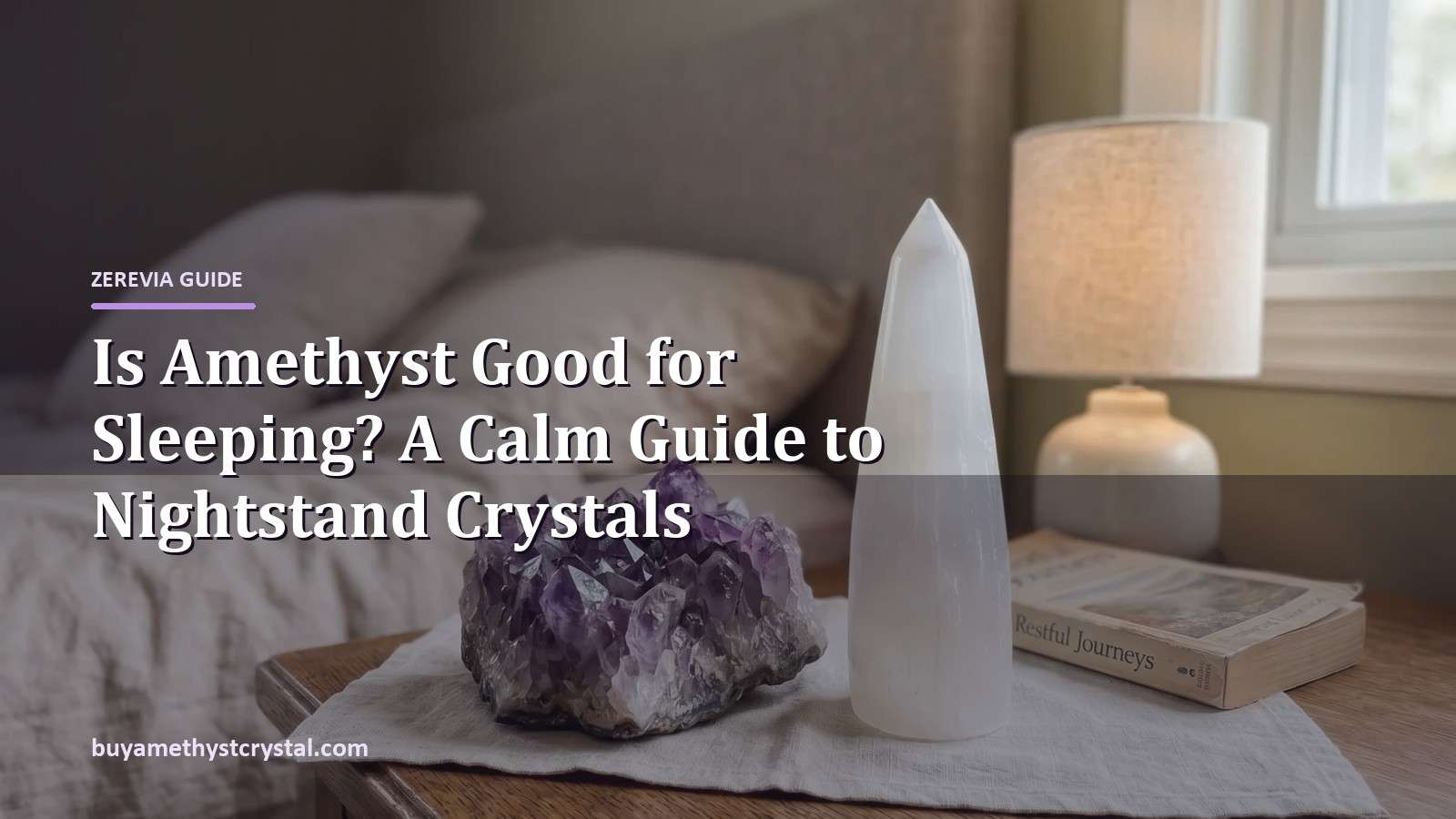
Is Amethyst Good for Sleeping? A Calm Guide to Nightstand Crystals
The first amethyst I ever bought cost twelve dollars. It was not a particularly beautiful specimen — the color was on the pale side, the matrix rock was a dull grey, and it sat in a wooden display box like something that had been forgotten for a long time. The hand-written tag, in purple ink and slightly messy script, said: amethyst — for calm nights — $12.
I picked it up. It was heavier than I expected, which is not important, but I remembered it. That night was the first time in months I fell asleep without waking up at three in the morning.
That doesn’t prove anything. But I started looking into whether amethyst is actually good for sleeping, and I haven’t stopped since. Here’s what I’ve found — the traditions, the practical placement decisions, and what to look for when choosing a crystal for your nightstand.
Is Amethyst Good for Sleep?
Amethyst has a long traditional association with calm and rest across multiple cultures and centuries of mineral trade. People have placed this purple quartz near their beds — not because of a clinical trial, but because of a shared intuition that the stone invites stillness.
There is no medical proof that crystals cure insomnia. I want to say that clearly before going any further. If you are dealing with a serious sleep disorder, a crystal is not a substitute for professional care.
What tradition does support is this: a consistent bedtime ritual helps. A physical object that signals stop scrolling, it is time to wind down has real value — not as a medical intervention, but as a practical one. My twelve-dollar stone became that signal. You can read more about the traditional associations in our amethyst healing properties guide.
What Tradition and Personal Practice Say About Sleeping with Amethyst
The reported benefits of sleeping with amethyst tend to cluster around a few themes: mental quiet, ease of transition from wakefulness to rest, and a general sense of settling.
In traditional frameworks, amethyst is associated with the Third Eye and Crown chakras — both linked to awareness and stillness in Indian philosophical tradition. You don’t have to subscribe to any belief system to notice that many people find comfort in holding or viewing something real and beautiful before sleep.
I once had a conversation with someone who was openly skeptical. He asked if I really thought stones had that kind of mysterious power. My honest answer: I don’t know. But I know that when there is something on my nightstand — a real stone, from a real place, treated with care — I spend a minute or two looking at it before I fall asleep instead of scrolling through my phone. That minute or two matters. It is a concrete change in behavior, not a mystical one.
The benefits of sleeping with amethyst that buyers report most often are not about energy fields. They are about ritual. Having a reason to put the phone down. A small, quiet object that marks the end of the day. That is enough for many people. For a deeper look at traditional associations, see our amethyst healing properties guide.
How to Place Amethyst for Sleep: Pillow, Nightstand, and Room
Where you put your amethyst crystal for sleeping depends on what kind of crystal you choose and what kind of experience you want.
Under the pillow is the most searched method. The idea is proximity — the stone stays close to you through the night. This works well with smooth, palm-sized pieces. It does not work well with sharp clusters, large geodes, or raw specimens with rough edges.
On the nightstand gives you a visual cue. You see the stone when you reach to turn off the lamp. It signals that the day is done. This placement works for a wider range of crystal forms, including towers, spheres, small geodes, and clusters.
Room placement draws from Feng Shui tradition, where the southeast corner of a room is associated with calm and settled energy. Wherever you place your crystal, keep it away from windows that receive direct sunlight — UV exposure can fade the purple color over time, and that change is irreversible.
| Placement | Best Crystal Forms | Key Consideration |
|---|---|---|
| Under pillow | Tumbled stones, palm stones, small polished points | Must be smooth and comfortable |
| Nightstand | Towers, spheres, small geodes, clusters | Visible ritual cue; keeps stone safe |
| Room corner | Medium to large geodes, cathedrals | Away from direct sunlight |
For a detailed comparison of forms and shapes, see our amethyst forms and shapes guide.
Benefits of Sleeping with an Amethyst Under Your Pillow
If you are drawn to the under-pillow method specifically, the benefits of sleeping with an amethyst under your pillow come down to closeness and tactile connection. The stone is physically near you. You can feel its weight and its coolness when you first settle in.
The best forms for this method are tumbled stones and palm stones. Both are polished smooth, easy to hold, and durable — amethyst has a Mohs hardness of 7, which means it can handle daily contact without chipping easily. A palm-sized piece is the sweet spot: large enough to notice, small enough to stay comfortable through the night.
What to avoid: sharp crystal clusters that might poke through pillowcase fabric, large raw geodes that add unwanted weight, and any rough specimen whose edges could damage bedding or wake you up.
One practical test I use: hold the stone against your cheek for a few seconds. Real amethyst — and most natural quartz — feels cool to the touch at first, then slowly warms from your body heat. If it matches that pattern, it is a good candidate for bedside use.
Sleeping with Amethyst Jewelry: Necklaces and Bracelets
Some people prefer wearing their amethyst to bed rather than placing a loose crystal on the nightstand. Sleeping with an amethyst necklace means the pendant rests near your chest or throat area; sleeping with an amethyst bracelet keeps the stone at your wrist.
There are honest trade-offs here. Necklaces can tangle during sleep. Clasps can press into skin when you shift positions. Pendant settings can snag on sheets or hair. Bracelets are generally easier — you put them on, and if they are comfortable, you forget they are there.
If you are wondering what an amethyst bracelet is good for in a sleep context, the answer is mostly about convenience and continuity. Some buyers prefer to wear their jewelry all the time and treat sleep as part of that routine. Others put it on in the morning and take it off at night. Both approaches are fine.
Material matters for overnight wear. Our jewelry uses 100% natural amethyst set in 925 sterling silver, which is nickel-free and will not turn your skin green over time. If you are trying the overnight approach for the first time, wear your piece during the day first to make sure the fit and weight feel right for you.
Which Chakra Is Amethyst Good For?
In the Indian philosophical tradition of chakras, amethyst is most commonly associated with two energy centers:
Third Eye (Ajna) — located between the brows, traditionally linked to intuition, inner clarity, and the quieting of mental noise.
Crown (Sahasrara) — located at the top of the head, traditionally linked to awareness, stillness, and a sense of being settled.
For sleep, both associations make a certain kind of sense. Traditional practice connects these chakras to the act of turning inward — letting go of the day’s external input and finding a quieter internal state. Whether you view chakras as a literal energy system or as a useful metaphor, the connection to restfulness is there in the tradition.
The chakra framework is a philosophical one, not a medical diagnosis. But for people who find meaning in it, knowing which chakra amethyst is good for can add a layer of intention to the bedtime ritual. You can explore these associations further in our amethyst healing properties guide.
Choosing Your Sleep Crystal: What Actually Matters
When you are ready to choose, here are the practical factors that matter more than any label.
Form by use case. Tumbled stones and palm stones go under pillows. Towers and spheres work on nightstands. Small geodes and clusters make room statements. Match the form to where you plan to put it.
Size. Palm-sized for under-pillow use. Three to five inches for a nightstand tower or sphere. Six inches and above for a geode that anchors a room.
Color depth. This is where origin matters. Uruguayan amethyst tends toward deep, saturated purple — sometimes deep enough to approach what the trade calls emperor purple. Brazilian amethyst runs from lavender to medium purple, often in larger specimens. Neither is better. The question I ask is the one a mineral show vendor once asked me: Do you want something big, or something with deep color?
What to look for. Natural color zoning — uneven purple distribution with lighter and darker areas — is a sign of a real stone. Uniform, perfectly even purple can indicate synthetic or treated material. Ask for documented origin and look for sellers who photograph each piece individually.
What to skip. AAAA is not a real grading standard for amethyst. There is no internationally recognized gemological grading system that uses those letters for quartz. Sellers who use AAAA are defining it themselves, and often not consistently. Weight, dimensions, color description, and origin are more useful than letters.
For a full breakdown of quality factors, see our amethyst quality and value guide, and for origin details, our Brazilian and Uruguayan origins explained page.
Caring for Your Sleep Crystal
Amethyst’s purple color comes from trace iron (Fe³⁺) in the quartz crystal lattice, activated by natural radiation over millions of years. That color is real, and it is stable under most conditions. The one thing that can damage it irreversibly is sustained UV exposure.
A buyer once wrote to tell me her crystal had faded. She had placed it on a south-facing windowsill, where it got direct afternoon sun for a couple of hours each day. The deep emperor purple had lightened to a soft lavender. The crystal was still real, still amethyst, but that original color was gone and it was not coming back. I added UV warnings to every product description after that.
For care and cleansing, the safest methods are:
- Moonlight. Place your crystal in moonlight overnight. This is the most commonly recommended cleansing method in crystal tradition, and it carries no risk of color damage.
- Sound. A singing bowl or similar instrument near your crystal is safe, ritualistic, and requires no physical contact.
- Avoid direct sunlight. The popular advice to “charge” crystals in sunlight is, for amethyst specifically, the worst thing you can do. It fades the stone.
For a complete care walkthrough, see our full amethyst care and cleansing guide.
Frequently Asked Questions
Is amethyst actually good for sleep?
Traditional practice and buyer experience associate amethyst with calm and rest. There is no clinical proof that crystals treat insomnia. What does help is the ritual: having a real, beautiful object on your nightstand that signals it is time to stop scrolling and settle in. The crystal is the anchor for the habit, not the medicine.
Can I sleep with an amethyst necklace or bracelet on?
Yes, but think about comfort first. 925 sterling silver is nickel-free and safe for skin. Necklaces can tangle; bracelets tend to be easier for overnight wear. Try wearing your piece during the day to check the fit before committing to sleeping in it.
Which chakra is amethyst associated with?
In Indian philosophical tradition, amethyst is linked to the Third Eye (Ajna) and Crown (Sahasrara) chakras. Both are associated with mental clarity and stillness — qualities that traditional practice connects to restful sleep.
What kind of amethyst should I put under my pillow?
Tumbled stones and palm stones are the best choice. They are smooth, palm-sized, and durable (Mohs hardness 7). Avoid sharp clusters, large rough pieces, or anything with edges that could snag your bedding. The right one will feel cool in your hand and settle comfortably under your pillow.
Ready to find a real amethyst for your nightstand? Browse our documented-origin crystals and honest gemstone jewelry to find a piece that fits your routine.
 Crystal Cluster
 Crystal Tower
 amethyst crystal ball
 Amethyst Caves for Sale
 Amethyst Bracelets
 Amethyst Earrings
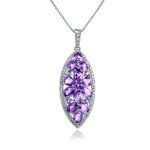 Amethyst Necklaces
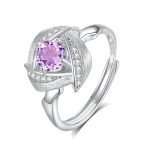 Amethyst Rings
 amethyst crystal healing
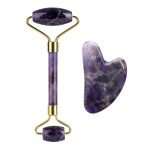 Amethyst Beauty & Wellness
 Crystal Home Decor
 Spiritual & Divination Tools