
Hidden Rules in the Naming of Amethyst: How to Distinguish between “Siberian Amethyst” and “Dark Amethyst” Crystals?
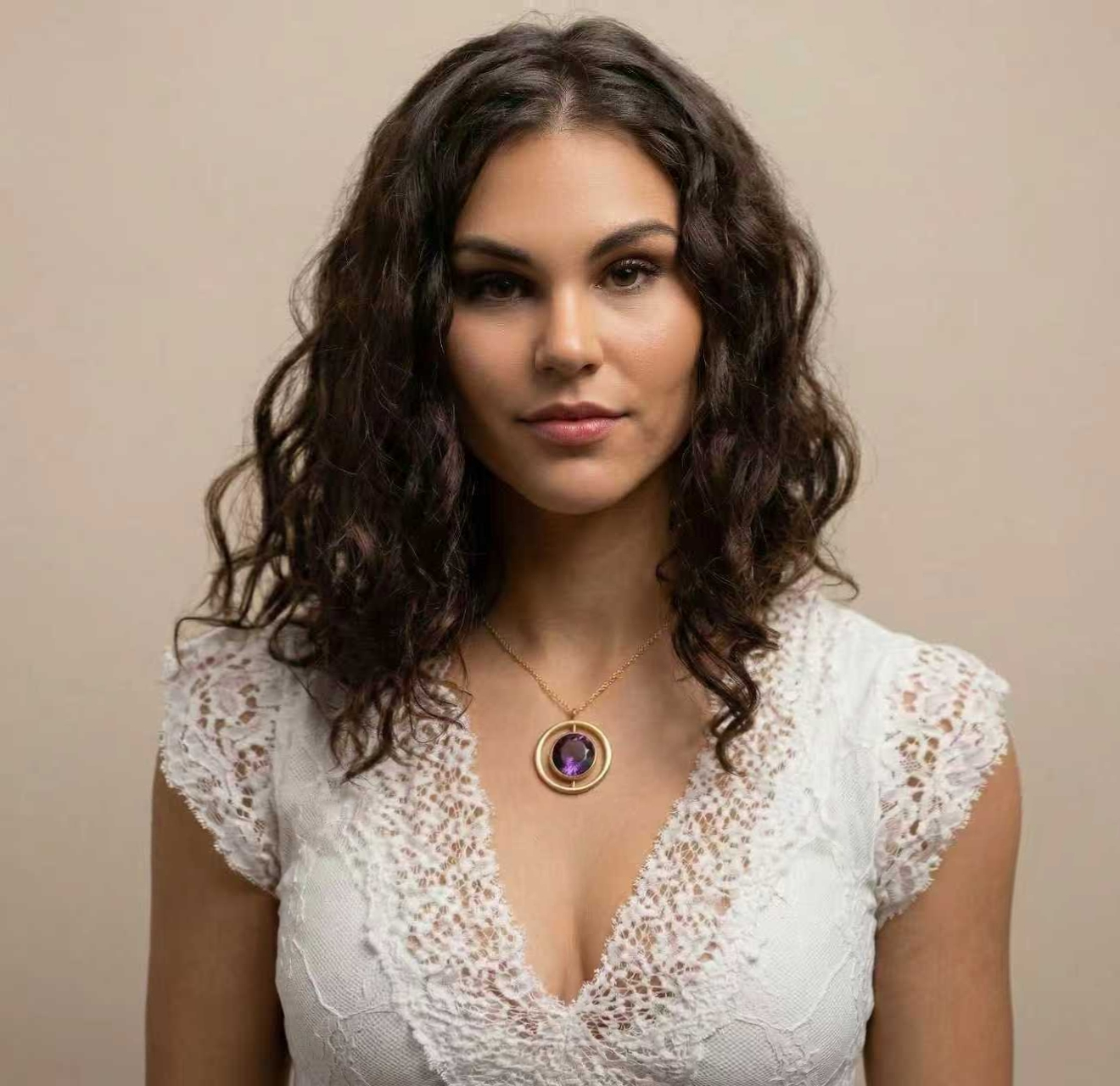
In t”Two labels show up constantly in this market: ‘Siberian Amethyst’ and ‘Dark Amethyst.’ They’re not the same thing. One is a color grade. The other is a vague description that can mean almost anything.
The price gap between them can be significant. Here’s how to tell which one you’re actually looking at.”
1. Naming Origin of the Amethyst Crystal: What is “Siberian”?
To see through labels, one must first understand the deviation between the origin of these terms and their modern definitions.
1. Origin and Modern Qualitative Changes of “Siberian Amethyst”
Historical Origin: “Siberian Amethyst” was indeed originally a geographical term. It originated from the Ural Mountains and Siberian mining areas in Russia. In the 19th century, this region produced the world-recognized highest-quality amethyst—they boasted an extremely intense purple color and shimmered with red or blue hues under incandescent light. This quality was once monopolized by European royalty and was known as the “Royal Hue.”
Modern Definition (Industry Norm 1): However, you must know a harsh geological fact: the genuine Russian commercial-grade amethyst mines were depleted decades ago.
In today’s jewelry industry (according to GIA and CIBJO standards), “Siberia” has evolved from a proof of origin to the highest color grade.
In short, as long as the color of an amethyst meets that legendary standard, regardless of whether it is from Brazil, Zambia, or Uruguay, merchants can legally refer to it as “having Siberian color” in their commercial descriptions.
2. Market Pitfalls of “Dark Amethyst”
In contrast, “Dark Amethyst” is a broader and more ambiguous market description.
Definition: It usually refers to amethysts with relatively high saturation and deep tone. But the key point is: “dark color” does not guarantee “luster.”
GIA Standard Warning: According to the grading of the GIA (Gemological Institute of America), amethyst has an extremely wide range of hues. Although darker colors are generally more expensive than lighter ones (such as Rose de France), the GIA specifically points out that if an amethyst is too dark, appearing like a black stone in low light (extinction), its value will instead be significantly reduced.
2. Strict Standards for Color and Quality: How to Distinguish by Hue Like an Expert?
If you see the words “Siberian” or “top-grade dark” in an advertisement, please don’t rush to pay. Please take out this “geological ruler” and measure it.
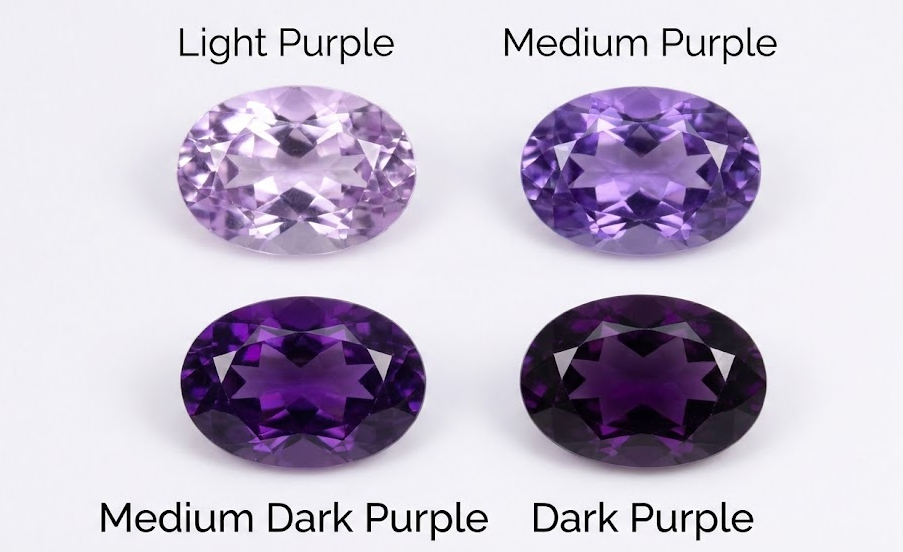
Evaluating amethyst color involves three core dimensions: hue, saturation, and tone.
1. Parameter Deconstruction of the “Siberian Class”
The true “Siberian color” is not simply “very purple.” According to high-end gemstone trade standards, it must meet extremely precise color composition:
- Primary Hue: Must reach 75% – 80% rich purple.
- Secondary Hue: Must be accompanied by 15% – 20% blue tone. It is precisely this deep, cool-colored background that can set off the red flash.
- Visual characteristics of the amethyst crystal: The color is extremely uniform, with extremely high saturation. Most importantly, it has a medium-dark tone (medium-dark tone)—deep enough yet transparent enough.
2. Visual Defects of “Ordinary Dark Color”
In contrast, ordinary “dark amethyst” often has the following inherent flaws:
- Hue deviation: Purple may have obvious brown (Brown) or bronze (Bronze) tones, which is a sign of unstable iron content or uneven heating.
- Extinction: This is the biggest pitfall. Due to excessive saturation combined with poor cutting (often too deep), light is completely absorbed and cannot be reflected after entering the crystal.
- Visual characteristics: It may appear purple in strong light, but in indoor lighting or dim areas, it looks like a lifeless black glass mass.
| Dimension | Siberian Grade | Commercial Dark |
| Hue Composition | 75% Purple + 20% Blue/Red | Purple mixed with brown/gray |
| Light Performance | Deep & Clear | Opaque and light-absorbing (Opaque Look) |
| Low-light performance | Still maintains the purple halo | Blackout (Extinction) |
| Value Assessment | Rare, investment grade | Ordinary, decorative grade |
3. Trade Secrets and Core Values: Why is “Red Flash” the Ultimate Anti-counterfeiting Code?
Since origin is not the sole criterion, and neither is shade, then what exactly is the ultimate anti-counterfeiting code for identifying “top-grade”?
The answer is a special optical effect—Red Flash.
What is “Royal Red Flash”?
This is the soul of the “Siberian” amethyst. Due to the trace hematite lattice or special optical axis orientation inside the crystal, when you rotate this deep purple crystal under incandescent or warm light, a vivid magenta or cherry red fire will suddenly jump out from the deep blue undertone.
This is the true pursuit of collectors. Deep purple without a red flash is just ordinary purple; deep purple with a red flash is the “royal purple.”
4. Modern Inheritors: Where to Find the “Red Flash”?
Russia’s commercial deposits are gone. The color grade remained; the geography didn’t.
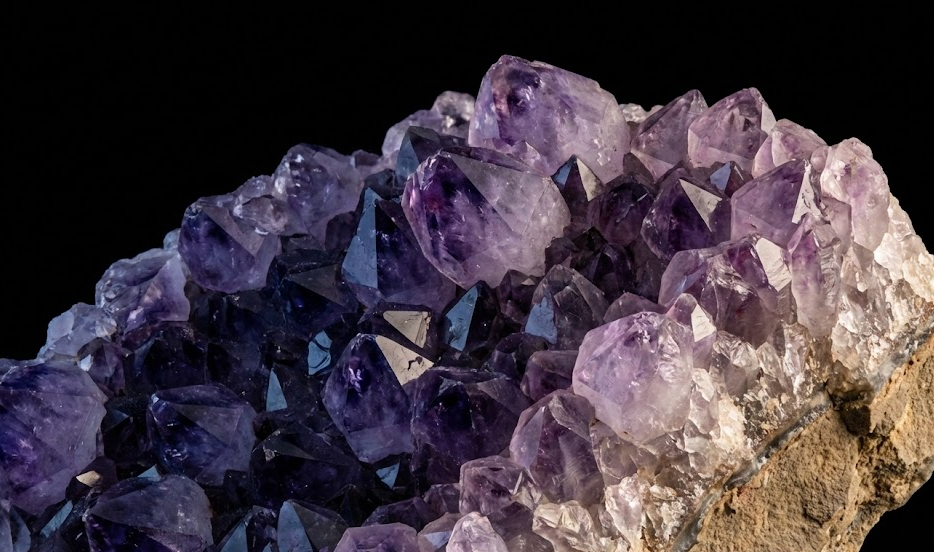
The closest modern equivalent comes from the Artigas region in Uruguay — low-temperature mineralization, basalt-sealed cavities, very little of the brown undertone that kills a stone’s brilliance. Zambia produces Red Flash too, with its own hematite-driven optical signature. But if you’re looking for something that reads closest to what the historical Siberian grade described, Artigas is where most serious collectors start.
Our pieces in this range are sourced from established wholesale partners in Artigas, Uruguay.
Here, we’ve compiled a “Modern Shopping Cheat Sheet” to help you see through the essence behind the labels and amethyst quality grades:
“Siberian Amethyst” (Marketing Term): Beware of inflated prices. Sellers must be required to provide videos to confirm whether it meets the 75/20 color ratio and whether there is a “red flash.” If it’s just a nice-sounding name, don’t buy it.
“Uruguayan Artigas” (Pragmatist): This is the best modern choice. The unique low-temperature mineralization environment in the Artigas region results in very few brown tones in its crystals, making it the source currently closest to the “Siberian color” on Earth.
5. Practical Suggestions: How to Choose Your “Heirloom Quality Gem”?
Four things I actually check before a piece goes into inventory:
- The Light Test: Don’t just look at the photos taken by merchants under strong lights. Ask to see what the crystal looks like under natural scattered light.
- Testing Criteria: If it appears black when not illuminated, it is “dark amethyst”; if it still shows a faint deep purple hue when not illuminated, then it is a good stone.
- Look for the “red tone”: When viewing the video, pay attention to the edges of the crystal rotation. You’re looking for that 15-20% secondary red. This red glow is proof of the crystal’s perfect clarity and color saturation.
- Check the “zoning” (Zoning): Hold the stone up to the light. Although top-grade “Siberian color” allows for zoning, the color must be uniform when viewed from the front. If obvious colorless transparent areas or brown patches are seen, it can only be classified as commercial grade.
- Raw Integrity: If you purchase a geode or rough stone, please check the back. Genuine high-quality Artigas specimens will retain the natural basalt rind. If the back is covered with cement or glue, it is often to conceal the fragility of the rock layer, which is a negative factor in high-end collections.
Conclusion
A label is a starting point, not a guarantee. ‘Siberian’ tells you what color someone is claiming. It doesn’t tell you whether the stone actually has it.
Ask for a video in natural light. Look for the red at the edges when the stone rotates. If it’s there, you’ll know. If it isn’t, the name doesn’t matter.
If you want to see what we currently have from Artigas — the pieces that passed the rotation test — they’re here.
Explore our “Artigas Midnight Purple” curated collection
Frequently Asked Questions About Amethyst Crystal Grading
What is Siberian Amethyst?
Historically, “Siberian Amethyst” referred to stones from Russia. Today, it is a trade term describing the highest color grade of amethyst crystal: deep purple with blue undertones and flashes of red, regardless of actual origin (often from Uruguay or Zambia).
Is darker amethyst always more valuable?
No. While deep color is desirable, if an amethyst crystal is too dark, it suffers from “extinction” (looking black/opaque in low light). The most valuable stones are deep purple but still transparent enough to reflect light and color.
What is the “Red Flash” in amethyst?
The “Red Flash” (or Royal Red) is a rare optical effect found in top-quality amethyst crystals. When rotated under warm light, a deep purple stone will momentarily flash vivid magenta or cherry red. This is the hallmark of investment-grade amethyst.
Where does the best modern amethyst come from?
Since the original Russian mines are depleted, the Artigas region in Uruguay is currently considered the premier source for “Siberian-grade” amethyst crystals, known for their intense color saturation and clarity.


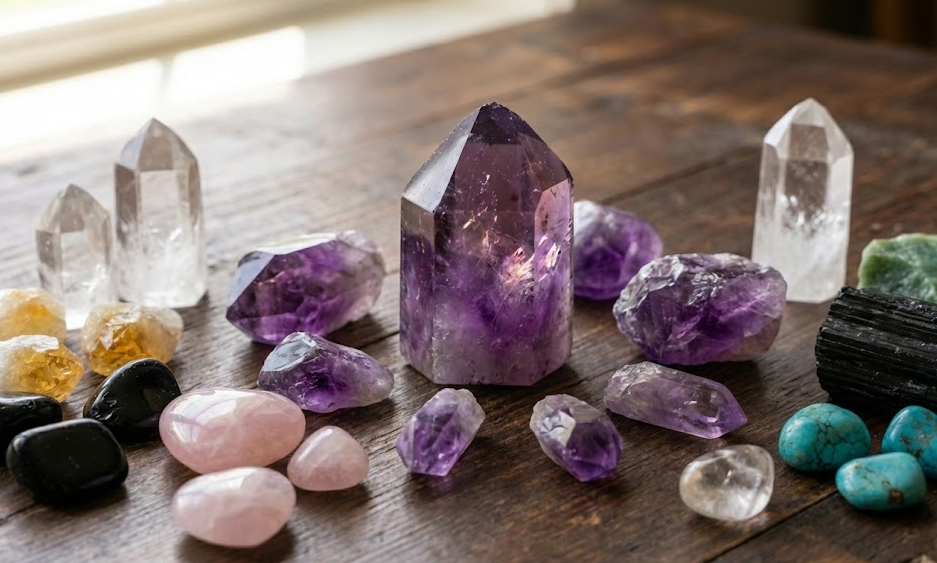

 Crystal Cluster
 Crystal Tower
 amethyst crystal ball
 Amethyst Caves for Sale
 Amethyst Bracelets
 Amethyst Earrings
 Amethyst Necklaces
 Amethyst Rings
 amethyst crystal healing
 Amethyst Beauty & Wellness
 Crystal Home Decor
 Spiritual & Divination Tools