
How to Tell If an Amethyst Is Real: A Step-by-Step Guide
The first amethyst I ever bought cost twelve dollars. It was not particularly beautiful — the color leaned toward pale lavender, the base rock was gray, and the handwritten tag in purple pen read simply: amethyst — for calm nights — $12. I picked it up and noticed it was heavier than I expected. That small detail stayed with me. I did not buy it because I believed in anything mystical. I bought it because it was twelve dollars and I needed something to look at that was not a screen.
That stone sent me down a path through Fe3+ color mechanics, mineral shows, and eventually GIA gemology coursework. Along the way, I learned that knowing how to tell if an amethyst is real is not about one magic trick. It is about a series of small, physical checks that anyone can do — no lab equipment, no gemologist credentials, just your hands, your eyes, and a few minutes of attention.
Whether you are looking at a raw crystal, a geode, or an amethyst ring in a jewelry case, the questions are the same: Is this natural amethyst, or is it dyed glass, synthetic quartz, or coated stone? This guide walks you through each test step by step — and covers jewelry and geodes specifically, because they each have their own red flags. If you want a shorter overview, we also have a quick guide to identifying real amethyst crystals.
Why Real vs. Fake Amethyst Matters More Than You Think
Dyed glass, synthetic quartz, coated stones, and mislabeled crystals all circulate in the market. Some are sold by well-meaning sellers who do not know the difference. Others are sold by sellers who know exactly what they are doing.
Price alone does not tell you much. Some genuine amethyst is very affordable — a small tumbled stone or a medium Brazilian geode does not need to cost a lot. And some fakes are overpriced, labeled with grades and terms that sound authoritative but mean nothing standardized. Understanding how to tell if amethyst is real versus fake protects your money, but it also protects your trust in what you are bringing into your home.
The tests below are the ones I use myself. They build on each other — start with the simplest ones and move to the more specific checks. None of them require special equipment. All of them are ones I wish someone had walked me through before I spent that first twelve dollars.
Step 1: Pick It Up — The Weight Test
This is the first thing I do, every time. When I picked up that very first stone, the thing I noticed before anything else was the weight. It felt heavier than I expected for its size. That is because real amethyst is natural silicon dioxide (SiO2) with a Mohs hardness of 7. It is denser than glass and noticeably heavier than plastic or resin of the same dimensions.
Hold the piece in your palm. Does it feel unexpectedly light for a solid stone? That is a first warning sign. Plastic and resin imitations are common, especially for tumbled stones and palm stones, and they are significantly lighter than real quartz.
If you are checking a piece of jewelry — say, wondering how to tell if a amethyst stone is real when it is already set in a ring — the weight test still applies. A real amethyst gemstone will make the ring feel more substantial than a glass or acrylic substitute of the same size.
Step 2: Press It to Your Skin — The Temperature Test
Real stone has different thermal conductivity than glass, plastic, or resin. This is something you can feel directly with no tools.
Press the stone against the inside of your wrist or your cheek — areas where your skin is most sensitive to temperature. A real amethyst crystal will feel cool when it first touches your skin, then warm slowly from your body heat. Glass also feels cool, but it warms faster and more uniformly. Plastic or resin warms almost immediately — you will barely feel that initial coolness.
This test works on everything from raw specimens to jewelry stones. It is quick, it is free, and it is surprisingly reliable once you have done it a few times and know what natural mineral feels like against skin.
Step 3: Look for Color Zoning — Why Uneven Purple Is a Good Sign
This is where understanding why amethyst is purple helps you spot fakes. Real amethyst gets its color from Fe3+ — triple iron ions — trapped inside the quartz crystal structure and activated by natural background radiation over millions of years. This is a geological process. It does not happen evenly.
The result is color zoning: patches where the purple is darker, areas where it lightens to almost clear or white, gradient transitions from deep violet at one end to pale lavender at the other. This is not a flaw. It is the geological fingerprint of natural formation.
I spent a long time reading about Fe3+ color mechanics one evening, going through my GIA coursework. What struck me was how specific and explainable the color is — there is a real chemical reason this stone is purple, not because of anything mystical, but because of iron and time. That specificity felt more honest to me than any vague claim about what the stone might do for you. You can read more about those amethyst properties and meanings in our full guide.
Completely even, saturated purple throughout the stone is more likely to be dyed glass or synthetic quartz. Real amethyst has personality in its color. It shows you where it grew.
For a deeper look at what separates higher-quality natural amethyst from lower grades, our amethyst quality and value guide breaks down color depth, crystal density, and what actually affects price.
Step 4: Check for Natural Inclusions Under Light
If you want to tell if an amethyst crystal is real, this step gets closer to proof. Hold the stone under a bright light — a desk lamp, a window, or even your phone flashlight. Look inside.
Real amethyst often contains internal features: feather-like veils, tiny needle-like lines, milky or cloudy zones, and sometimes small mineral specks. These are natural inclusions — traces of the conditions under which the crystal grew over thousands to millions of years. They are signs of authenticity, not defects.
Now, here is the red flag: round bubbles. Real quartz does not contain round, uniform bubbles. If you see small, perfectly spherical air pockets inside the stone, you are almost certainly looking at glass. Glass sometimes has swirl lines from manufacturing as well, which natural stone does not show.
If the stone is perfectly clear, perfectly uniform, and has zero internal features whatsoever — proceed with caution. That level of flawlessness is rare in natural amethyst and common in synthetic or glass imitations.
Learn more about the different amethyst forms and shapes to know what natural variations to expect depending on whether you are looking at a raw crystal, a polished tower, or a tumbled stone.
Step 5: The Scratch Test (Use Sparingly)
Amethyst sits at 7 on the Mohs hardness scale. That means it can scratch ordinary glass — and it means that if your stone is scratched by something softer than quartz, it is probably not real amethyst.
Find an inconspicuous area on the stone’s surface and an inconspicuous area on a piece of ordinary glass. Gently draw the stone across the glass with light pressure. If the stone leaves a scratch on the glass, that is consistent with quartz hardness. If the glass scratches the stone instead, the stone is softer than quartz and is not natural amethyst.
A few cautions: this test can scratch the glass surface, so do not use anything you care about. It can also leave a faint mark on a polished stone if done aggressively. This test is most useful for raw specimens and loose stones — for jewelry you want to keep pristine, rely on the other tests first. The scratch test is an optional confirmation, not a required step.
How to Tell If an Amethyst Ring or Necklace Is Real
Jewelry adds another layer because you are evaluating two things at once: the stone and the setting. If you are wondering how to tell if amethyst is real in jewelry, here is what to check.
The setting. Look for a 925 stamp on the inside of the ring band or the clasp of a necklace chain. This marks the piece as 925 sterling silver — 92.5% silver alloyed with 7.5% copper — which is the standard for quality silver jewelry. A 925 stamp also means the piece is nickel-free, so it should not cause skin discoloration or green fingers after extended wear. If there is no stamp and the seller cannot confirm the metal, the setting may be plated base metal that will tarnish or discolor quickly.
The stone itself. The same visual checks apply. Use your phone flashlight to look for color zoning inside an amethyst ring or pendant. A real stone will show some variation in color depth. For an amethyst necklace, hold the pendant in your palm and check the weight relative to its size — a surprisingly light stone may be glass or coated material rather than genuine quartz.
The feel. Real amethyst jewelry paired with 925 sterling silver should feel solid. The ring band should not bend easily, the chain should not feel flimsy, and the stone should not rattle in its setting. If it feels hollow or insubstantial, something may be off.
One practical note on rings: adjustable ring designs solve the sizing problem for first-time buyers who are not sure of their ring size. This is a design choice, not a quality indicator — but it does mean you are less likely to end up with a piece you cannot wear.
How to Tell If an Amethyst Geode Is Real
Geodes are a different animal. They are larger, heavier, and have different tells than a loose stone or a piece of jewelry.
Check the base rock. The outer shell of a real amethyst geode is rough, gray-brown basalt — the volcanic rock the crystals grew inside. It should look natural: uneven, rough, sometimes layered. If the base rock is smooth, painted, or uniformly colored, it may be a manufactured shell with crystals glued inside.
Check the crystal direction. Real geode crystals grow inward from the shell, with pointed terminations facing toward the cavity center. If crystals are pointing in random directions or appear to be attached to the surface rather than growing from the rock itself, they may be glued on.
Think about origin. Brazilian amethyst geodes tend to be larger with a wider color range — from lavender to medium purple — and are generally more affordable for their size. Uruguayan geodes are smaller on average, but the crystals are denser and the color runs deeper, sometimes reaching a deep blue-purple that the industry calls Emperor Purple. Neither is better — it depends on what you want. As I explain to people who ask: if you want a big visual impact on a shelf, Brazilian is the practical choice. If you want the deepest possible color and you are willing to pay more for it, Uruguay is where to look.
Watch for dye signs. Dyed geodes often have unnaturally vivid color concentrated at the crystal tips, or color that coats the base rock evenly. Real amethyst does not color the matrix rock itself — the basalt stays gray-brown. If the entire interior, including the rock, is aggressively purple, ask questions.
Look for WYSIWYG photos. Honest sellers show you a photograph of the exact piece you will receive — not a stock photo or a “representative” image. One-of-a-kind photography is a small operational detail, but it is one of the most reliable signs that a seller is not hiding something.
What AAAA Grading Won’t Tell You
If you have been shopping for amethyst online, you have probably seen terms like AAAA, AAA, AA, and A scattered across product descriptions. Here is something I wish I had known earlier: these are not standardized grades. There is no international gemological grading system for amethyst the way GIA grades diamonds. A, AA, AAA, AAAA are descriptive terms that the crystal trade uses loosely, and every seller defines them differently.
I used to list my stones that way too. Then I realized that some sellers labeled everything AAAA because no one could argue — there is no authority to appeal to. The term had become meaningless. So I stopped using it.
What actually tells you something about the stone: documented origin, an accurate photo of the exact piece, a specific color description, the weight in grams, and the dimensions in centimeters or inches. These are facts you can verify. A grade label with no shared definition is not a fact — it is marketing.
Why UV Fading Does Not Mean Your Amethyst Is Fake
This one catches a lot of people off guard. A buyer once messaged me because her crystal tower had visibly lightened in color over a few months. She was worried she had been sold a fake. But the stone was real — I knew it because I had sourced and photographed it myself.
What happened was UV fading. She kept the crystal on a south-facing windowsill where direct sunlight hit it for about two hours every afternoon. Ultraviolet light reverses the Fe3+ activation that gives amethyst its purple. Over time, the color faded from deep purple to lavender. The fading is permanent and irreversible. That deep color is gone.
This is a care issue, not an authenticity issue. Real amethyst fades in direct sunlight. The solution is simple: keep your amethyst out of direct sunlight. Display it on a shelf, a desk, or a nightstand — anywhere the sun does not hit directly. If you use your crystal for cleansing rituals or personal practice, moonlight is safe and will not affect the color. For a full rundown on keeping your stone looking its best, see our amethyst care and cleansing guide.
Questions to Ask Before You Buy
After you have run through the physical and visual tests, the final step is asking the seller directly. Here are the questions that matter most:
- Where was this stone mined? Documented origin — Brazil, Uruguay, or a specific region — tells you more about the stone than any grade label. A seller who knows their supply chain can answer this.
- Is this photo of the exact item I will receive? WYSIWYG (what you see is what you get) photography means the stone in the picture is the stone that ships to you, not a “representative” stock image.
- What are the exact weight and dimensions? Specific measurements let you compare across sellers and verify claims about size and density.
- What metal is the setting? For jewelry, ask specifically for 925 sterling silver confirmation. If the seller says “silver tone” or “silver-plated,” that is not the same as 925 sterling silver.
An honest seller will answer these questions without hesitation. If someone cannot or will not tell you where a stone came from, or if their product photos look different from item to item with no individual photo shown, those are reasons to keep looking.
FAQ: Common Questions About Real vs. Fake Amethyst
How can you tell if an amethyst is real or glass?
Use the weight test first — real quartz is heavier than glass of the same size. Then check for round bubbles inside the stone: glass has them, quartz does not. The temperature test helps too — glass warms faster against skin than natural stone. And look for color zoning; perfectly even purple throughout is a warning sign.
Does real amethyst have inclusions?
Yes. Natural inclusions like feather-like patterns, tiny needle lines, and milky zones are signs that the stone formed in the earth over millions of years. These are authenticity markers, not defects. If a stone is completely clear and glassy with no internal features, it may be synthetic or glass.
Can you scratch real amethyst?
Amethyst sits at Mohs hardness 7, which means it scratches glass easily. It is harder than steel (5.5–6.5) but softer than topaz (8), corundum (9), and diamond (10). If your stone scratches easily from something softer than quartz, it may not be real.
How do I know if my amethyst jewelry is real?
Check for a 925 stamp on the band or clasp to confirm sterling silver. Use your phone flashlight to look for color zoning inside the stone — real amethyst shows variation in purple depth. Ask the seller about documented origin and whether the photo is of the exact item you will receive.
Can fake amethyst fade in the sun?
Both real and fake stones can change color with sun exposure, but the mechanism is different. In real amethyst, UV light reverses the Fe3+ color activation, causing permanent fading. Some dyed stones also fade as the dye breaks down. Fading alone is not definitive proof of a fake — but if your stone has never been in sunlight and still shows dramatic color loss, that warrants closer inspection. Our 5 key tips for identifying real amethyst cover more red flags to watch for.
Ready to choose a piece you can trust? Browse our documented-origin amethyst collection with accurate photos of every item.
 Crystal Cluster
 Crystal Tower
 amethyst crystal ball
 Amethyst Caves for Sale
 Amethyst Bracelets
 Amethyst Earrings
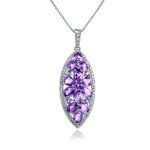 Amethyst Necklaces
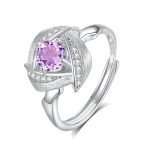 Amethyst Rings
 amethyst crystal healing
 Amethyst Beauty & Wellness
 Crystal Home Decor
 Spiritual & Divination Tools