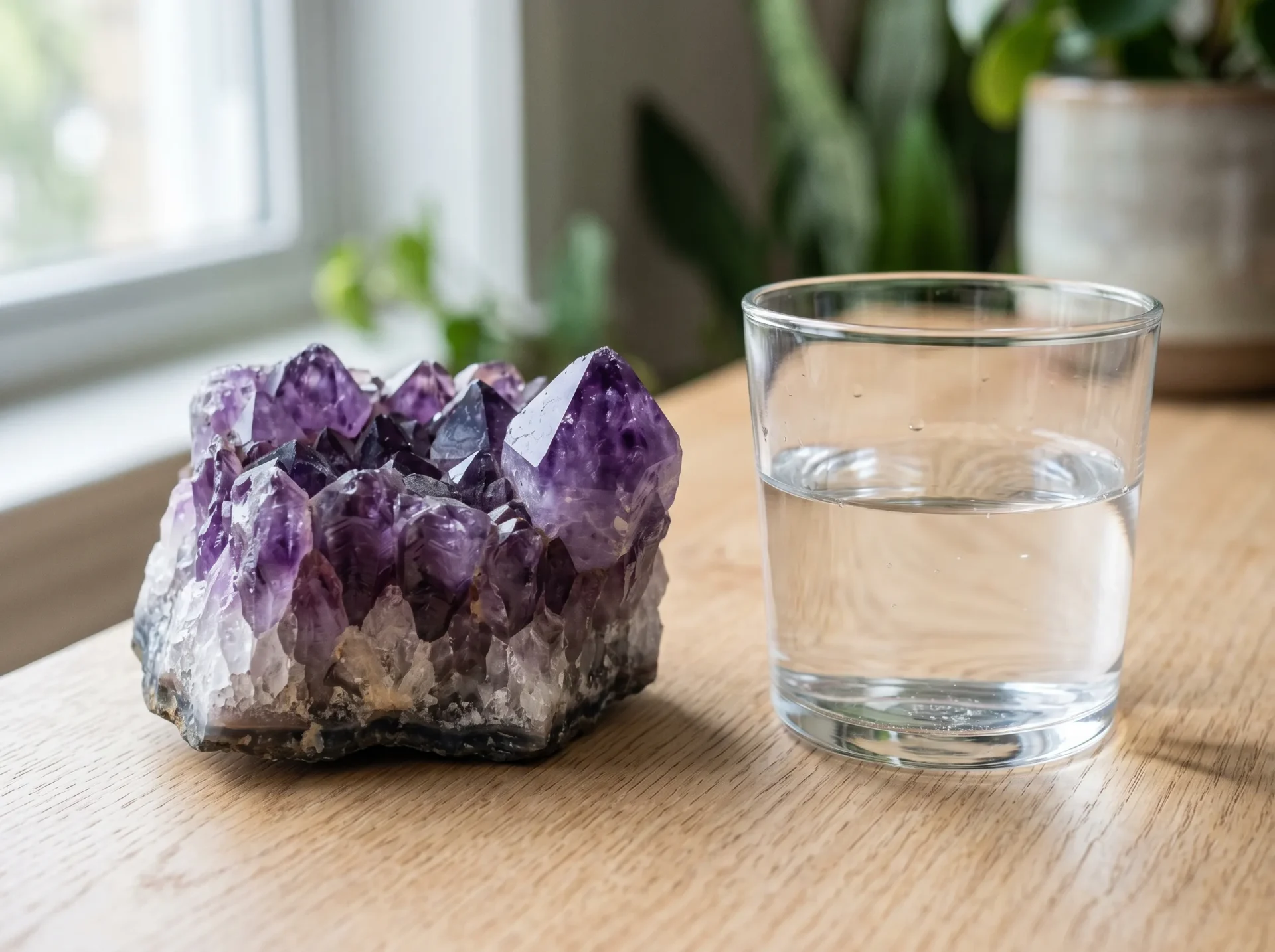
Can Amethyst Go in Water? Full Guide to Safe Crystal Cleansing

If you’re asking this question, you’ve probably just bought an amethyst crystal and want to cleanse it — or you’ve seen someone talk about crystal water and want to know if amethyst is safe to use that way. Either way, you deserve a straight answer instead of a vague “it depends.”
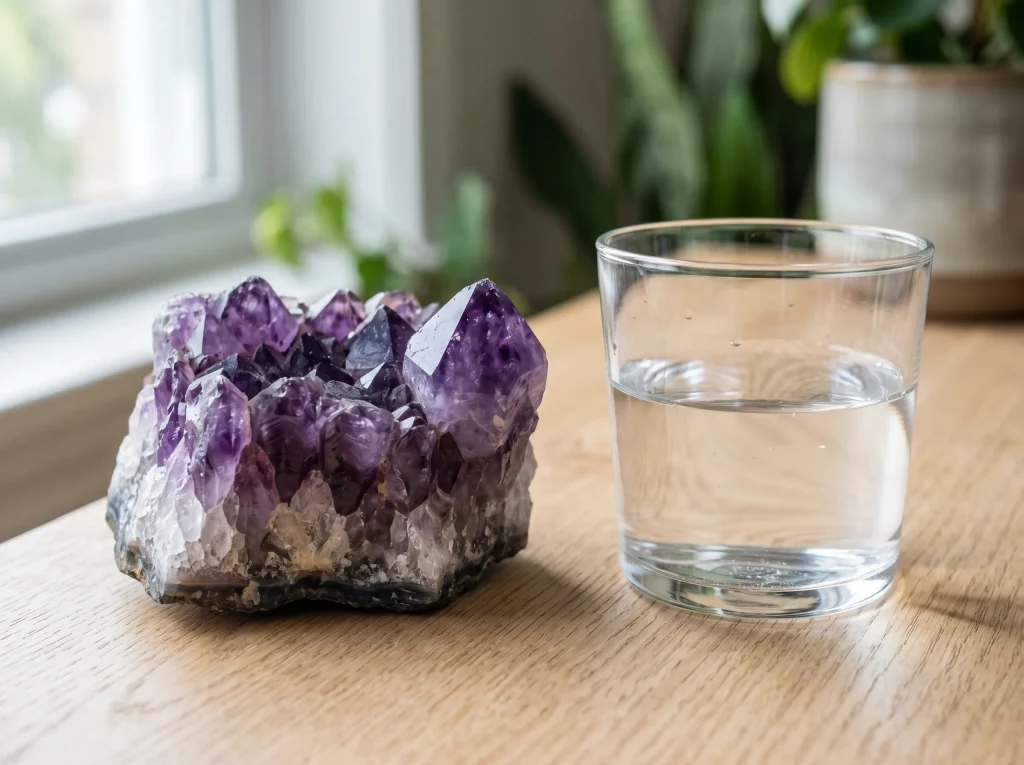
Here it is: amethyst can get wet. Brief contact with water — rinsing, wiping down — is fine. What’s not recommended is prolonged soaking, and salt water is a specific problem regardless of duration. The reasons are geological, not metaphysical, and they’re worth understanding before you fill a bowl.
The Short Answer — and Why It’s More Complicated Than Yes or No
Amethyst is a variety of quartz, with a Mohs hardness of 7. That hardness means water alone won’t dissolve or structurally damage the crystal itself—you’re not going to ruin amethyst by getting it wet.
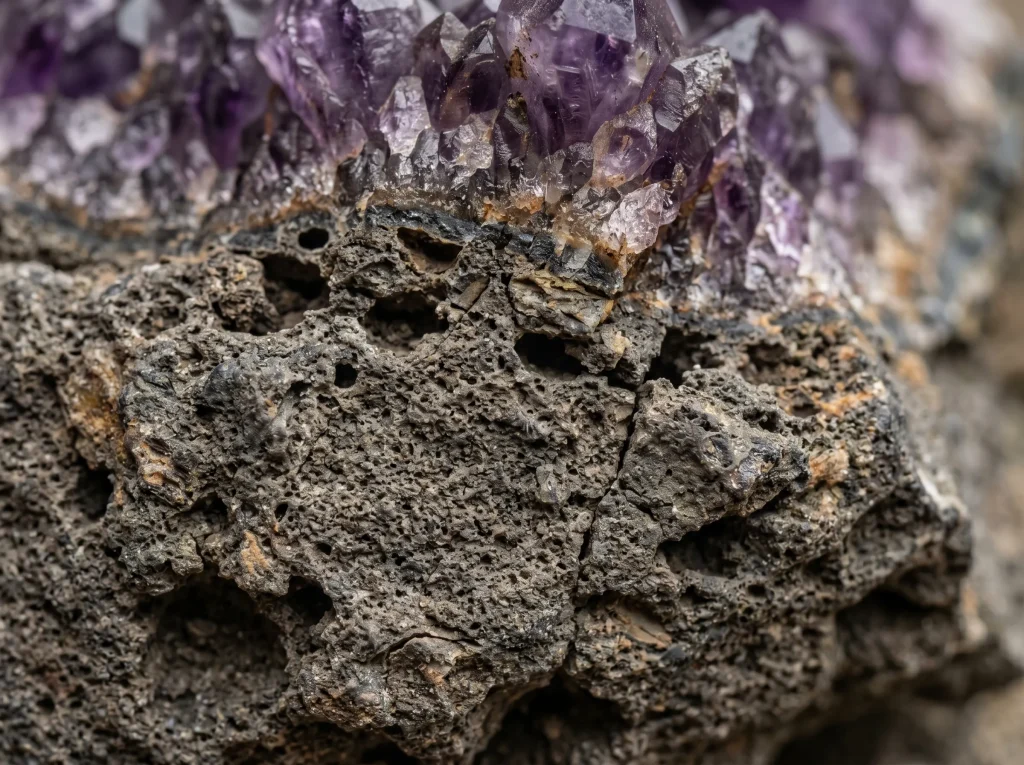
The complication comes from two other things: the matrix rock that many amethyst pieces grow on and the iron-based inclusions that give amethyst its color.
The basalt matrix—the dark base rock of most geodes and clusters—is more porous and reactive than the quartz crystals it supports. Extended water exposure, particularly salt water, can gradually work into the matrix and cause surface erosion or weakening over time. The iron compounds responsible for amethyst’s purple color (Fe³⁺) are also vulnerable to prolonged exposure, particularly to acidic or highly mineral-rich water.
Think of it this way: the same logic that applies to UV exposure applies here. A single afternoon in the sun won’t visibly fade your amethyst. A year on a south-facing windowsill will. A quick rinse won’t damage your piece. Months of soaking in salt water might — and you won’t see the damage until it’s already done.
What Happens When Amethyst Gets Wet?
The quartz crystal itself is chemically stable in water at normal temperatures and pH levels. This is why a brief rinse to remove dust or handling oils is completely fine — the water isn’t interacting with the crystal structure in any meaningful way.
What’s more vulnerable:
- The matrix rock. Basalt and other host rocks that form the base of geodes and clusters are softer and more porous than the amethyst crystals they support. Prolonged water exposure—especially hot water or water with minerals or salt dissolved in it—can cause gradual surface erosion, mineral leaching, or, in extreme cases, structural weakening of the base.
- Natural inclusions. The iron compounds that produce amethyst’s color, along with other natural inclusions like goethite (needle-iron minerals), can be affected by acidic water or extended soaking. In most cases this isn’t dramatic or immediate—but it’s a cumulative effect that works against preservation.
The practical line: rinsing under cool tap water for thirty seconds to clean off dust = fine. Submerging in a bowl of water overnight = not recommended. Submerging in salt water for any extended period = more specifically problematic, which brings us to the next question.
Can Amethyst Go in Salt Water?
This one gets a clearer answer: not recommended, especially not for extended periods.
Saltwater is the traditional crystal-cleansing method recommended in a lot of older wellness literature—the idea being that salt purifies and neutralizes energy absorbed by the stone. The intention behind the practice is understandable. The chemistry, though, creates a real problem.
Dissolved salt in water creates a mildly corrosive solution that accelerates the kind of surface erosion that plain water causes more slowly. For a piece of quartz with no matrix or inclusions, the risk is lower. For an amethyst geode with a basalt base or for raw amethyst with iron-based inclusions near the surface, saltwater soaking over time will degrade the material in ways that aren’t reversible.
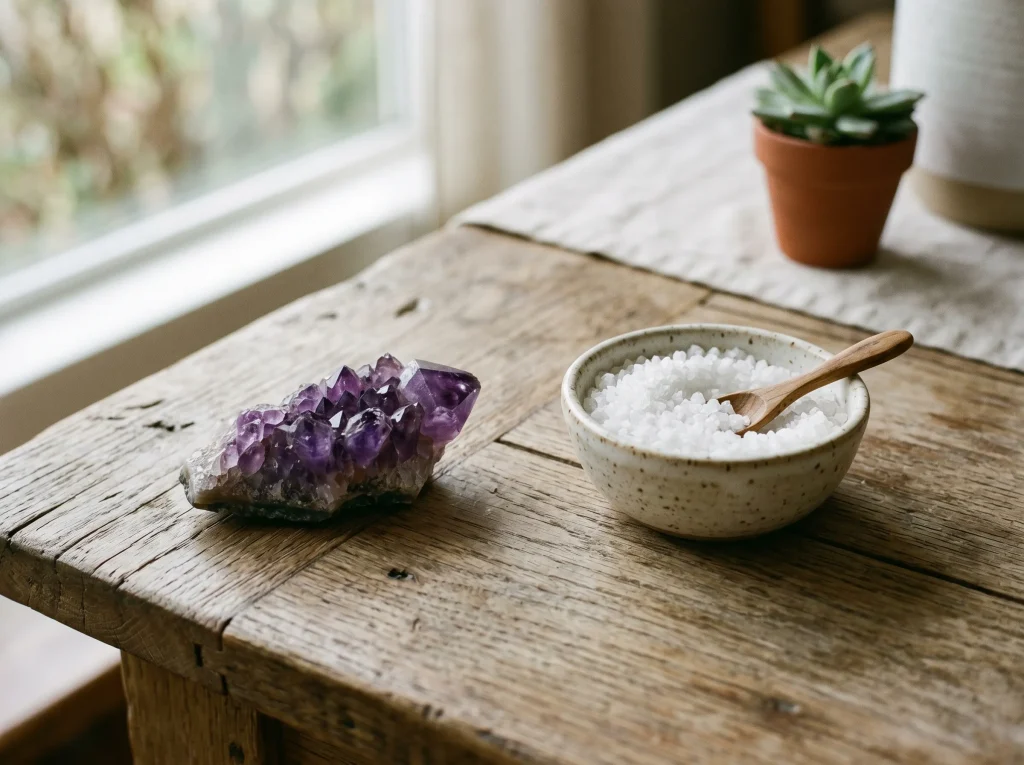
The other issue is that the iron compounds responsible for amethyst’s color are precisely the components most vulnerable to this kind of chemical exposure. If you care about preserving the purple—and at the prices quality amethyst pieces command, you probably do—saltwater soaking isn’t worth the risk.
If you’ve seen saltwater cleansing recommended for crystals generally, note that it’s more appropriate for harder, non-iron-bearing stones. For amethyst specifically, safer alternatives work just as well without the downside.
Can You Put Amethyst in a Water Bottle or Make Crystal Water?
This practice — submerging a crystal in water that’s then drunk as an infusion — gets recommended in some wellness spaces. For amethyst specifically, the answer is not directly and not without understanding the risk.
The physical concern is that extended soaking (which is what making crystal water involves) carries the matrix and inclusion risks described above. Beyond that, for a drinking application, you’d want to be confident about the specific mineral composition of your stone and any coatings or treatments it may have undergone—information that’s often unavailable for commercially sold crystals.
I get asked about this a lot by buyers looking to make crystal elixirs. My answer is always the same: if you want the visual or traditional benefit of having the stone near your water, just place it on the table next to the glass.
If you want to work with amethyst in a water-adjacent way, the indirect method is safer: place the crystal beside the glass or carafe rather than inside it. Whether that achieves anything is a question we’ll leave to your own judgment—we’re not in the business of making claims about what water remembers.
How to Safely Clean Amethyst with Water
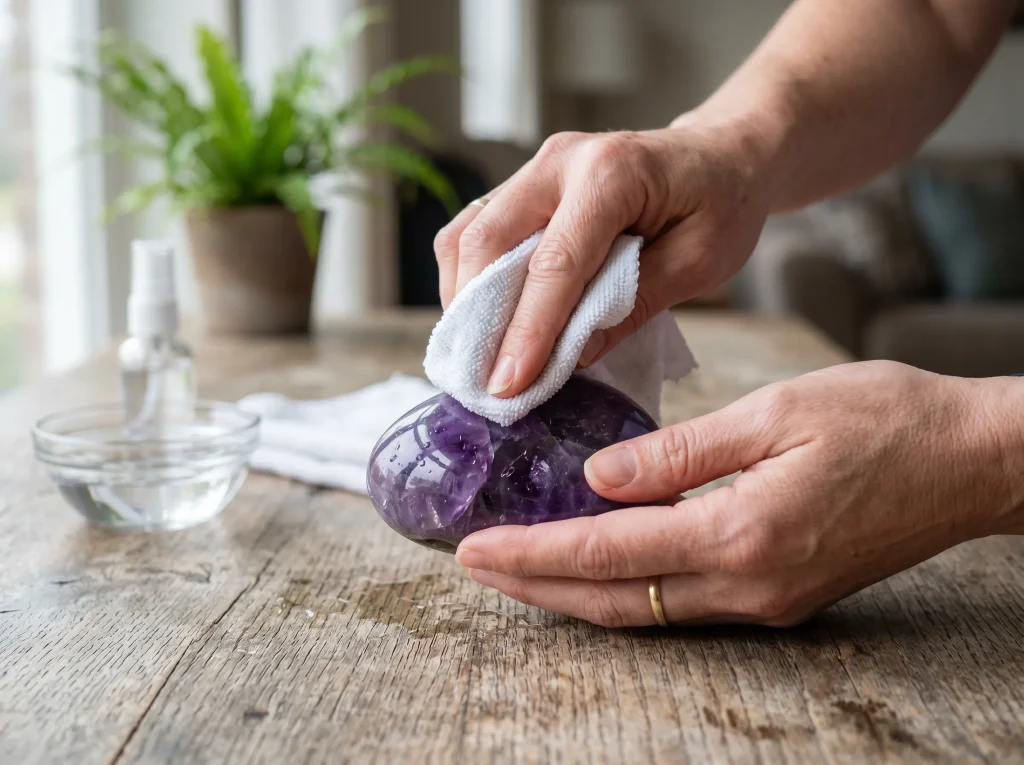
Physical cleaning and energetic cleansing are two different things. For physical cleaning—removing dust, oils from handling, and residue—water is fine when used correctly.
Here’s what safe looks like:
- Step 1: Use cool or lukewarm water. Avoid hot water — rapid temperature changes can cause micro-fractures in quartz over time, particularly in pieces with existing natural inclusions.
- Step 2: Rinse briefly under running water, or wipe with a soft damp cloth. Thirty seconds is enough to clean a piece that’s been sitting on a shelf.
- Step 3: Dry immediately with a soft cloth. Don’t leave amethyst sitting in standing water or on a wet surface.
- Step 4: Allow to air dry completely before storing or placing back in its spot.
What to avoid: ultrasonic cleaning machines (the vibration can propagate through natural fractures and cause damage), steam cleaning (heat plus moisture), and harsh cleaning products of any kind. Plain water and a soft cloth are genuinely all you need for physical maintenance.
Better Alternatives for Cleansing Amethyst
If your goal is energetic cleansing rather than physical cleaning, water isn’t the most effective method for amethyst anyway. Here are the three approaches that work well without any risk to the stone:
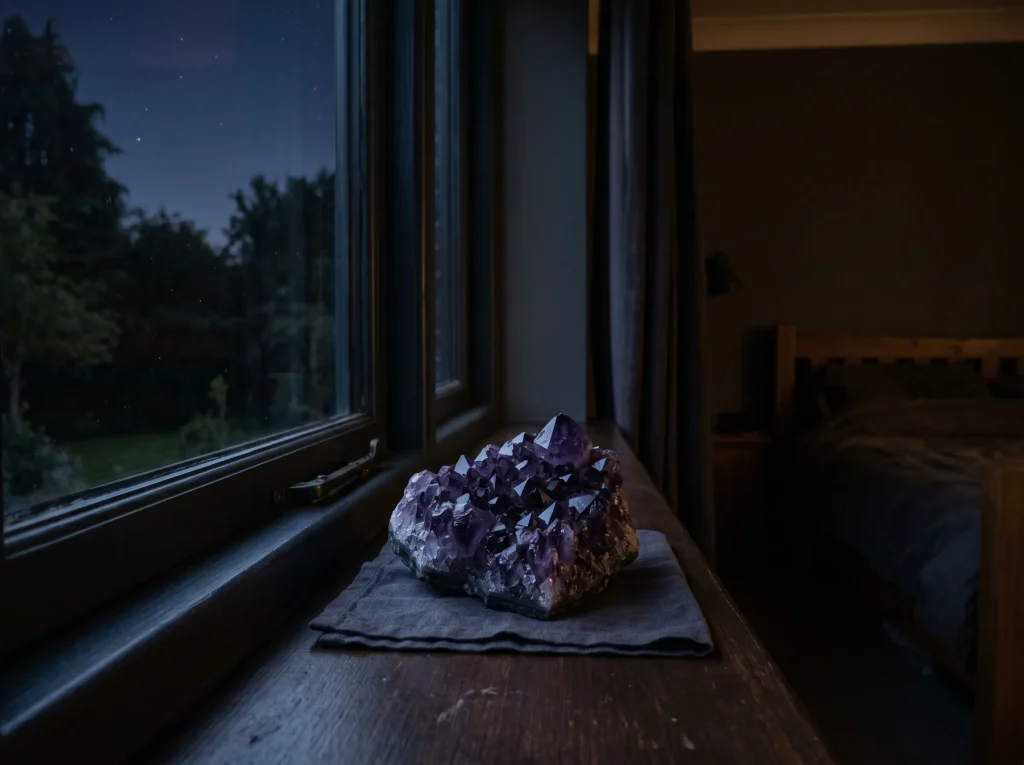
- Moonlight: Leave your amethyst on a windowsill or outdoor surface overnight during a full or new moon. Indirect ambient light is fine—a windowpane between the stone and the moon doesn’t negate the practice. This is the lowest-effort, zero-risk method, and it has no upper limit on how long you can do it. Morning light is also fine; what you’re avoiding is sustained direct midday sun.
- Sound bath: Hold a singing bowl near your amethyst and strike it several times, allowing the sound to move through the space around the stone. The vibration is gentle, non-contact, and carries no risk of surface or structural damage. This is particularly useful if you want to cleanse a piece quickly without waiting for the next full moon.
- Smoke cleansing: Pass your amethyst through the smoke of burning sage, palo santo, or cedar. Keep the stone moving—you’re not trying to coat it in smoke, just pass it through briefly. This is the fastest of the three methods and leaves no residue on the stone if done correctly.
For a complete guide to cleansing and charging your amethyst — including how often to cleanse, what each method does, and how to set intentions around the practice — the full amethyst cleansing guide is here.
The One Thing to Never Do with Amethyst and Water
Extended saltwater soaking. That’s the one.
Brief rinse: fine. Damp cloth: fine. Overnight in a salt bath: not fine, and not reversible once the damage accumulates.
The broader principle is the same one that applies to sunlight: amethyst is a durable stone in ordinary conditions, but it has two specific vulnerabilities — UV exposure and sustained contact with corrosive solutions — that cause permanent changes. Knowing both of those things before you set up a care routine means you won’t have to learn them the hard way.
If you’re shopping for amethyst and want to know that what you’re buying has been honestly represented—origin disclosed, piece individually photographed, and care instructions included—you can browse our collection of natural amethyst crystals and geodes here.
About this article: Written by Serena Delaney, Founder of Zerevia · GIA Gemology Graduate. Content is based on hands-on specimen assessment, GIA gemology coursework, direct supplier sourcing, and questions collected from our customers. Where conclusions are based on personal observation or traditional belief rather than third-party testing, this is noted in the text. Last reviewed: April 2026
For cleaning, sunlight, storage, and water-safe routines, use the full amethyst crystal care guide.
 Crystal Cluster
 Crystal Tower
 amethyst crystal ball
 Amethyst Caves for Sale
 Amethyst Bracelets
 Amethyst Earrings
 Amethyst Necklaces
 Amethyst Rings
 amethyst crystal healing
 Amethyst Beauty & Wellness
 Crystal Home Decor
 Spiritual & Divination Tools