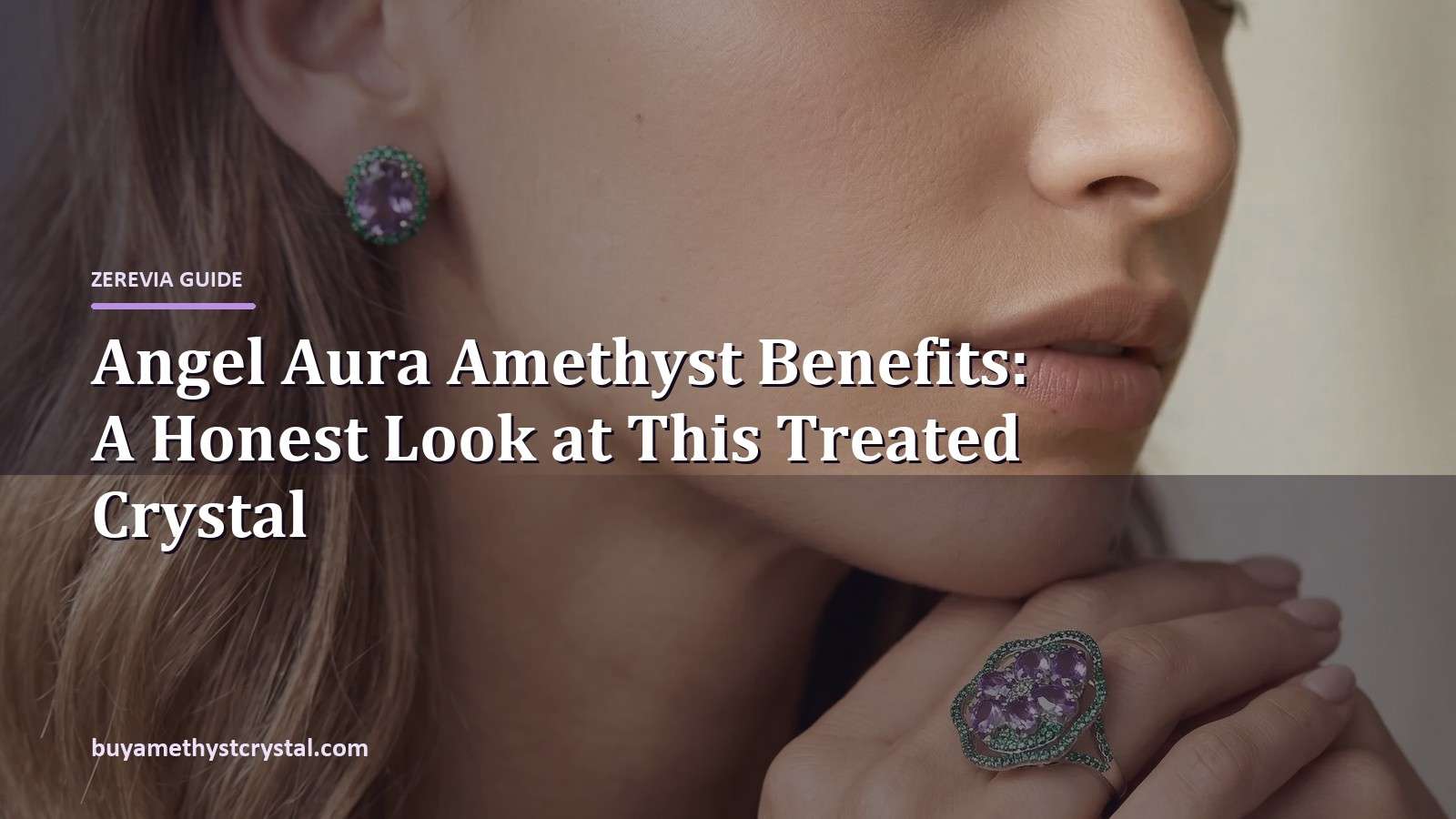

Angel Aura Amethyst Benefits: A Honest Look at This Treated Crystal
Angel Aura Amethyst catches light like almost nothing else in a crystal collection. Its surface shimmers with an opalescent wash of pink, blue, and gold that regular amethyst simply does not have. If you are researching angel aura amethyst benefits before buying, the most important thing to understand first is this: the iridescent coating is not something nature put there. It is a treatment applied to a natural stone.
That does not make it bad. It does make it different. And the difference matters for everything from how you clean it to how long the shimmer lasts.
This guide walks through what Angel Aura Amethyst actually is, what traditional practitioners and buyers tend to say about it, how it compares to untreated varieties, and the practical realities of owning one. If you are choosing between treated and natural stones, the amethyst healing properties overview is a useful starting point for understanding the base mineral before any coating is added.
What Exactly Is Angel Aura Amethyst?
Angel Aura Amethyst starts as a piece of natural amethyst—the same silicon dioxide mineral (SiO₂) that gets its purple color from trace amounts of iron (Fe³⁺) in its crystal lattice, rated at 7 on the Mohs hardness scale. In its untreated state, it is a straightforward quartz variety with color zoning, natural inclusions, and the usual characteristics you would find in any documented-origin specimen from Brazil or Uruguay.
The “angel aura” part happens in a lab. A thin layer of metal—typically platinum, sometimes combined with silver or titanium—is bonded to the crystal surface using a process called vapor deposition. The metal atoms deposit onto the stone at the molecular level, creating an ultra-thin film that refracts light into an iridescent rainbow sheen. The result is a crystal that looks like it was dipped in liquid opal.
Here is what that means in plain terms: the color play you see on the surface is an optical effect produced by the metal coating, not a property of the amethyst itself. Underneath, the stone is still amethyst. It still has the same hardness, the same crystal structure, and the same geological origin as any untreated piece. The coating is cosmetic. It is also permanent in the sense that it does not evaporate, but it is not permanent in the sense that it can be scratched, worn, or damaged by the wrong cleaning method.
If you want to understand the full range of untreated options before committing to a treated piece, our amethyst forms and shapes guide covers everything from raw clusters to polished spheres without any added coatings.
Observed Properties and Traditional Associations
When people search for aura amethyst benefits, they are usually looking for one of two things: a description of what the crystal “does” energetically, or a practical reason to buy one. Let me address both, starting with the honest framing.
The base amethyst has a long cultural history of being associated with calm, clarity of thought, and emotional steadiness. These associations appear across multiple traditions—from ancient Greek beliefs about preventing intoxication to Indian chakra systems where amethyst is linked to the third eye (Ajna) and crown (Sahasrara) energy centers. None of this is medical evidence. It is tradition, ritual, and the accumulated weight of how people have chosen to use this stone over centuries.
I once had a conversation with someone who asked me directly whether I thought crystals had any real effect. What I told him was this: I do not know if stones carry the kind of energy some people describe. But I know that when I keep a piece of amethyst on my nightstand, I spend a minute or two looking at it before sleep instead of scrolling through my phone. That small change is real to me. The ritual of choosing a stone, placing it somewhere intentional, and pausing to notice it—that is the benefit I can speak to honestly. The rest is personal.
As for the amethyst aura benefits attributed to the iridescent coating itself: many crystal practitioners describe the metallic sheen as adding qualities of joy, lightness, and creative inspiration to the base stone’s traditional associations with calm. In some crystal healing communities, you will see the term “angel aura” connected to themes of emotional uplift and spiritual openness. These are practitioner traditions and personal beliefs, not scientific findings. The coating does not have its own mineralogical identity—it is a metal film on quartz. Whether that metal film carries any energetic quality beyond its visual appeal is a question each person answers for themselves.
What is not debatable is the visual effect. The rainbow iridescence is genuinely striking, and it is the primary reason most people choose an aura-treated stone over a natural one. If the visual quality is what draws you in, that is a perfectly good reason to buy it. You do not need to justify a purchase with spiritual claims when the thing simply looks the way you want it to.
For a deeper look at how practitioners and traditions frame natural amethyst’s associations—without the coating—see the amethyst healing properties guide.
Types of Treated Amethyst: Aura Varieties Explained
The term “amethyst aura quartz benefits” covers a family of treated stones, not just one type. The different names you will encounter—Angel Aura, Rainbow Aura, Flame Aura, Opal Aura—refer to different metals used in the vapor deposition process, each producing a distinct color effect.
| Aura Type | Metal Coating | Typical Color Effect |
|---|---|---|
| Angel Aura | Platinum / Silver | Opalescent pink, blue, and gold iridescence |
| Rainbow Aura | Titanium | Full spectrum rainbow, more intense color saturation |
| Flame Aura | Titanium / Niobium | Deep red, copper, and blue tones |
| Opal Aura | Platinum | Soft, milky opalescence with gentle color shifts |
Now, here is where confusion often enters the picture. You may also see terms like Bahia amethyst, banded amethyst, grey amethyst, dreamy amethyst, and dog tooth amethyst in product listings or search results. These are not aura treatments. They are natural varieties described by their geological characteristics, color, or crystal habit.
Bahia amethyst refers to stones from the Bahia region of Brazil, known for larger formations. Banded amethyst (also called chevron amethyst) shows distinctive V-shaped color banding from natural growth patterns. Grey amethyst is a lighter, more muted purple that some buyers prefer for its subtlety. Dog tooth amethyst describes a specific crystal shape with pointed, ridged terminations. And dreamy amethyst typically refers to stones with a soft, diffused color appearance, sometimes from natural inclusions that scatter light.
The benefits people associate with these natural varieties—Bahia amethyst benefits for grounding, banded amethyst benefits for clarity, grey amethyst benefits for gentle calm, dreamy amethyst benefits for introspection, dog tooth amethyst benefits for structure—are rooted in the same tradition-and-ritual framework as all crystal use. The key difference is that these are natural geological descriptions, not treatments. If you are weighing natural versus treated stones, our amethyst quality and value guide can help you understand what actually affects price and desirability.
Practical Benefits: Why People Choose Angel Aura Amethyst
Setting aside tradition for a moment, the benefits of wearing amethyst stone—whether natural or aura-treated—come down to practical, observable reasons. Here is why Angel Aura Amethyst specifically ends up in people’s carts.
Visual impact for décor. The iridescent surface catches and refracts light in a way that untreated amethyst does not. On a shelf, a windowsill (away from direct sunlight—more on that in a moment), or a nightstand, it draws the eye. If you are choosing a crystal primarily for how it looks in your space, the rainbow shimmer is the main appeal.
Jewelry versatility. Angel Aura Amethyst is popular in rings, pendants, and earrings because the color-shifting surface pairs well with metals like 925 sterling silver. The iridescence gives even a small stone a lot of visual presence. It is worth noting that the coating on jewelry pieces will experience more friction and wear than a display piece, so rings and bracelets may lose some shimmer over time compared to a pendant or earring that gets less contact.
Gift symbolism. The name “angel aura” carries a certain connotation—lightness, care, something gentle. Combined with the visual appeal, it makes a thoughtful symbolic gift for birthdays (amethyst is the February birthstone), housewarmings, or moments when someone could use a small, beautiful object. The colorful surface gives it an accessible quality that appeals to people who might not be drawn to a plain purple stone.
Ritual and intention setting. For people who incorporate crystals into personal practice—meditation space setup, altar arrangements, intention-setting rituals—Angel Aura Amethyst can serve as a focal object. Some practitioners specifically choose aura-treated stones when the intention relates to creativity, joy, or a sense of lightness. Whether the coating adds anything beyond the visual is a personal judgment. What it undeniably adds is a distinct look that separates it from other stones on a practice space, which can help with focus and intention.
Collection variety. For amethyst collectors who already own natural specimens—Brazilian geodes, Uruguayan clusters, raw points—an aura-treated piece adds a different texture to the collection. It is the same mineral, but presented in a way that looks completely different.
Important Considerations and Care
This is the section I wish more crystal sellers would lead with, because the care requirements for Angel Aura Amethyst are meaningfully different from untreated stone. The black amethyst benefits question also belongs here, since dark natural stones and rainbow-coated stones are often grouped together in search results despite being completely different things.
Coating durability. The metal film bonded to Angel Aura Amethyst is thin. It resists casual handling, but it can be scratched by abrasive surfaces, damaged by harsh chemicals, and worn down over time in high-friction applications like daily-wear rings. If the iridescence is the main reason you are buying, know that it will stay vibrant under gentle treatment but will degrade under rough handling. This is not a defect—it is the nature of the treatment.
Cleaning. Do not use ultrasonic jewelry cleaners, steam cleaners, or chemical dips on Angel Aura Amethyst. The safest method is a soft, damp cloth, wiped gently and dried immediately. For more detailed care information—including the UV fading issue that affects all amethyst, treated or not—see the amethyst care and cleansing guide.
UV fading still applies. One thing the coating does not change: the base amethyst is still vulnerable to ultraviolet light. I once had a buyer write to me about a natural crystal that had turned from deep purple to pale lavender after months on a south-facing windowsill. The Fe³⁺ ions responsible for amethyst’s color undergo an irreversible change under sustained UV exposure. The same thing will happen to the stone underneath Angel Aura Amethyst’s shimmer. Keep it out of direct sunlight. A shelf away from the window is fine; a sunny windowsill is not.
Value transparency. Aura treatments are applied to amethyst of varying quality—sometimes to lower-grade stones that benefit commercially from the visual upgrade. The treatment itself is relatively inexpensive, which means an Angel Aura piece should not be priced like a high-grade natural specimen of comparable size. If you are paying for amethyst, the relevant question is what the base stone would be worth without the coating. If you are paying for the aesthetic, the relevant question is whether you like how it looks enough to justify the price.
A note on black amethyst. You may see “black amethyst” in related search results. This typically refers to natural amethyst that is very dark—often heavily included with hematite or other minerals that darken its appearance. It is not a treatment, and it is not related to aura processes. The benefits traditionally associated with black amethyst (grounding, protection, stability) come from the same tradition-and-ritual framework as other natural amethyst varieties. If you encounter a listing claiming both “black” and “aura” properties, ask the seller to clarify whether the piece is treated, natural, or both.
FAQ: Angel Aura Amethyst Quick Answers
Is Angel Aura Amethyst natural?
The base stone is natural amethyst. The iridescent coating is not natural—it is a laboratory treatment that bonds platinum, silver, or titanium to the crystal surface via vapor deposition. Always ask whether a seller is describing the base stone or the treatment when they use words like “natural.”
What are the main angel aura amethyst benefits?
The practical benefits are visual appeal, gift suitability, and use as a ritual or intention-setting object. The base amethyst carries traditional associations with calm and clarity from various cultural traditions. The coating adds an iridescent aesthetic that many buyers and practitioners describe as joyful or uplifting, though this is personal interpretation, not a verified property of the metal film.
How do I clean Angel Aura Amethyst?
A soft, damp cloth is the safest method. Avoid ultrasonic cleaners, steam, harsh chemicals, and abrasive scrubbing. The coating can be damaged by aggressive cleaning.
Will the color fade?
Two separate things can happen. The coating can scratch or wear with rough handling, reducing the iridescent effect. The base amethyst can also fade if exposed to prolonged direct sunlight, because UV light causes irreversible changes to the iron ions that create the purple color. Gentle handling and indirect light storage protect both layers.
Is Angel Aura Amethyst the same as regular amethyst?
The base mineral is the same. Regular amethyst is untreated; Angel Aura Amethyst has an additional metal coating applied after mining. They share the same Mohs hardness (7), the same chemical composition (SiO₂ with Fe³⁺), and the same care vulnerabilities (UV fading). The difference is entirely in the surface treatment and its visual effect.
Should I choose Angel Aura or natural amethyst?
That depends on what you want. If you are drawn to the iridescent shimmer and want something visually distinctive for display, jewelry, or gifting, Angel Aura delivers that. If you prefer the stone as it came out of the ground—with natural color zoning, inclusions, and the full range of purple from pale lavender to deep violet—natural amethyst gives you that instead. Neither is better. They are different products for different preferences.
Looking for untreated amethyst with documented origins? Explore our curated collection of natural amethyst crystals—no coatings, no treatments, just the stone as it formed over millions of years.
 Crystal Cluster
 Crystal Tower
 amethyst crystal ball
 Amethyst Caves for Sale
 Amethyst Bracelets
 Amethyst Earrings
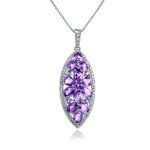 Amethyst Necklaces
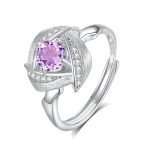 Amethyst Rings
 amethyst crystal healing
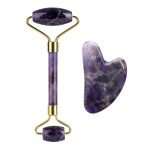 Amethyst Beauty & Wellness
 Crystal Home Decor
 Spiritual & Divination Tools