
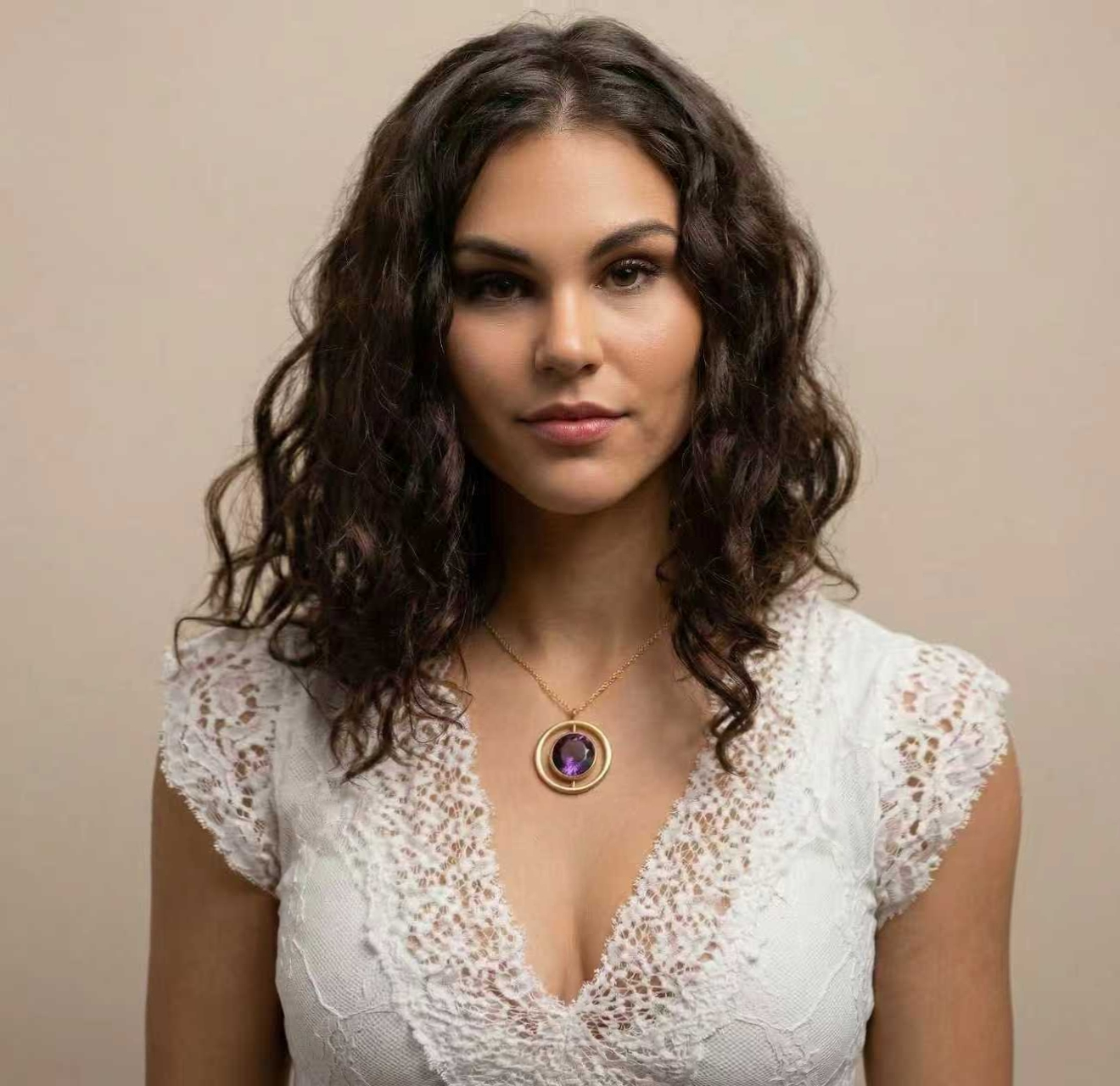
Amethyst Ball Benefits: What Tradition, Science, and Real Use Actually Look Like
What People Mean by ‘Amethyst Ball Benefits’
When most people search for amethyst ball benefits, they’re looking for something specific: a reason to choose a polished sphere over a geode, a cluster, or nothing at all. That’s a reasonable question. Let me answer it honestly.
An amethyst ball is a polished sphere made from natural amethyst—technically, silicon dioxide (SiO₂) with trace iron (Fe³⁺) that produces the purple color. It has a Mohs hardness of 7, making it durable enough for daily display but not indestructible. And there’s one real risk worth knowing upfront: prolonged UV exposure can permanently fade its color.
The conversation around amethyst ball benefits typically splits into three layers. First, verifiable mineral properties—what the stone actually is. Second, traditional and ritual uses—what people have done with amethyst for centuries. Third, personal experience—what individual buyers report about having one in their space.
I once had someone ask me directly: “You really think stones do anything?” I told him I didn’t know if they carry mysterious power. I still don’t. But I also told him that when a real piece of amethyst sits on my nightstand—one that came from a specific place, that was mined and shaped with care—I spend a minute or two looking at it before sleep instead of scrolling my phone. That has been useful for me.
That framing matters. This guide covers what’s verifiable, what’s traditional, and what’s personal—clearly separated so you can decide what’s relevant to your life. For a deeper foundation, start with our guide to traditional associations with amethyst.
The Science: Why Amethyst Is Purple and What That Tells You
Understanding gemstone amethyst benefits starts with understanding why amethyst is purple at all. This isn’t a marketing story—it’s mineralogy.
Amethyst gets its color from trace ferrous iron (Fe³⁺) locked inside the quartz crystal lattice. Over millions of years, natural gamma radiation from surrounding rock activates those iron atoms, producing the violet-to-deep-purple range we recognize. The color isn’t applied or dyed—it grows into the crystal as it forms underground.
That’s why you’ll often see uneven color inside a natural amethyst sphere. Some areas are deep purple; others are lighter, almost lavender, or white. This is called color zoning, and it’s a sign that the stone formed naturally. Perfectly uniform purple throughout a sphere usually indicates synthetic material or dye.
Here’s the part that matters for anyone keeping an amethyst ball on display: UV light reverses the process that created the color. Prolonged direct sunlight reduces the Fe³⁺ ions, and the purple fades. This is irreversible.
I discovered this after a buyer messaged me that her crystal point had lightened. She’d kept it on a south-facing windowsill, in direct afternoon sun for about two hours a day. The deep purple had shifted to lavender. The stone was still real, still natural—but that color depth was gone permanently.
If you take one thing from the science section: keep your amethyst sphere away from windows with direct sunlight. For more on how amethyst forms across different geological origins, that guide covers Brazil, Uruguay, and other major source regions.
Traditional and Ritual Uses of Amethyst Spheres
Amethyst stone uses and benefits have been discussed for centuries—long before mineralogy explained the Fe³⁺ mechanism. What follows are traditional practices and buyer-reported experiences, not medical claims.
Feng shui placement. In traditional Chinese environmental practice, amethyst spheres are placed in the southeast corner of a room (the “wealth corner”), on a living room shelf, or beside the bed. The sphere shape is significant in this tradition because it’s symmetrical from every angle—no directional point, no flat side. Tradition holds that a sphere radiates evenly in all directions.
In practical terms, the sphere shape has a different kind of benefit: it looks intentional from anywhere in the room. You don’t need to position it facing a certain direction. You set it down and it belongs there.
Intention setting. Some buyers use amethyst spheres as part of a personal ritual—holding the sphere, sitting quietly, naming a specific goal or state of mind they want to carry into the day. This isn’t scientifically validated as producing a measurable effect. But holding something real, something with actual weight and cool mineral texture, has a grounding quality that a screen doesn’t replicate.
Home decor. There’s a straightforward, non-mystical reason people buy amethyst spheres: they’re visually striking. A genuine sphere with natural color zoning and real mineral weight looks different from a synthetic imitation. The color has depth. The surface catches light in a way that resin doesn’t.
My own practice started with a $12 rough piece—not even a sphere, just an unpolished crystal labeled “for calm nights.” I didn’t believe in crystal energy then, and I approach it with skepticism still. But having something real on my nightstand changed my routine in a small, specific way. That’s the kind of benefit I can speak to honestly.
For a deeper look at different amethyst forms and their traditional uses, that guide covers spheres alongside geodes, clusters, towers, and other shapes.
Choosing an Amethyst Ball: Origin, Color Depth, and Size
When you’re evaluating amethyst ball benefits for your specific space, the practical decisions come down to three things.
Brazilian vs. Uruguayan Amethyst
Brazilian amethyst spheres tend to be larger—the raw material is available in bigger formations—and the color range spans from soft lavender to medium purple. They’re typically more affordable per gram, making them a good choice if you want a visually large sphere without a steep price.
Uruguayan amethyst is denser. The crystals are more tightly packed, and the color runs deeper—sometimes reaching that near-blue emperor purple that collectors look for. Uruguayan spheres tend to be smaller at the same price point, but the color saturation is often immediately recognizable when you set the two side by side.
I usually explain it this way: if someone asks which is better, I ask what they want more—a bigger piece or a deeper color. Neither is universally better. It depends on where you’ll put it, what catches your eye, and what you’re comfortable spending.
How to Tell If an Amethyst Sphere Is Real
A few practical checks: genuine amethyst is heavier than glass of the same size. Press it against your face—real mineral material feels cool initially and warms slowly. Look for color zoning: uneven purple distribution is a sign of natural formation, not a flaw. And ask the seller about origin. Reliable vendors will tell you whether the stone is Brazilian or Uruguayan.
WYSIWYG Photography
One thing that eliminates guessing: when a seller photographs each sphere individually and states the photo is the exact piece you’ll receive—what’s often called WYSIWYG (what you see is what you get). No stock photos, no “item may vary” disclaimers. The sphere in the photo is the sphere that ships.
Size Guide for Placement
| Size | Approximate Use |
|---|---|
| Small (palm-sized, 2–3 in.) | Desk, nightstand, small shelf |
| Medium (4–6 in.) | Bookshelf, coffee table, display cabinet |
| Large (7+ in.) | Floor stand, altar, entryway statement |
For more on evaluating quality and pricing, see our amethyst quality and value guide.
Amethyst Ball vs. Other Amethyst Forms: Which Shape Fits Your Life?
A sphere is one way to bring amethyst into your space. It’s not the only one. The amethyst stone wearing benefits conversation, for example, applies to jewelry rather than display pieces. Here’s how the most common forms compare:
| Form | Best For | Traditional Association | Practical Note |
|---|---|---|---|
| Sphere / Ball | Stationary display, feng shui, decor | Even presence in all directions | Looks intentional from every angle; requires a stand |
| Bracelet | Wearable, personal carry | Daily personal ritual; reminder of intention | Choose 925 sterling silver for no-green-fingers comfort; natural amethyst stones set in wearable form |
| Crystal Tree | Decorative gift, multi-point display | Growth, abundance, new beginnings | Amethyst stone tree benefits are primarily visual and symbolic; popular housewarming or birthday gift |
| Cluster / Tower | Desk, altar, directional placement | Focus, clarity | Towers have a single point; clusters have many—tradition assigns them slightly different uses |
| Tumbled Stones | Pocket carry, starter gift, crystal grids | Portable calm, intention reminder | Most affordable entry point; easy to give as a set |
| Elestial Amethyst | Collector display, contemplation | Deep inner work, patience | Elestial amethyst benefits are largely collector interest and traditional association; the layered surface texture is natural and distinctive |
The key question isn’t “which form has more benefits.” It’s “which form fits my actual life?” If you want something on a shelf that you’ll notice every evening, a sphere makes sense. If you want something you carry, a bracelet or tumbled stone does that job. If you’re buying a gift and want visual impact, a crystal tree or geode serves that purpose.
Caring for Your Amethyst Ball So It Stays Purple
The most important amethyst ball benefit—its color—is also the most vulnerable. Here’s how to protect it.
Rule #1: No prolonged direct sunlight. UV light breaks down the Fe³⁺ ions responsible for the purple color. A few minutes of morning light won’t destroy a sphere, but hours of direct afternoon sun on a windowsill will gradually and permanently lighten it.
Moonlight cleansing. If you follow crystal cleansing traditions, moonlight is the safest method. Place the sphere on an indoor windowsill during a full moon. No color risk, no chemical contact, and it aligns with the ritual of intentional care.
Sound cleansing. Using a singing bowl or tuning fork near the sphere is another safe method. The sound vibration is part of a traditional cleansing ritual, and it doesn’t involve any liquid, heat, or UV exposure. If you enjoy the ceremony of it, this is a gentle option.
Water. A brief rinse under lukewarm water is generally safe for a polished sphere—amethyst is hard enough (Mohs 7) to handle brief contact. But avoid soaking, and don’t let water pool on matrix rock bases if your sphere has one. Prolonged moisture can weaken the bond between crystal and base rock.
Placement. Set your amethyst ball on a stable surface away from south-facing windows. A stand or small dish keeps it from rolling and elevates it slightly, which makes a real difference in how it reads visually on a shelf. For more detailed amethyst care and cleansing guidance, that guide covers every method in depth.
Frequently Asked Questions
Do amethyst bracelets have different benefits for men?
Amethyst isn’t gender-specific. Traditional associations—calm, focus, contemplation—apply regardless of who’s wearing it. A bracelet is simply the wearable form of what a sphere provides as a display piece. Some buyers prefer bracelets for daily carry, and 925 sterling silver settings work well for anyone concerned about skin sensitivity. The question of amethyst bracelet benefits for male buyers comes down to style and personal ritual, not a different set of mineral properties.
What are elestial amethyst benefits?
Elestial amethyst refers to a natural surface texture—layered, multi-faceted crystal growth that looks like small cascading steps or etched patterns. It’s a real formation type, not a marketing label. Collectors value it for its rarity, and in traditional crystal practice, elestial formations are associated with patience and deep contemplation. The “benefits” are the same as any natural amethyst; the texture is what makes it distinctive.
What is an amethyst crystal tree?
An amethyst crystal tree is a decorative form with small tumbled or raw amethyst pieces wired onto branches, usually mounted on a base of natural stone or resin. The amethyst stone tree benefits are primarily visual and symbolic—tradition links them to growth, abundance, and new beginnings, which makes them popular housewarming and birthday gifts. They’re a different display style than a sphere: more whimsical, less minimalist.
What are amethyst yoni egg benefits?
Amethyst yoni eggs exist as a product category, rooted in jade egg practices that have their own long cultural history. This is outside Zerevia’s current product range, and I’d encourage anyone interested in personal wellness applications to consult a healthcare provider rather than relying on crystal-based claims. What I can say: if you choose one, make sure it’s genuine, undyed amethyst with no chemical treatments.
What are the benefits of an amethyst roller?
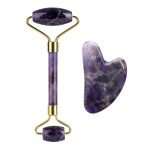
An amethyst roller is a skincare tool—typically a dual-ended face roller—with amethyst attached as the rolling surface. The traditional association is calm and ritual. I haven’t seen verifiable evidence that amethyst rollers produce different skincare outcomes than jade or rose quartz rollers, so the benefit here is primarily the experience of using a real mineral tool as part of a daily routine.
What is an amethyst biomat?
An amethyst biomat is a heated mat product that incorporates amethyst crystals, usually in tube form, inside the mat surface. It’s a specific product type outside Zerevia’s range. I’d note that any claimed benefits come from the heat therapy and the product’s own design, not from amethyst properties alone. Understanding amethyst as a mineral first—its Fe³⁺ color mechanism, its UV vulnerability, its real hardness—is more useful than attributing broad wellness effects to it inside a mat.
How do I know if my amethyst ball is real?
Several practical checks: genuine amethyst is noticeably heavier than glass of the same size. Press it against your cheek—real mineral feels cool initially, then warms slowly, while glass cools more evenly and quickly. Look for natural color zoning: uneven purple distribution with lighter and darker areas is a positive sign. Perfectly uniform purple throughout often indicates dye. Ask the seller about documented origin—a vendor who can tell you the stone is Brazilian or Uruguayan is more likely to have sourced it through a traceable supply chain.
If you’re ready to explore documented-origin amethyst spheres—each photographed individually with weight, dimensions, and origin noted—browse our amethyst collection to find the right piece for your space.
 Crystal Cluster
 Crystal Tower
 amethyst crystal ball
 Amethyst Caves for Sale
 Amethyst Bracelets
 Amethyst Earrings
 Amethyst Necklaces
 Amethyst Rings
 amethyst crystal healing
 Amethyst Beauty & Wellness
 Crystal Home Decor
 Spiritual & Divination Tools