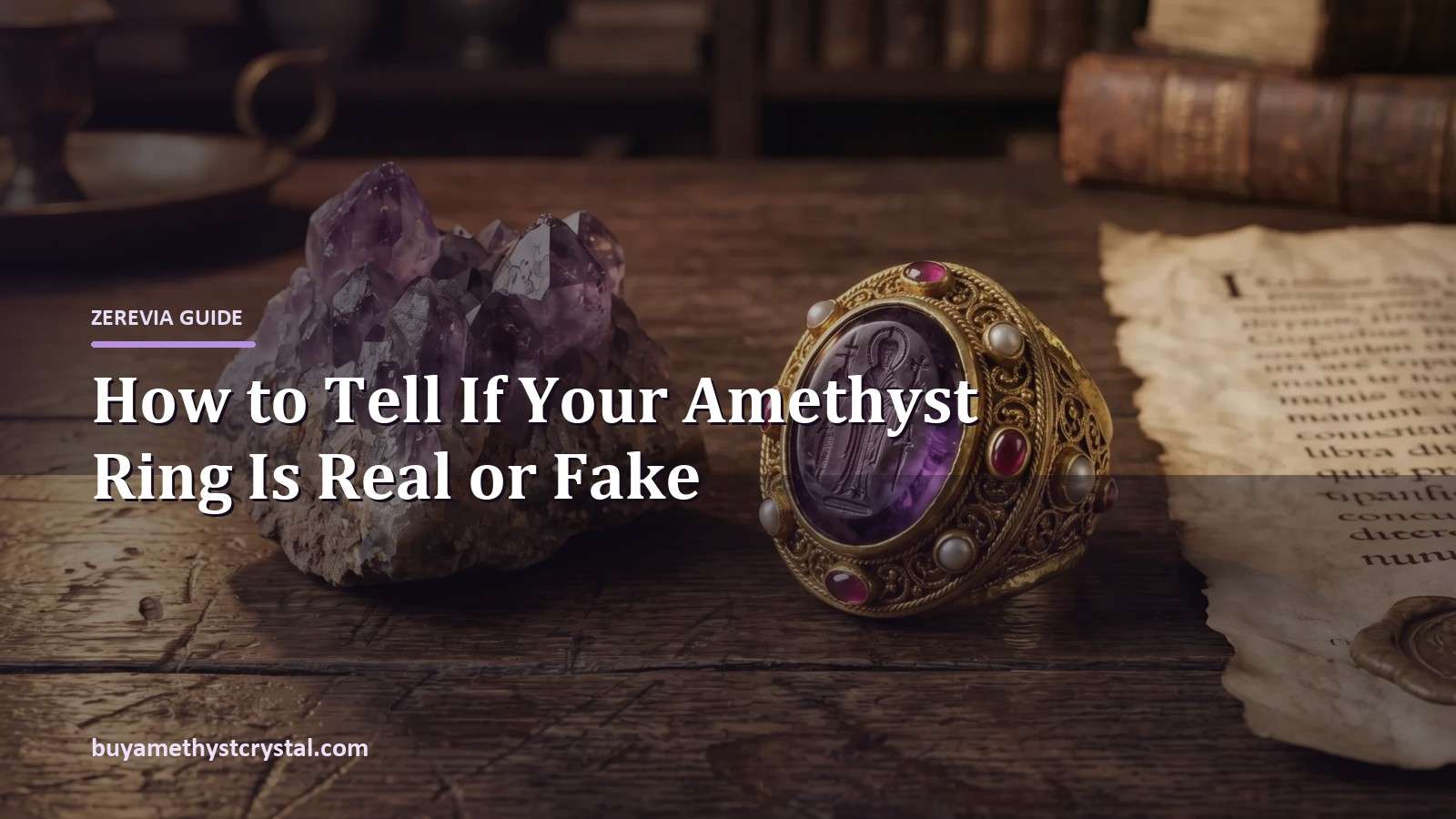

How to Tell If Your Amethyst Ring Is Real or Fake
Why Fake Amethyst Rings Are More Common Than You Think
If you’re searching for how to spot a fake amethyst ring, you’ve already taken the most important step: asking the question before handing over your money.
The market is full of glass, dyed quartz, and lab-grown stones sold as natural amethyst. Rings are especially tricky — the stones are small, often tucked behind prongs, and nearly impossible to examine closely in a photo or under store lighting. I didn’t always know what to look for, either. The first amethyst I ever bought was a twelve-dollar specimen at a small shop, labeled in purple ink: “amethyst — for calm nights.” It was real. I only know that now because that purchase sent me into months of studying color mechanisms, Mohs hardness, and what natural amethyst actually looks like up close.
Amethyst is a form of quartz (SiO₂) colored by trace amounts of iron — specifically Fe³⁺, iron ions activated by natural radiation over millions of years. It registers at Mohs hardness 7, meaning it’s harder than glass but softer than sapphire or diamond. These are verifiable mineral facts, and they’re the foundation of every test in this guide.
This article gives you a clear, repeatable checklist so you can judge any amethyst ring with confidence — whether you’re shopping for yourself, choosing a February birthstone gift, or considering an engagement ring. For a broader understanding of value factors, our amethyst quality and value guide covers grading, pricing, and what to compare. And if you’re ready to see rings made with documented-origin stones, you can browse our amethyst rings anytime.
Real vs Fake Amethyst Ring: 5 Tests You Can Do at Home
Before I studied amethyst through GIA coursework, I built a personal checklist of what to look for. Here’s that same list, adapted for rings.
Test 1: Check the Color Zoning
Real amethyst gets its purple from Fe³⁺ — iron ions in the quartz crystal lattice that were activated by natural radiation. This geological process doesn’t produce uniform color. Look for uneven purple distribution: deep violet patches next to lighter lavender zones, sometimes with white or clear areas near the edges. Perfectly, evenly purple across the entire stone? That’s a warning sign. Natural stones have character in their color; fakes tend to look consistent.
Test 2: Feel the Weight
Real quartz is noticeably heavier than glass or plastic. Hold the ring in your palm. If you have a known glass ring or piece of costume jewelry nearby, compare the two. Natural amethyst has a density that glass and acrylic simply don’t match.
Test 3: The Temperature Test
Press the stone against your cheek or the inside of your wrist. Natural amethyst feels cool when it first touches skin, then warms slowly. Glass is cool too, but it changes temperature faster and more uniformly. This isn’t a definitive test on its own, but combined with color zoning and weight, it adds a useful data point.
Test 4: Look for Inclusions
Natural amethyst almost always contains small internal features — feather-like veils, tiny needle inclusions, or wispy fractures. These are marks of authenticity, not defects. Under a loupe or even a phone camera zoomed in, these features confirm you’re looking at something that grew in the earth. A perfectly clean, flawless stone under magnification should raise questions about whether it’s natural or synthetic. If you’re curious about how these features relate to different crystal formations, our amethyst forms and shapes guide covers the differences.
Test 5: The Hardness Check (Use Caution)
Amethyst is Mohs 7 — hard enough to scratch glass. You can test this gently on an inconspicuous area, but I’d recommend asking the seller for verification rather than risking damage to a ring you’re evaluating. If a seller can’t or won’t confirm basic material information, that tells you something too.
These five tests reduce your risk significantly. None of them replace seller transparency about origin and treatment, but together they give you a solid foundation for evaluating any amethyst ring — real or otherwise.
Common Fakes: Glass, Dyed Quartz, and Synthetic Amethyst
Knowing what to test is half the equation. Understanding what you’re up against completes it.
Glass. The most common fake. Fails the weight test, the temperature test, and contains zero inclusions. Often set in unmarked mystery metal. If a ring looks too inexpensive for the materials claimed, it probably is.
Dyed colorless quartz. This one is trickier because it’s still quartz — same hardness, same basic structure. But the purple color sits in surface cracks and fractures rather than distributing through the crystal lattice. Look for dye pooling in crevices, especially where the stone meets the setting. Under magnification, the color pattern looks different from natural Fe³⁺ distribution.
Synthetic amethyst. Chemically identical to natural amethyst — same SiO₂ structure, same iron-based color. The giveaway is that it’s usually too clean, too perfect, with no natural inclusions and very uniform color. Legitimate sellers disclose when a stone is synthetic. If the listing just says “amethyst” without specifying natural, ask directly.
Coated stones. A thin purple coating on glass or cheaper material. Look for color wearing off at edges, especially near prong contact points. Uneven color loss or a different-colored layer visible underneath is a giveaway.
The common thread: asking “is this amethyst ring real?” starts with asking the seller a direct question about origin and treatment. Vague answers — or no grading specifics at all — are a pattern I learned to recognize early. I don’t use terms like AAAA to describe amethyst because there’s no internationally recognized grading system for it. What matters is concrete information: material composition, metal stamp, and documented source. You can read more about our approach to quality and value here.
What the Metal Setting Tells You: Sterling Silver, Gold, and Red Flags
The setting is a credibility signal for the stone. A seller who invests in proper metal is more likely to have invested in a proper stone.
925 sterling silver is stamped “925” — meaning 92.5% pure silver with 7.5% copper alloy. It’s nickel-free, which means no green fingers and no allergic reactions for most people. At Zerevia, our amethyst jewelry uses 100% natural amethyst set in 925 sterling silver, and every piece is stamped.
Gold settings — 10k, 14k, or 18k — are a beautiful and legitimate pairing with amethyst. An amethyst birthstone ring in gold is a popular choice for good reason: the warm metal complements purple stone naturally. A genuine gold setting should be stamped with its karat mark. If a listing advertises “14k gold” but the price seems unusually low, question the stone as well as the metal.
The red flag: no metal stamp at all. No stamp is one of the clearest warning signs in jewelry buying. Cheap rings made from mystery alloys almost always come with cheap or fake stones. If the seller can’t tell you what metal the ring is made from, they probably can’t tell you whether the amethyst is real either.
If you’d like to see examples of rings with documented 925 sterling silver settings and natural stones, our amethyst ring collection is a useful reference point.
Amethyst Ring Meaning: Why Authenticity Matters Beyond Appearance
Amethyst has carried meaning for thousands of years. The name comes from the ancient Greek “amethystos,” traditionally translated as “not intoxicated.” The stone has been associated with clarity and sobriety since classical antiquity — long before it became a popular ring choice.
In traditional crystal practice, amethyst is linked to the third eye and crown chakras — energy centers associated with intuition and awareness in the Indian philosophical tradition. These associations aren’t medical claims. They’re cultural and spiritual frameworks that have given the stone personal significance for generations. You can read more about traditional associations of amethyst in our detailed guide.
If you’re choosing an amethyst February birthstone ring, the meaning layer matters more than usual. February is the official birthstone month for amethyst — not January, which belongs to garnet. If you’ve seen listings for a “14k gold amethyst January birthstone ring,” that mislabeling is itself a red flag about the seller’s gem knowledge.
Someone once asked me whether I really thought stones had “power.” I told them I didn’t know — and I still don’t. But I know that when there’s a real piece of amethyst on my nightstand, the small ritual of pausing before sleep feels different from the nights I just reach for my phone. That’s not a medical guarantee. It’s just what happens when you place something real and specific in your line of sight.
A fake stone can look perfectly pretty. But if meaning is part of why you’re buying, authenticity isn’t optional.
Amethyst Engagement Ring Buying Guide: What to Check Before You Buy
Amethyst engagement rings are growing in popularity — meaningful, personal, and more accessible than diamond. But the emotional stakes are higher, which means doing more homework before you commit.
Here’s a condensed engagement ring checklist:
- Request origin information. For jewelry, look for “documented origin.” For raw crystals, the distinction matters even more: Brazilian and Uruguayan origins produce noticeably different results — Brazilian amethyst tends toward larger stones with broader color range, while Uruguayan amethyst is known for deeper, denser purple.
- Verify the metal stamp. 925, 10k, 14k, 18k — it should be there. No stamp, no purchase.
- Examine color zoning and inclusions in photos. Ask for close-up images if buying online. Real amethyst should show some natural variation.
- Confirm the return policy. A seller confident in their stone should offer returns without excessive hassle.
- Ask about treatment disclosure. Heat treatment is common and acceptable in the gem trade, but it should be disclosed. Untreated natural amethyst with good color carries different value than treated stone.
One specific red flag worth repeating: if a seller labels amethyst as a “January birthstone ring,” they’ve made a basic factual error. Amethyst is the February birthstone. This kind of mistake suggests the seller may not know — or may not care — enough about the stone they’re selling.
How to Polish and Care for Your Amethyst Ring
If you’ve done the work to find a real amethyst ring, protecting that investment is straightforward.
Daily cleaning: warm water, mild soap, soft cloth. Avoid ultrasonic cleaners — the vibration can fracture natural inclusions inside the stone.
Polishing: use a soft microfiber cloth for the metal setting. For the amethyst itself, gentle cleaning is enough. It’s a quartz at Mohs 7; it maintains its surface well with basic care and doesn’t need polishing compound.
UV fading — this one matters most. Amethyst’s purple comes from Fe³⁺, iron ions that are vulnerable to prolonged UV exposure. Direct, sustained sunlight can cause the purple to fade irreversibly. I learned this clearly when a buyer contacted me about a specimen that had been sitting on a south-facing windowsill for months. The deep purple had turned to a pale lavender, and it wasn’t coming back. For a ring you wear daily, the risk is lower — but take it off before extended sunbathing, beach days, or tanning.
Storage: keep your ring in a soft pouch or lined jewelry box, separated from harder stones. Sapphire (Mohs 9) and diamond (Mohs 10) can scratch amethyst easily.
Chemical avoidance: remove your ring before using cleaning products, swimming in chlorinated pools, or applying harsh cosmetics. Chemicals can damage both the stone surface and the metal over time.
Frequently Asked Questions
How can I tell if my amethyst ring is real or glass?
Run the five tests above: check for color zoning, feel the weight, test the temperature, look for inclusions under magnification, and verify hardness. No single test is definitive — use them in combination. And always ask the seller for material disclosure.
Is amethyst a February or January birthstone?
Amethyst is the official February birthstone. January belongs to garnet. Some retailers incorrectly label amethyst as a January birthstone — if you see this, it’s a credibility test for the seller.
What does an amethyst ring symbolize?
Tradition associates amethyst with calm, clarity, and sobriety — the Greek root of the name means “not intoxicated.” In traditional crystal practice, it’s also linked to the third eye chakra, associated with intuition and awareness.
Can I wear my amethyst ring every day?
Yes, with basic care. Mohs 7 is durable enough for daily wear. Just avoid prolonged UV sun exposure, harsh chemicals, and impacts against harder surfaces.
Is a major-brand amethyst birthstone ring always natural amethyst?
Not guaranteed. Brand name alone doesn’t confirm natural origin. Always check for material disclosure — natural vs. synthetic, metal type, and any treatments. This applies whether you’re looking at a Pandora-style birthstone ring or any other retailer.
Ready to see what a documented-origin, 100% natural amethyst ring actually looks like? Browse our collection — every piece photographed individually, every metal stamped, every question answered.
 Crystal Cluster
 Crystal Tower
 amethyst crystal ball
 Amethyst Caves for Sale
 Amethyst Bracelets
 Amethyst Earrings
 Amethyst Necklaces
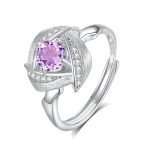 Amethyst Rings
 amethyst crystal healing
 Amethyst Beauty & Wellness
 Crystal Home Decor
 Spiritual & Divination Tools