
Buying Guide
Raw Amethyst: Benefits, Meaning & How to Choose Natural Pieces
A grounded guide to selecting, understanding, and caring for genuine raw amethyst — from first crystal to confident collector.
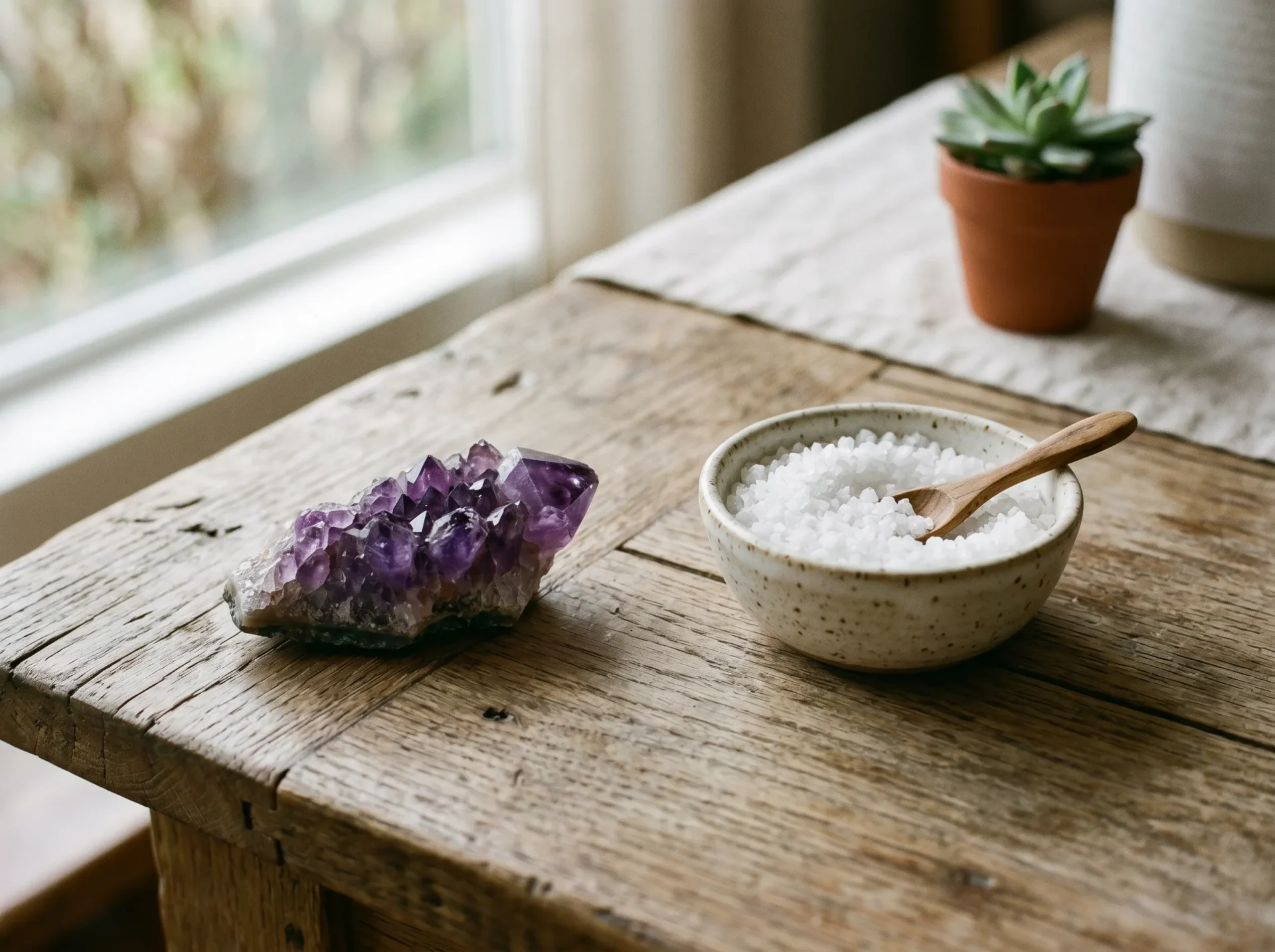
Raw amethyst is natural quartz crystal that hasn’t been polished, tumbled, or reshaped. It still carries the matrix rock it grew from, the color zoning that formed over millions of years, and the irregular edges that make each piece genuinely one of a kind. If you’ve ever held a rough purple stone and felt something click — not mystically, just practically, like “this is a real thing from the earth” — you already understand the appeal. This guide will help you choose natural amethyst pieces with confidence, understand what sellers mean by different claims, and avoid the mistakes that cost first-time buyers time and money.
What Is Raw Amethyst and Why It Appeals
Raw amethyst is unpolished natural quartz crystal, colored purple by trace amounts of iron (Fe³⁺) that were activated by natural radiation deep in the earth over millions of years. On the Mohs hardness scale, it rates a 7 — hard enough to scratch glass, soft enough to be shaped if you wanted to. But raw pieces haven’t been shaped. That’s the point.
When I found my first piece, it was sitting in a secondhand shop, labeled in purple pen: amethyst — for calm nights — $12. It wasn’t a pretty specimen. The color was pale, the matrix rock was grayish, and it looked like it had been sitting there for a while. But when I picked it up, it was heavier than I expected. I remembered that detail. I still do.
Raw amethyst appeals to different people for different reasons. For home decor buyers, it’s a natural focal point — something that doesn’t need a frame or a pedestal because it already has visual weight. For collectors, the unpolished surface shows what the crystal actually looks like as it formed: termination points, growth lines, sometimes internal fractures that catch the light. For first-time crystal buyers, there’s a directness to raw stone that polished pieces don’t always have. You can see the color variation. You can feel the texture. There’s nothing between you and the mineral except whatever matrix rock it grew on.
The difference from tumbled or polished amethyst is mostly about experience. A tumbled stone is smooth, pocket-sized, uniform. A raw crystal is irregular, sometimes sharp, always specific. If you want to understand more about the full range of crystal shapes and forms, our amethyst forms and shapes guide covers everything from geodes to towers to slices.
The Meaning and Benefits of Raw Amethyst
Amethyst has carried symbolic weight across cultures for centuries. In Greek tradition, the name comes from amethystos — “not intoxicated” — and the stone was associated with clarity and sobriety. In various traditions, it’s linked to calm, protection, and clear thinking. In Indian philosophy, amethyst is connected to the third eye chakra (Ajna), associated with intuition and inner knowing.
These are traditions. They’re meaningful to many people. They are not medical claims.
When someone asks me whether raw amethyst “works,” I think about a conversation I had with a friend who didn’t believe in any of it. He asked me straight out: “You really think rocks do something?”
“I think real things have value. I don’t know if stones have whatever mysterious energy you’re thinking of. I really don’t. But I know that when there’s a piece of amethyst from a documented Uruguayan mine on my nightstand, I spend a minute or two looking at it before I sleep instead of scrolling my phone. That does something for me.”
He thought about it. “Okay, that I can accept.”
For buyers interested in the traditional associations, the amethyst healing properties page covers the cultural and historical context more deeply. The short version: raw amethyst is traditionally linked to calm, mental clarity, and a kind of grounded stillness. Whether you approach that as ritual, personal practice, or simple appreciation of a beautiful mineral is entirely your call.
The practical benefits are easier to pin down. A raw amethyst specimen is a natural conversation piece. It holds visual interest in a room. It gives you something specific to look at — not a screen, not a manufactured object, but something that took millions of years to form. For people building a home that feels quieter, that matters.
How to Choose Natural Raw Amethyst: Step-by-Step
Buying raw amethyst isn’t complicated, but it does require paying attention to a few specific things. Here’s what I check, every time.
Step 1: Check the Color — Look for Zoning, Not Uniformity
Genuine raw amethyst almost never has perfectly even color. You’ll see darker zones near the crystal tips, lighter areas closer to the base, sometimes patches of white or clear quartz where the iron concentration was lower. This uneven color distribution is called color zoning, and it’s one of the most reliable signs you’re looking at a real stone.
If the purple is completely uniform — same shade from top to bottom, no variation at all — that’s worth questioning. Perfectly even color in raw stone can indicate dye, heat treatment, or synthetic origin.
Step 2: Pick It Up — Weight and Temperature Tell You Things
Real quartz is heavier than glass and significantly heavier than plastic. It also has a specific thermal behavior: when you first touch a genuine amethyst to your skin, it feels cool, then gradually warms. Glass is also cool, but it warms faster and more evenly.
This is one of the first things I learned, and it’s still the check I do first. Pick it up. Feel the weight. Hold it against your wrist for five seconds. Real stone has a slow, specific warmth pattern.
Step 3: Look for Natural Features — Inclusions and Matrix Rock
Raw amethyst should show some of the following:
- Matrix rock: the gray or brownish base rock the crystals grew from. This is a sign of natural origin, not a defect.
- Inclusions: tiny internal features — feather-like patterns, needle-like minerals, cloudy zones. These are proof of natural formation.
- Termination points: the natural six-sided pyramid tips where crystals ended their growth.
A piece with no matrix, no inclusions, and perfectly smooth surfaces is either heavily processed or synthetic.
Step 4: Ask About Origin
This matters more than most people realize. Brazilian amethyst tends to come in larger formations with a wider color range — from soft lavender to medium purple. It’s generally more affordable and works well for statement pieces. Uruguayan amethyst has denser crystals and deeper color, sometimes reaching that dark, almost blue-purple shade called emperor purple. It’s rarer and costs more, but the color depth is immediately recognizable if you compare side by side.
A seller who can tell you where the stone came from — and ideally which region or mine — is a seller who’s done their homework. A seller who just says “natural amethyst” without any origin information is giving you less to work with. For a deeper look at how geography affects color and quality, see our guide to amethyst geological origins.
Step 5: Use Realistic Photos — WYSIWYG or Nothing
What you see should be what you get. If a seller uses generic stock photos, you have no way to verify that the specific piece you’re ordering matches the image. Look for listings with individual photos of each piece — sometimes called “WYSIWYG” (what you see is what you get) or “one-of-a-kind” photos. These show the exact item, with its specific color, shape, and size.
For more on quality markers and what to prioritize, our amethyst quality and value guide covers this in detail.
Common Mistakes When Buying Raw Amethyst
Mistake 1: Trusting “Natural” Without Documented Origin
The word “natural” on its own doesn’t mean much. Dyed quartz can be called natural (the quartz is natural; the dye isn’t mentioned). Heat-treated stones can be called natural. What you want is documented origin: where was this mined, by whom, and when? The more specific a seller can be, the more you can trust the claim.
Mistake 2: Ignoring UV Care — The Color Won’t Come Back
I learned this the hard way, through a buyer message. She had placed her crystal point on a south-facing windowsill. Two hours of direct afternoon sun, every day. The deep imperial purple she’d bought had faded to lavender — not through any fault of the stone, but because ultraviolet light causes Fe³⁺ to reduce, and the purple fades permanently. It’s irreversible.
This is the single most common care mistake I see. It’s also the easiest to prevent. Find a spot that doesn’t get direct sunlight. Your amethyst will keep its color for decades.
Mistake 3: Paying for Unverified Quality Claims
There is no internationally recognized grading system for amethyst. Terms like “A,” “AA,” “AAA,” and “AAAA” are industry shorthand, and every seller defines them differently. Some mark everything AAAA because there’s no authority to say otherwise. Instead of relying on these labels, compare the actual details: color depth, crystal density, size, and origin. Those are measurable. A grade label is not.
Mistake 4: Not Thinking About Placement Before You Buy
Size and color depth should match where you plan to put the piece. A large, light-lavender geode works beautifully as a living room centerpiece. A small, deep-purple cluster might be better on a desk or shelf. Think about the space first, then choose the stone — not the other way around. If you’re considering geode formations specifically, our raw amethyst geodes collection shows documented-origin pieces photographed individually.
Caring for Your Raw Amethyst Crystal
Raw amethyst doesn’t need much. It’s a hard, stable mineral. But a few simple habits will keep it looking the way it did the day you brought it home.
- Avoid direct sunlight. UV radiation fades the purple permanently. Display your piece in a spot that gets indirect or ambient light only.
- Avoid prolonged heat. Don’t leave it on a radiator, in a hot car, or near a heat vent. High temperatures can accelerate color changes.
- Clean gently if needed. A soft, dry cloth works for dust. For deeper cleaning, lukewarm water and a tiny amount of mild soap — then dry thoroughly. No ultrasonic cleaners, no harsh chemicals, no steam.
- Store carefully if moving it. Wrap in a soft cloth or padded bag. Raw crystals can have sharp points that chip if they knock against harder surfaces.
Traditional Cleansing: Moonlight Baths
Many people who work with crystals in a ritual or intentional practice prefer moonlight cleansing over other methods. The idea is simple: place your raw amethyst in indirect moonlight overnight, ideally during a full moon, as a way of resetting or refreshing its presence in your space. This is tradition, not science — but it’s also completely safe for the stone, unlike sunlight or saltwater methods that can cause damage.
Sound cleansing with a singing bowl is another common ritual method that won’t affect the crystal’s color or structure.
 Crystal Cluster
 Crystal Tower
 amethyst crystal ball
 Amethyst Caves for Sale
 Amethyst Bracelets
 Amethyst Earrings
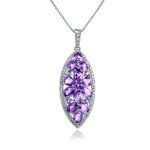 Amethyst Necklaces
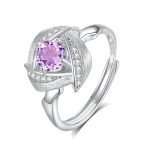 Amethyst Rings
 amethyst crystal healing
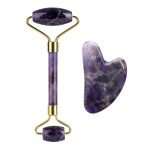 Amethyst Beauty & Wellness
 Crystal Home Decor
 Spiritual & Divination Tools