The Complete Guide to Amethyst Crystals: From Natural Mysteries to Energy Healing

“In my time sourcing from Brazil and Uruguay, I’ve stopped trying to dress these stones up in mystical language. The reality of how they form is interesting enough. It is a piece of quartz that took millions of years of radiation and iron trace elements to turn purple. Today, I just want to walk you through what these stones actually are, how to look at them, and why people still keep them on their nightstands.” — Serena
If racing thoughts and restless nights are something you deal with, you’ve probably been told to get an amethyst. It is usually the first stone people reach for when they want to quiet a busy mind. But from its formation in volcanic basalt to its place on a bedside table, its physical reality is often overshadowed by the hype.
Let’s look at the actual story of the amethyst crystal, separating the straightforward geology from the exaggerated claims. For a deeper dive into any specific topic, be sure to explore our dedicated Amethyst Master Guides.
1. The Geological Magic: Born in Volcanic Fire
In the mineral world, natural amethyst is no ordinary stone. Its formation requires a perfect, chaotic alignment of extreme heat, specific pressure, and the slow passage of geological time.
The Chemistry of the Purple Ray
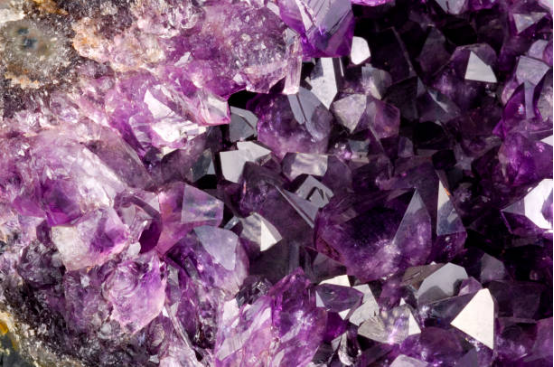
At its core, an amethyst crystal is composed of silicon dioxide ($SiO_2$). But pure quartz is entirely clear. The magic happens when trace amounts of trivalent iron ($Fe^{3+}$) seep into the hydrothermal fluids filling cavities within volcanic basalt rock. Over millions of years, natural, low-level gamma radiation from the surrounding earth activates these iron ions, transforming the clear crystal into its signature vibrant purple hue.
The Tale of Two Titans: Brazil vs. Uruguay
Where your crystal comes from dictates its aesthetic and energetic footprint.
- Brazilian Amethyst: Known as the “Land of Giants,” Brazil produces massive, human-sized Cathedral Geodes. These pieces often feature medium-to-light lavender tones and are unmatched in their ability to act as large environmental energy anchors for a room.
- Uruguayan Amethyst: If Brazil is the king of size, Uruguay is the queen of color. Sourced primarily from the Artigas region, Uruguayan amethyst is famous for its dense clusters and intense, dark “grape jelly” or “deep Siberian” purple.
(Want to learn more about the 4-billion-year journey of these stones? Read our complete Amethyst Geological Sources Guide.)
2. Culture and Mythology: The Modern “Sobriety Stone”
The name “Amethystos” translates from ancient Greek as “not drunk.” According to classical mythology, it was believed to protect the wearer from the intoxicating effects of wine. By medieval Europe, this majestic purple stone was set into bishops’ rings, symbolizing faith, spiritual clarity, and a sacred identity.
The Modern Translation: Today, we rarely use amethyst to ward off wine. Instead, it serves as a “sobriety stone” for the modern mind. We live in an era intoxicated by digital notifications, endless anxiety loops, and overthinking. Amethyst provides a sobering, grounding influence against the overwhelm of modern life, helping to cool the heat of frustration and radiate tranquility.
(Explore the rich historical lore in our Amethyst Cultural History Guide.)
3. Energy Applications: A Practical Healing Guide
Meditation and Chakra Alignment
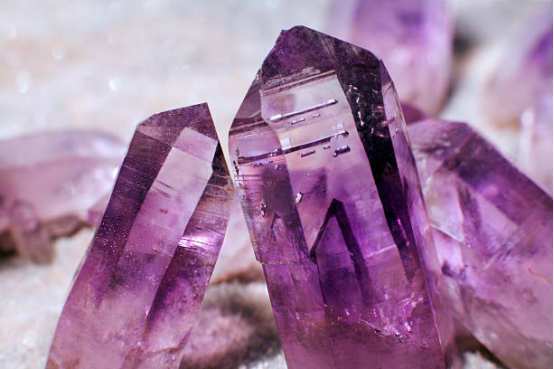
In energy healing, amethyst is intimately connected to the Third Eye Chakra (the center of intuition and perception on the forehead) and the Crown Chakra (our connection to higher consciousness). Many practitioners place a raw amethyst point or tumbled stone on their forehead during meditation to dissolve rigid thought patterns and experience a clearer flow of consciousness. (Explore more about chakra balancing in our Amethyst Healing Properties Guide.)
Space Clearing and Feng Shui
You don’t need to be a meditation guru to benefit from this stone; size equals presence.
- For Sleep & Anxiety: Placing a medium-sized cluster or sphere on your bedroom nightstand acts as a natural tranquilizer, helping the brain downshift into restorative sleep rhythms (Insomnia Aid).
- For Wealth & Abundance: In Eastern Feng Shui, a deep, concave amethyst geode is known as a “Money Bag” or Treasure Basin. Placed in the Wealth Corner (the far left corner of a room from the entrance), it is believed to anchor the space, gather positive Chi, and prevent financial luck from leaking away.
(Curious about which shape fits your needs? Check out our Amethyst Forms & Shapes Guide.)
4. How to Choose Authentic Amethyst (Forget the “4Cs”)
If you are buying raw amethyst for energy healing or home decor, throw the jewelry industry’s “4Cs” (Color, Clarity, Cut, Carat) out the window. The flawless “AAAA grade” standard is a myth that often leads buyers toward energetically dead synthetics.
Here is what you should actually look for:
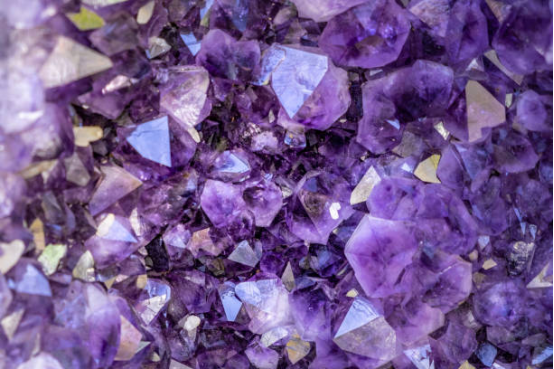
- Embrace Natural “Flaws”: Real amethyst will have natural color zoning (uneven distribution of light and dark purple) and internal inclusions like feather patterns or golden goethite needles. A perfectly uniform, flawless purple stone priced suspiciously low is almost certainly lab-grown synthetic crystal or dyed glass.
- Look for the Matrix: Authentic clusters and geodes will still have the rough grey/brown basalt host rock attached to the back. This grounds the crystal and proves its natural geological origin.
- Beware of “Burnt” Stones: Much of the “citrine” sold on the market is actually low-grade amethyst that has been heat-treated at extreme temperatures to turn it orange. Always buy from sellers who are fully transparent about heat treatments.
- WYSIWYG (What You See Is What You Get): Because no two natural stones are alike, ensure you are buying the exact piece shown in the photo, not a random generic stock pull.
(Read our full Amethyst Quality & Grading Guide to become a confident crystal buyer.)
Conclusion | An Anchor for the Soul
An amethyst crystal is more than just a decorative natural mineral; it represents a lifestyle choice to “look inward.” While a crystal cannot magically solve all of life’s problems, holding a piece of 4-billion-year-old Earth can provide a profound sense of perspective and stability when you need to calm down and sort out your emotions.
If you are ready to invite this grounding energy into your home, explore our hand-selected, ethically sourced Amethyst Crystal Collection. We believe in complete transparency, providing exact photos of every unique piece—because your perfect stone is already waiting for you.
Frequently Asked Questions (FAQ)
Can I put my amethyst in the sun to charge it?
Absolutely not! Sunlight is the number one enemy of amethyst. UV exposure will permanently and irreversibly alter the iron ions, fading your vibrant purple stone into a pale grey. Always keep your amethyst away from direct windowsills.
How should I cleanse my crystal?
Since sunlight is harmful and salt water can corrode the natural rock matrix, the safest methods are “moonlight bathing” (leaving it near a window overnight during a full moon) or “smudging” the stone with the smoke of white sage or Palo Santo to clear absorbed negative energy. (See our Care & Maintenance Guide for step-by-step instructions).
How do I know if my amethyst is real or fake?
Real amethyst feels cool to the touch and will easily scratch glass (it has a Mohs hardness of 7). Look closely at the color—if it looks like a perfectly uniform “grape candy” color without any natural banding or white quartz roots, it is likely synthetic or dyed.
Is dark purple more powerful than light purple?
Not necessarily. While deep Uruguayan purple is highly prized by collectors for its visual impact, pale “Lavender” or “Rose de France” amethyst carries a much gentler, nurturing frequency that many find better suited for anxiety relief and bedroom placement.
 Crystal Cluster
 Crystal Tower
 amethyst crystal ball
 Amethyst Caves for Sale
 Amethyst Bracelets
 Amethyst Earrings
 Amethyst Necklaces
 Amethyst Rings
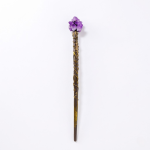 amethyst crystal healing
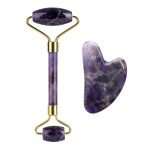 Amethyst Beauty & Wellness
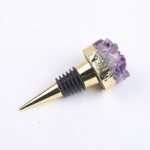 Crystal Home Decor
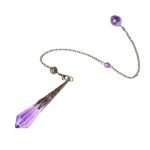 Spiritual & Divination Tools