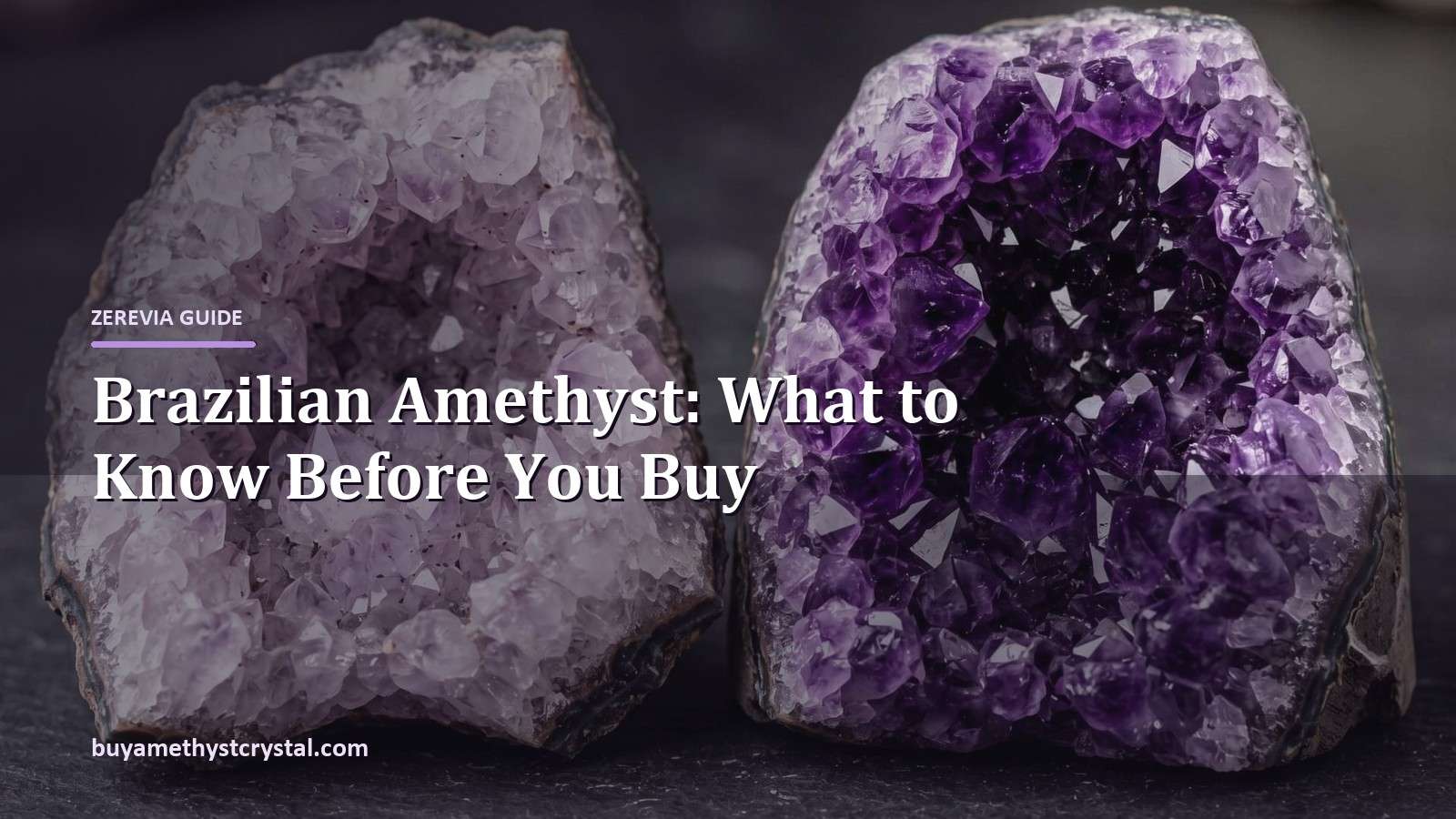

Brazilian Amethyst: What to Know Before You Buy
Brazilian amethyst is the most widely available amethyst on the market—and the one most buyers encounter first. If you’re shopping for a geode, a cluster, a crystal point, or a piece of jewelry, there’s a strong chance the stone in front of you came from Brazil. That prevalence is both a benefit and a source of confusion. More supply means more options, but it also means more variation in quality, more vague origin claims, and more questions about what you’re actually getting.
This guide covers what makes Brazilian amethyst distinct, how it compares to Uruguayan amethyst, what to check before you buy, and how to choose a piece that fits your space and your budget. Whether you’re a first-time crystal buyer or you’ve been collecting for years, the goal is the same: enough real information to make a decision you feel good about.
Why Brazilian Amethyst Dominates the Market
Brazil is the world’s largest producer of amethyst, with most mining concentrated in the state of Rio Grande do Sul in the country’s south. This region produces enormous geode formations—some tall enough to stand inside—and a wide color spectrum that ranges from pale lavender to a solid medium purple. The sheer volume of material coming out of Brazil makes documented-origin amethyst from this region one of the most accessible starting points for buyers worldwide.
When someone asks me what the difference is between Brazilian and other amethyst, I usually start with a question: Do you want something big, or do you want something deeply colored? Brazilian amethyst tends to answer the first question well. The geodes are larger, the clusters are broader, and you can find statement pieces at price points that don’t require a collector’s budget. If your goal is a visual anchor for a room—a piece that fills a shelf or becomes the centerpiece of a living space—Brazilian amethyst is where most people end up.
The abundance also means more sellers carry it, which means more competition and, generally, more transparent pricing. That said, abundance doesn’t automatically equal quality. A large Brazilian geode with pale, washed-out crystals is not the same as one with saturated color and well-formed points. Origin tells you where a stone came from. It doesn’t tell you everything about what it looks like.
For a deeper look at how Brazilian amethyst moves from mine to market, see our complete guide to Brazilian amethyst sourcing.
Brazilian Amethyst Meaning: More Than Just a Purple Stone
The word “amethyst” comes from the Greek amethystos, meaning “not intoxicated.” Ancient Greeks believed the stone could prevent drunkenness—they carved drinking vessels from it and wore it as jewelry during feasts. That origin story has shifted over centuries into a broader association with clarity, levelheadedness, and a kind of mental quiet that many people find appealing in an era that rewards constant stimulation.
In traditional crystal practice, Brazilian amethyst is linked to calmness, mindful intention, and a sense of inner steadiness. Many buyers place it in spaces where they want to slow down—a bedroom, a reading corner, a desk where they spend long hours. These uses are rooted in personal ritual and tradition, not clinical proof. But the distinction matters: the value people find in amethyst is often about the act of choosing it, placing it intentionally, and returning to it as a visual reminder of what they want more of in their day.
There’s also a deeper, less mystical layer to what makes amethyst meaningful. The purple color in amethyst comes from trace amounts of iron (Fe³⁺) in the quartz crystal structure, activated by natural radiation over millions of years. That color is not painted on or added—it grew that way, slowly, inside the earth. For people who find meaning in geological patience, the science behind the stone is its own kind of story.
You can read more about amethyst healing properties and traditional uses in our dedicated guide. The important thing is to approach it as tradition and personal practice, not as a prescription.
Brazilian vs. Uruguayan Amethyst: A Practical Comparison
The two most common origin labels you’ll see when shopping for amethyst are Brazil and Uruguay. They share a border in southern South America, and much of the amethyst from both regions was formed in the same ancient lava flows. But the differences in how the crystals grew—and what miners prioritize—create distinct characteristics.
| Characteristic | Brazilian Amethyst | Uruguayan Amethyst |
|---|---|---|
| Typical Size | Larger geodes and clusters, often exceeding 12 inches | Smaller, more compact formations |
| Crystal Density | Varies widely; some formations are open with fewer crystals | Densely packed crystals with finer structure |
| Color Range | Lavender to medium purple; wide spectrum | Medium to deep, saturated purple; occasionally “emperor purple” |
| Best For | Statement display pieces, room focal points, larger gifts | Deep-colored points, collectors, jewelry-grade material |
| Price Range | Generally more accessible due to volume | Higher per piece due to rarity and color depth |
“Emperor purple”—a term for the deepest, most saturated shade of amethyst, sometimes approaching a blue-violet tone—is most commonly associated with Uruguayan material. You can find deep color in Brazilian amethyst, but it’s less common and typically commands a higher price within the Brazilian category.
Neither origin is universally better. If you want a large geode that fills a bookshelf and costs less than a weekend trip, Brazilian is the practical choice. If you want a small, intensely colored cluster for a nightstand or altar, Uruguayan may be worth the investment. For more on how quality is assessed across origins, see our amethyst quality and value guide.
What to Check: Value, Authenticity, and Common Questions
How Is Amethyst Priced?
If you’ve been searching for “amethyst value per carat,” you might be thinking of diamond pricing, where per-carat cost is the standard. Amethyst doesn’t work that way. It’s typically priced per piece, based on a combination of factors: weight, origin, color saturation, formation type (geode vs. cluster vs. single point), and visual impact. A 2-kilogram Brazilian geode with pale crystals might cost less than a 500-gram Uruguayan cluster with deep purple. Per-piece pricing puts the emphasis on what you see, not just the scale reading.
Can Amethyst Go in Water?
This is one of the most common questions buyers ask. Amethyst has a Mohs hardness of 7, which means it’s harder than glass and resistant to casual scratches. A quick rinse under running water to remove dust is generally safe. However, prolonged soaking is discouraged, especially for geodes and porous matrix rock. Water can seep into cracks and crevices, potentially loosening crystals or affecting the base rock over time. For regular cleaning, a soft dry cloth is the simplest and safest method.
Heat Treated Amethyst
Some pale amethyst is heat-treated to deepen its purple color or to convert it into citrine (a yellow-orange quartz variety). This is a standard industry practice and isn’t inherently deceptive—as long as the treatment is disclosed. At Zerevia, we describe treatment status on every product page. If you’re buying elsewhere, it’s a fair question to ask: Has this stone been heat-treated? A seller who won’t answer is a seller worth thinking twice about.
How to Spot Fakes
Genuine amethyst has natural color zoning—areas where the purple is deeper and areas where it fades to lighter lavender or white. If a stone’s color is perfectly uniform throughout, that’s worth questioning. Glass imitations often feel warmer to the touch than real quartz (which stays cool longer) and tend to be lighter in weight for their size. Dyed stones sometimes show color pooling in cracks or along the edges of the matrix rock. These aren’t foolproof tests on their own, but they’re a starting point.
Protecting Your Stone from UV Fading
One thing worth knowing early: amethyst can fade irreversibly in direct sunlight. The Fe³⁺ ions that produce the purple color can revert under sustained UV exposure, permanently lightening the stone. I learned this the hard way when a buyer contacted me about a crystal point she’d placed on a south-facing windowsill. Two hours of direct afternoon sun, every day for a few months, and her deep emperor purple had become a soft lavender. The stone was still real. The color was gone, and it wasn’t coming back.
Keep your amethyst out of prolonged direct sunlight. A shelf away from the window, a nightstand, or a display case are all safe choices. If you use it in a sunlit room, rotate it away from direct rays or cover it during peak hours. For more on the science behind amethyst’s color and durability, see our guide to amethyst geological origins.
Choosing Your Piece: Shapes, Uses, and Care
Once you’ve decided on origin and quality, the next question is shape. Brazilian amethyst comes in a wide range of formations, each suited to different spaces and purposes.
Geodes and Caves: These are the showpieces. A Brazilian amethyst geode—cut open to reveal its crystal interior—is a natural art object. At Zerevia, every geode is photographed individually (what you see is what you get), because with natural formations, size, color, and crystal structure vary from one piece to the next.
Clusters: Multiple crystals growing from a shared base rock. Clusters work well on desks, shelves, and tables. They’re also traditionally used in crystal practice as a “charging station” for smaller stones.
Points and Towers: A single polished or natural crystal point is one of the most popular forms for nightstands and work desks. Simple, focused, and easy to place.
Chevron Amethyst: This is a specific variety where amethyst and white quartz form a V-shaped or banded pattern. Chevron amethyst meaning in traditional practice centers on the combination of both minerals—clarity from the quartz, calm from the amethyst. Visually, the banding makes each piece distinct, and the pattern is impossible to fake convincingly. If you’re drawn to chevron amethyst, trust your eye. The pattern either speaks to you or it doesn’t.
Jewelry: Brazilian amethyst is widely used in rings, pendants, earrings, and bracelets. At Zerevia, our amethyst jewelry uses 100% natural amethyst set in 925 sterling silver—a durable, nickel-free alloy that won’t cause green fingers or skin irritation. Jewelry is where amethyst’s role as the February birthstone becomes especially relevant (more on that below).
Essential Care for All Forms: Avoid prolonged direct sunlight. Store separately from harder gems like sapphire or diamond to prevent scratching. Clean with a soft dry cloth. For jewelry, remove before swimming or heavy cleaning. For a full breakdown of shapes and their uses, see our amethyst forms and shapes guide.
Brazilian Amethyst and You: Specific Benefits and Considerations
When people search for “amethyst stone benefits for female” or “amethyst for sleep,” they’re usually looking for something specific: will this stone help me? The honest answer is that amethyst is not medicine and doesn’t cure anything. But there are ways people use it that are worth understanding.
For Evening Rituals and Wind-Down Routines
Many people place amethyst on a nightstand or in a bedroom as part of a wind-down routine. The practice isn’t about the stone doing something to you—it’s about creating a pause. A few minutes of looking at something real and quiet instead of a screen. One conversation I had with a skeptic stuck with me: he asked if I thought stones “worked,” and I told him that I thought real things had value. When I have a piece of documented-origin amethyst on my nightstand—something that was treated with care from mine to my home—I spend a minute or two before sleep looking at it instead of scrolling. That practice helps me. It’s not a cure for sleeplessness. It’s a small, intentional act of slowing down.
A Meaningful February Birthstone
Amethyst is the official birthstone for February. This makes Brazilian amethyst jewelry a natural gift for February birthdays, Valentine’s Day, or anyone with a personal connection to the month. A birthstone ring or pendant carries meaning that goes beyond aesthetics—it marks a date, a person, a relationship. For gift buyers, this is often the simplest and most resonant reason to choose amethyst.
Personal Resonance Over Prescribed Benefits
The best reason to choose a piece of Brazilian amethyst is that you’re drawn to it. Maybe it’s the color—some people prefer pale lavender, others want a deep saturated purple. Maybe it’s the shape—a tall point, a rough geode, a smooth palm stone. Maybe it’s the origin story: knowing that this particular stone formed over millions of years in the basalt flows of southern Brazil. Whatever the reason, choosing based on what resonates with you personally is more reliable than following a list of supposed benefits.
About That “Blue Point” Mine: A Note on Sourcing Transparency
If you’ve come across the term “blue point amethyst mine” in your research, you’re not alone—it shows up in search results and product listings with some regularity. Here’s what I can tell you: “Blue Point” is not a widely recognized, major amethyst mining region the way Rio Grande do Sul (Brazil) or Artigas (Uruguay) are. It may refer to a small local claim, a colloquial name for a specific pocket, or in some cases, a marketing term used to add specificity where less exists.
This isn’t unusual in the gemstone market. Origin names can be vague, aspirational, or simply inherited from a local tradition that doesn’t map onto geological databases. What matters to us at Zerevia is clarity: when we know the documented origin of a piece—such as Ametista do Sul in Rio Grande do Sul, Brazil—we say so. When we don’t have verified sourcing details, we describe the stone by its observable properties (color, weight, dimensions, formation type) rather than attaching an origin label we can’t support.
If origin documentation matters to you—and for many buyers it does—it’s a question worth asking any seller. The answer, or the willingness to give one, tells you something important about who you’re buying from.
Frequently Asked Questions
Is Brazilian amethyst considered high quality?
Quality depends on color saturation, clarity, crystal formation, and overall condition—not origin alone. Brazilian amethyst offers excellent quality across its range, and it’s particularly strong for larger display pieces like geodes and clusters. The key is evaluating each piece individually rather than assuming all Brazilian material is the same.
How can I tell if my Brazilian amethyst is real?
A few practical checks: real amethyst is heavier than glass or plastic of similar size. It feels cool to the touch and warms slowly against skin. Natural amethyst has color zoning—areas of deeper and lighter purple—rather than perfectly uniform color. Buying from a seller who provides individual photos (what you see is what you get) and documents origin reduces the risk of surprises.
Does the origin (Brazil vs. Uruguay) really matter?
Yes, for specific goals. Origin influences typical size, color depth, crystal density, and price. Brazilian amethyst tends to be larger and more affordable; Uruguayan amethyst tends to be smaller with deeper, more saturated color. Neither is objectively better—it depends on whether you’re prioritizing visual impact, color intensity, or budget. Our quality and value guide walks through these trade-offs in more detail.
Next Steps
If you’re ready to start looking, the most useful next step is deciding what you want the stone for. A room centerpiece? A desk companion? A piece of jewelry for everyday wear? A gift with personal meaning? Each use case points toward a different shape, size, and budget.
Browse our collection of documented-origin Brazilian amethyst crystals and jewelry, and take your time choosing. A stone that formed over millions of years isn’t in a rush, and neither are we.
 Crystal Cluster
 Crystal Tower
 amethyst crystal ball
 Amethyst Caves for Sale
 Amethyst Bracelets
 Amethyst Earrings
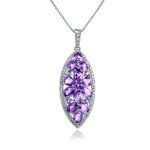 Amethyst Necklaces
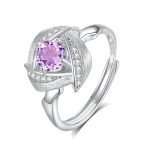 Amethyst Rings
 amethyst crystal healing
 Amethyst Beauty & Wellness
 Crystal Home Decor
 Spiritual & Divination Tools