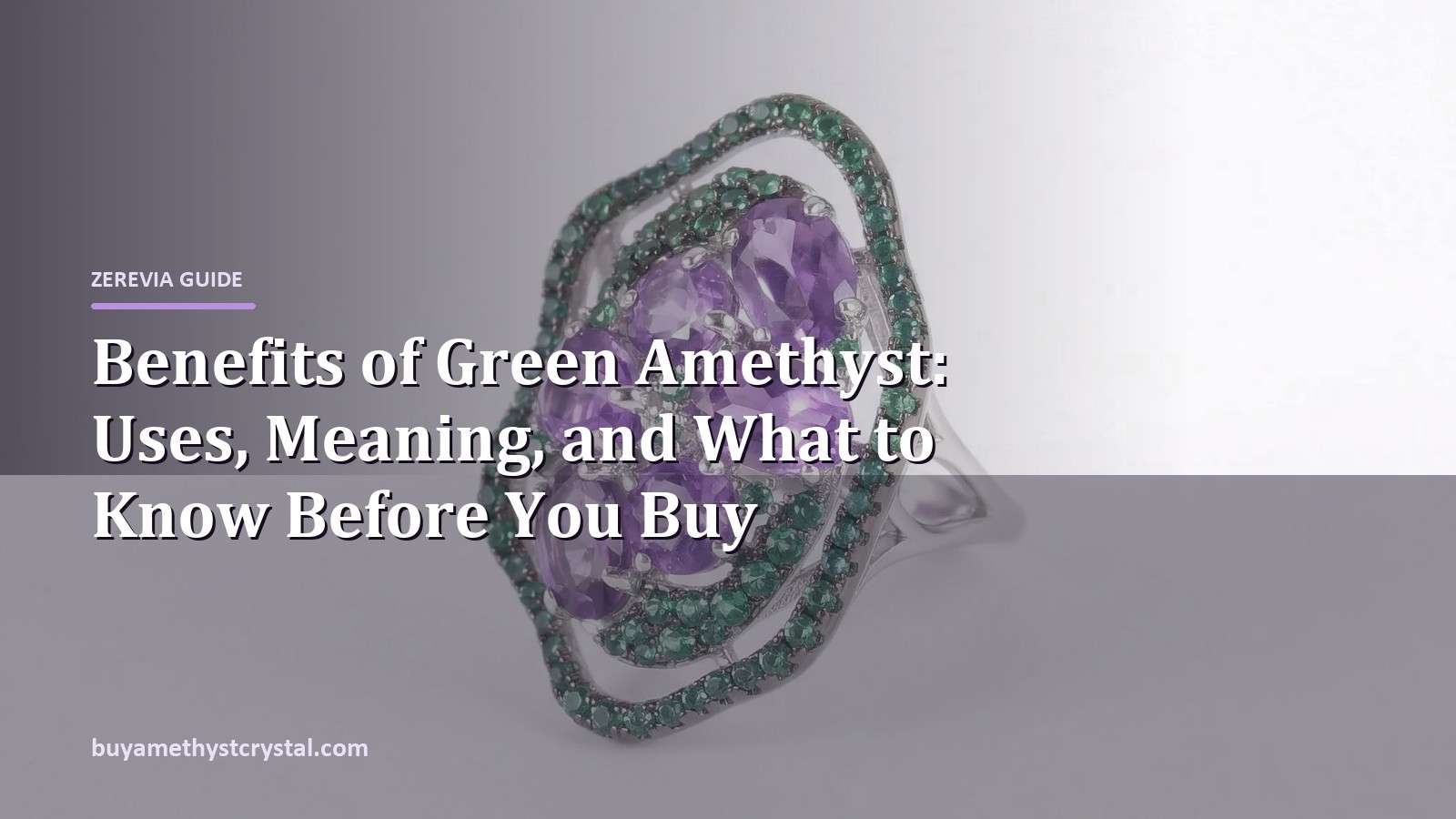

Benefits of Green Amethyst: Uses, Meaning, and What to Know Before You Buy
When people search for the benefits of green amethyst, they usually want two things: what this stone is traditionally believed to support, and whether it’s worth buying. Both are fair questions. The less comfortable answer is that most of what’s sold as “green amethyst” isn’t a separate mineral at all—it’s purple amethyst that’s been heat-treated to turn green. That doesn’t make it worthless. It means you deserve to know what you’re actually holding before you spend money on it.
This guide covers what green amethyst really is, what traditions and personal practices people associate with it, how to choose a piece you won’t regret, and how to keep its color from fading. If you’re also curious about amethyst healing properties more broadly, that guide goes deeper into the science and traditional context of the full amethyst family.
What Is Green Amethyst? Clarifying the Stone’s Identity
The first green amethyst stone benefits worth understanding aren’t spiritual—they’re material. Green “amethyst” is almost always quartz (SiO₂, Mohs hardness 7) that has been heat-treated to change its color from purple to green. The starting material is typically natural purple amethyst, whose color comes from trace amounts of Fe³⁺—iron ions activated by natural radiation over millions of years. When heated to specific temperatures, those iron ions shift, and the purple becomes green. The change is permanent.
Less commonly, the term “green amethyst” is applied to prasiolite, a naturally green variety of quartz. Prasiolite is real, but it’s rarer and more expensive than heat-treated material. Most sellers don’t distinguish between the two, which is why asking matters.
| Property | Natural Purple Amethyst | Heat-Treated Green “Amethyst” | Natural Prasiolite |
|---|---|---|---|
| Chemical composition | SiO₂ | SiO₂ | SiO₂ |
| Mohs hardness | 7 | 7 | 7 |
| Color origin | Natural Fe³⁺ and radiation | Heat-altered Fe³⁺ | Natural iron compounds |
| UV fading risk | Yes—irreversible | Yes—irreversible | Lower, but possible |
| Market availability | Very common | Common | Uncommon |
| Treatment disclosure | Not applicable | Should be disclosed | Not applicable |
This matters because the green amethyst benefits you’ll read about online are usually described in the same language used for natural purple amethyst. But a treated stone and a natural stone aren’t identical, even if they share a chemical base. If you care about provenance, ask the seller directly: was this stone heat-treated? A seller who won’t answer that question is telling you something.
If you’re also comparing varieties, you might come across pink amethyst (a naturally occurring variety from Patagonia, Argentina, colored by trace hematite inclusions) and rose quartz (colored by trace titanium or manganese). Each has its own traditional associations and material characteristics. For a broader overview of how amethyst color and origin relate to each other, our amethyst geological origins guide covers the major producing regions and what they’re known for.
Traditional and Spiritual Benefits of Green Amethyst
In crystal tradition—meaning the accumulated practices of practitioners over decades, not clinical evidence—green stones are associated with growth, renewal, and the heart center. The amethyst stone spiritual benefits attributed to green amethyst follow this pattern: tradition suggests it supports a calm, open emotional state and symbolizes fresh starts. Some practitioners place it in spaces where they want a feeling of quiet growth, like a workspace or a room where they journal.
None of this is medicine. I want to be clear about that because the internet blurs the line constantly. When someone says green amethyst “heals emotional wounds” or “cures anxiety,” they’re making a claim that no study supports. What tradition actually says is gentler: that holding or being near a green stone during a reflective moment can feel grounding. That placing it somewhere visible might remind you to pause. That the act of choosing a stone and setting an intention around it can be a useful ritual.
I once had a conversation with someone who asked me flat-out whether I thought crystals actually “work.” My honest answer was that I don’t know if stones have the kind of power some people describe. But I do know that when someone keeps a stone on their nightstand—a real one, from a place they can name—and spends a quiet minute with it before bed instead of scrolling through their phone, that minute has value. Not because of the stone’s frequency, but because of the pause it creates.
People who explore the benefits of rose quartz and amethyst together often follow a similar logic: rose quartz is traditionally tied to self-compassion, amethyst to clarity, and pairing them creates a ritual framework. Whether you use green amethyst, purple amethyst, rose quartz, or some combination, the benefit people report most consistently is not mystical—it’s the deliberate act of slowing down. For a deeper look at traditional associations across the amethyst family, our guide to amethyst healing properties covers the range without overpromising.
Practical Uses: Green Amethyst in Home Decor and Jewelry
One of the most concrete green amethyst stone benefits is aesthetic. If you’re drawn to softer, cooler colors—or if your home palette leans toward sage, white, or natural wood—a pale green quartz piece offers something different from the deep purple most people associate with amethyst. It sits quietly on a shelf without competing with everything else in the room.
Home Decor
As a decorative piece, green amethyst works well in spaces where you want a natural element without strong visual weight. A cluster on a bookshelf, a slice on a windowsill (away from direct sun), or a polished sphere on a desk. The color is subtle—more celery than emerald—which makes it versatile. For guidance on choosing between different crystal forms for different rooms, our amethyst forms and shapes guide walks through the options by use case.
Amethyst Crystal Trees
Amethyst tree benefits, as people search for them, are primarily decorative and symbolic. Crystal trees—wire-framed structures with small polished stones as leaves—are popular in feng shui traditions for representing growth and abundance. A green amethyst tree placed in a living room or on a desk is a small, contained way to add a natural focal point. Whether it “attracts abundance” is a matter of tradition and personal belief, not a guarantee. What it does do is sit there, look specific, and give you something real to glance at during a long afternoon.
Jewelry
In jewelry, green amethyst offers a quiet, everyday color—less assertive than purple, less common than clear quartz. If it’s set in 925 sterling silver (nickel-free, which means no green fingers after extended wear), it works as an understated ring, pendant, or pair of earrings. One caveat: because most green amethyst is heat-treated, the “100% natural” label applies more honestly to untreated purple amethyst or natural prasiolite. Ask the seller what you’re getting.
Amethyst Under Pillow Benefits
Placing amethyst under a pillow is one of the most common personal rituals in crystal practice. The tradition links it to calmer sleep and quieter dreams. I wouldn’t call it a sleep aid—that’s a medical claim, and this isn’t medicine. But some people find that the act of putting a stone under their pillow becomes a signal to their own brain: it’s time to wind down. If that ritual helps you put your phone away thirty minutes earlier, the benefit is real, even if the mechanism is behavioral rather than mineral.
Gift Giving
Green amethyst’s association with renewal makes it a thoughtful gift for someone starting a new chapter—a new home, a new job, a birthday that feels like a threshold. It’s specific enough to feel chosen, unusual enough to feel personal.
How to Choose Quality Green Amethyst
When I’m evaluating any quartz piece, I start with the same checklist I’ve used since those early mineral shows. Not because it’s secret, but because most sellers won’t volunteer this information:
- Pick it up. Real quartz is heavier than glass and noticeably heavier than plastic. The weight should feel dense in your hand.
- Touch it to your face. Natural stone is cool on first contact and warms slowly. Glass is cool too, but it warms faster and more evenly.
- Look at the color. For green amethyst specifically, expect a soft, even pale-to-medium green. If the color looks neon or unnaturally vivid, it may be dyed. Some color variation is normal and actually a good sign—it suggests the stone wasn’t manufactured to look uniform.
- Ask about treatment. A reputable seller will tell you whether the stone was heat-treated. If they won’t answer, that’s your answer.
One thing I stopped doing early on was relying on grading labels like “AAAA.” There’s no internationally recognized grading system for amethyst the way there is for diamonds. A, AA, AAA, AAAA are descriptive terms each seller defines for themselves—and some sellers mark everything as AAAA because nobody can prove otherwise. What you can evaluate is weight in grams, dimensions in centimeters, color depth, and whether the seller shows you the actual stone you’ll receive. For a fuller breakdown of what quality factors actually matter, our amethyst quality and value guide covers it without the grading theater.
Caring for Your Green Amethyst Stone
This is the part most buyers skip, and it’s the part that costs them the most. Heat-treated green amethyst, like natural purple amethyst, is vulnerable to UV fading. The iron ions that produce the color can be reduced by prolonged ultraviolet exposure, and the change is irreversible.
I learned this the hard way—well, a buyer did. She messaged me after her crystal’s color had visibly lightened. After a few questions, it turned out she’d placed it on a south-facing windowsill where it got direct afternoon sun for about two hours daily. That was enough. The deep green had shifted to a washed-out pale tone, and it was never coming back. Not because the stone was fake, but because UV light doesn’t care about your intentions.
A few care basics:
- Sunlight: Avoid prolonged direct exposure. A windowsill with afternoon sun is the most common mistake.
- Cleaning: Mild soap, lukewarm water, soft cloth. Skip harsh chemicals and ultrasonic cleaners, especially for jewelry settings.
- Storage: Keep separate from harder stones (topaz, sapphire, diamond) to prevent surface scratches. Quartz is 7 on the Mohs scale, which is durable but not invincible.
- Traditional cleansing: If you practice crystal cleansing, moonlight and sound (singing bowls, bells) are the safest methods—they don’t involve UV exposure. Our full amethyst care and cleansing guide walks through each method with practical details.
Frequently Asked Questions
Is green amethyst the same as prasiolite?
Not exactly. Most green amethyst sold commercially is heat-treated purple quartz. Prasiolite is a naturally green variety of quartz, much less common and usually more expensive. The two look similar, and sellers often use the names interchangeably. If the distinction matters to you, ask the seller to specify whether the stone is treated or natural.
What are the spiritual benefits of green amethyst?
In crystal tradition, green amethyst is associated with heart-centered energy, emotional balance, growth, and renewal. Practitioners use it in meditation, intention-setting rituals, and as a reminder of personal goals. These are traditional associations and personal practices—not medical claims or guaranteed outcomes.
Can green amethyst help with anxiety or sleep?
Some people place green amethyst under their pillow or on their nightstand as part of a calming bedtime routine. Tradition links it to quieter sleep and reduced restlessness. However, it is not a clinical treatment for anxiety or insomnia. If it helps you build a wind-down ritual—putting the phone away, sitting quietly for a minute—the benefit is in the practice, not in the mineral itself.
How do I clean and care for my green amethyst?
Gentle soap and lukewarm water with a soft cloth. Avoid prolonged direct sunlight, which can cause irreversible fading. For traditional cleansing, moonlight and sound are safe options. For the full breakdown, see our amethyst care and cleansing guide.
Is green amethyst good for jewelry?
Yes—if it’s set in quality materials like 925 sterling silver (nickel-free). The color is more subtle than purple amethyst, which makes it versatile for everyday wear. Because most green amethyst is heat-treated, look for sellers who disclose the treatment rather than marketing it as untreated.
 Crystal Cluster
 Crystal Tower
 amethyst crystal ball
 Amethyst Caves for Sale
 Amethyst Bracelets
 Amethyst Earrings
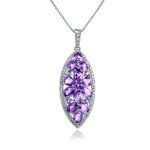 Amethyst Necklaces
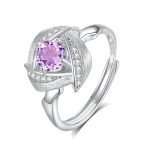 Amethyst Rings
 amethyst crystal healing
 Amethyst Beauty & Wellness
 Crystal Home Decor
 Spiritual & Divination Tools