Chakra Stones Amethyst: A Guide to Its Traditional Connection and How to Choose One
There’s a specific purple that mineral people recognize immediately. Not lavender, not grape — something deeper, with weight to it. That’s the color most people picture when they hear chakra stones amethyst, and they’re usually asking the same question: what is amethyst chakra practice actually about, and how do I pick the right piece?
I started with a $12 stone from a shelf that had a hand-written label in purple pen. The label said for calm nights. I didn’t know anything about chakra systems or Fe³⁺ color mechanics. I just knew the stone was heavier than I expected, and when I pressed it to my palm, it was cool in a way that felt specific. That specificity is what sent me down a path through GIA coursework, mineral shows, and more conversations about purple rocks than I ever anticipated.
So here’s what I’ve learned — framed as tradition, observed detail, and practical guidance rather than promises. If you’re trying to figure out what chakra is amethyst used for, or which shape to choose, or why some sellers are more specific than others, this guide should help you make a grounded decision.
What Chakra Is Amethyst Associated With?
In the traditional Indian philosophy of energy centers, the chakra system identifies seven points along the body. Amethyst has a long-standing association with two of them: the Third Eye Chakra (Ajna), located between the eyebrows, and the Crown Chakra (Sahasrara), positioned at the top of the head.
The Third Eye is traditionally linked to intuition, insight, and the kind of quiet perception you notice when you stop trying to force a decision. The Crown Chakra relates to awareness, connection, and the feeling of being present without effort. In chakra tradition, amethyst’s purple color — which comes from trace amounts of iron (Fe³⁺) in quartz crystal, activated by natural radiation over millions of years — makes it a natural symbolic match for these upper-energy centers.
If you’re asking what chakra is the stone amethyst used for, the traditional answer is: primarily these two. Different practitioners may extend amethyst’s association to other chakras depending on their framework, but the Third Eye and Crown connection is the most widely held view across traditions. You can read more about the broader context in our amethyst healing properties guide.
A practical note: the form you choose may shift how you use amethyst in chakra work. A piece worn at the throat — like an amethyst chakra necklace — sits closer to the upper chakras in traditional layout. A stone placed on a surface during a ritual sits wherever you put it. The association is about the stone’s symbolic tradition, not a fixed physical rule.
Traditional Benefits of Amethyst in Chakra Practice
When people search for amethyst stones benefits, they’re usually looking for something specific: what does this actually do for me? I want to answer that honestly.
In traditional and personal-practice contexts, amethyst is commonly associated with these experiences:
- Clarity during stillness. Many buyers describe a sense of mental quiet when holding or sitting near amethyst during meditation or breathwork. This isn’t a medical claim — it’s a commonly reported personal experience that aligns with the stone’s Third Eye association.
- A ritual anchor. Having a specific object you associate with slowing down creates a kind of environmental cue. I’ve noticed this in my own practice: when the stone is on my nightstand, I’m more likely to pause before sleep rather than reach for my phone. That’s observation, not proof.
- Visual calm. There’s a reason purple shows up in spas, bedrooms, and quiet spaces. The color itself has a visual quality that many people find grounding. Amethyst makes that quality tangible and three-dimensional.
- Intention setting. In chakra practice, holding a stone while naming what you want to focus on gives the abstract goal a physical object. This is a ritual technique, not a mechanism — but rituals work for many people precisely because they’re specific and repeatable.
What I appreciate about the Fe³⁺ color mechanism is that it gives the stone’s appearance a real explanation. The purple isn’t a coating or a dye — it’s the result of iron ions sitting in the quartz crystal lattice, changed by natural radiation over geological time. That kind of specific chemistry makes the stone feel more grounded to me than any mystical framework. If you’re curious about how origin affects color and quality, our amethyst quality and value guide covers the practical differences.
I don’t claim that amethyst will solve a particular problem. What I can say, from my own experience and from conversations with buyers, is that having a real, documented-origin stone — one you chose with care — changes how you relate to a space. That’s worth something, even if it’s hard to measure.
Choosing Amethyst Forms for Chakra Work
This is where the practical decisions start. The same mineral shows up as an amethyst chakra necklace, a chakra pyramid, a raw cluster, a tumbled stone, and a crystal sphere. Each form has different advantages depending on your use case, and the right choice depends less on mystical hierarchy and more on how you actually live.
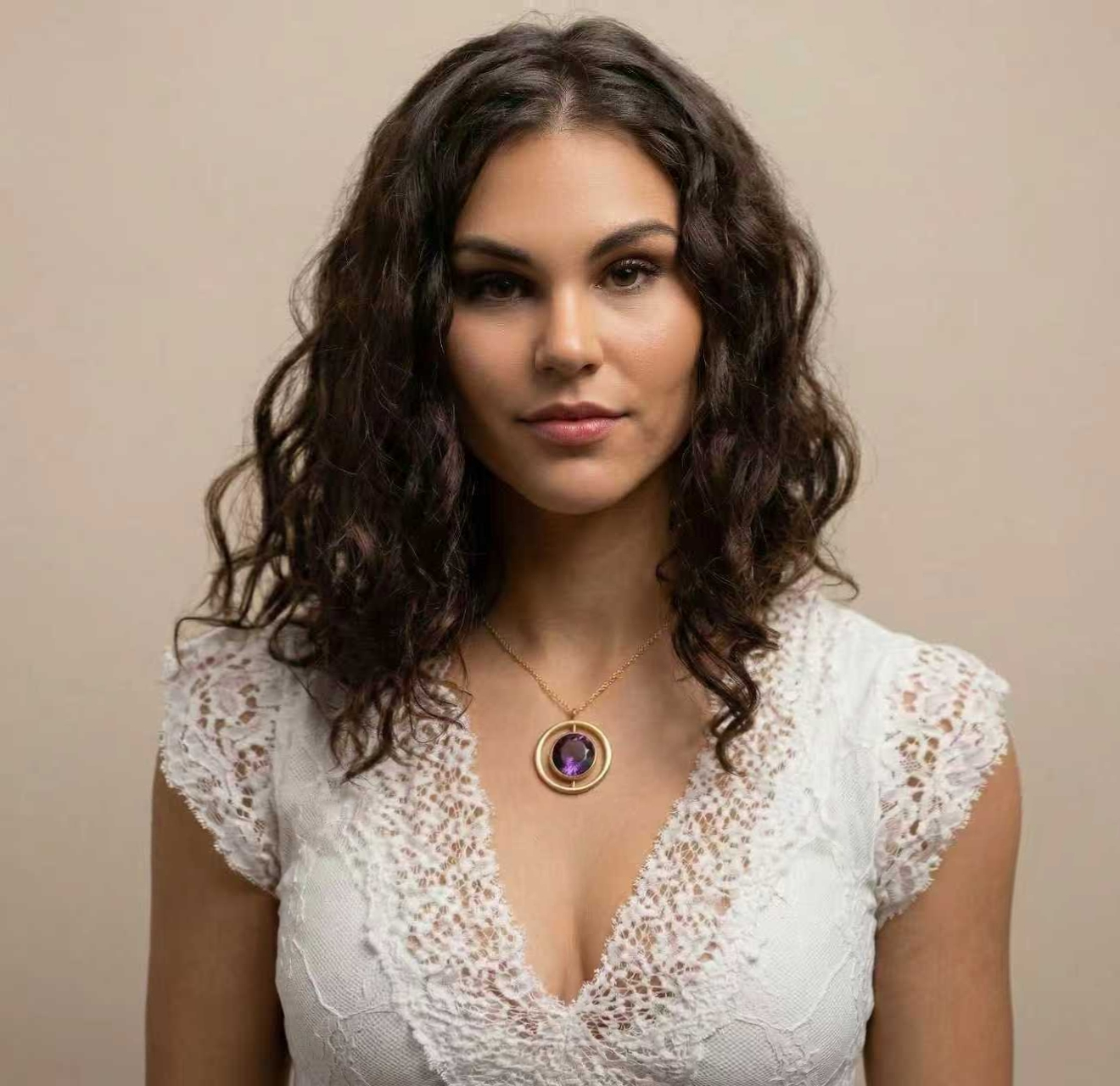
Amethyst Chakra Necklace
A necklace sits near the upper chest and throat, which places it physically close to the throat, Third Eye, and Crown chakra positions in traditional mapping. For someone who wants amethyst as a daily companion rather than a stationary object, jewelry is the most practical path.
When choosing an amethyst chakra necklace, look for:
- Stone quality: Natural amethyst with visible color depth. Uniform, flat purple with no variation can indicate dyed material — real amethyst typically shows some color zoning.
- Setting material: 925 sterling silver is the standard for affordable, durable, nickel-free settings. It won’t cause skin discoloration or irritation for most people.
- Pendant size: A pendant between 1–3 cm works well for daily wear without weight or snagging issues.
- Wearability: Consider whether you want something you sleep in, exercise in, or remove at the door. Amethyst is Mohs hardness 7 — durable enough for regular wear, but not indestructible.
Amethyst Chakra Pyramid
A pyramid shape has a flat base and four triangular faces meeting at a point. In traditional practice, this form is associated with concentration and direction — the idea being that the point focuses whatever quality the stone represents. Whether or not you subscribe to that framework, an amethyst chakra pyramid is a visually striking object that sits well on a desk, shelf, or meditation surface.
Practical selection tips:
- Size matters more than you think. A small pyramid (3–5 cm) fits on a nightstand; a larger one (8–12 cm) becomes a room statement. Choose based on placement, not aspiration.
- Color depth varies by origin. Brazilian amethyst tends toward larger pieces with lavender-to-medium purple. Uruguayan amethyst is typically smaller with deeper, more saturated color. Neither is inherently better — it depends on what you’re drawn to.
- Polished vs. raw base: Some pyramids have a fully polished surface; others retain some natural matrix rock on the base. Both are real. The polished version is smoother to hold; the natural-base version shows more of the stone’s original character.
Other Forms Worth Considering
| Form | Best For | Practical Notes |
|---|---|---|
| Raw Crystal / Cluster | Display, altar work, charging station | WYSIWYG photos matter here — each piece is unique. Documented origin available for raw specimens. |
| Tumbled Stone | Carrying in a pocket, beginners | Most affordable entry point. Smooth, portable, easy to hold during ritual. |
| Crystal Tower / Obelisk | Focused placement, desk or altar | Flat base, pointed top. Pairs well with other stones in a crystal grid. |
| Crystal Sphere | Meditation focus, display | Symmetrical shape. Heavier than you’d expect for its size — real quartz is dense. |
For a deeper breakdown of how these forms compare, see our amethyst forms and shapes guide.
Caring for Your Amethyst Chakra Stones
This is the section I wish someone had written for me years ago. Not because the information is complicated, but because one mistake is irreversible.
UV fading is real and permanent. The Fe³⁺ ions that create amethyst’s purple color can be reduced by sustained UV exposure. I learned this when a buyer contacted me about her crystal tower — she’d placed it on a south-facing windowsill where it received direct afternoon sun for about two hours daily. Over several months, her deep emperor purple shifted to a pale lavender. The stone was still genuine amethyst, but that color was never coming back. Geological origins can affect color stability, but all amethyst is vulnerable to prolonged UV.
Here’s the care framework I recommend:
- Placement: Avoid direct sunlight. Indirect daylight is fine. Display cases, shelves away from windows, and bedside tables are safe positions.
- Cleansing methods: In chakra tradition, stones are periodically “cleansed” to reset them for ritual use. The safest methods are moonlight (place the stone under moonlight overnight — no sun risk), sound cleansing with a singing bowl, or simply holding the stone with intention. Avoid saltwater on any stone with a setting or surface coating.
- Physical care: At Mohs hardness 7, amethyst is harder than glass but softer than sapphire. Store separately from harder stones to prevent scratching. A soft cloth is sufficient for cleaning.
- Jewelry-specific: Sterling silver tarnishes naturally. A soft polishing cloth restores shine. Remove amethyst jewelry before swimming (chlorine), cleaning (chemicals), or heavy manual work.
For a complete care walkthrough, our amethyst care and cleansing guide covers every method and material combination.
FAQ: Common Questions About Amethyst and Chakra
What is amethyst chakra?
“Amethyst chakra” refers to the traditional association between amethyst and specific energy centers in the chakra system. Amethyst is primarily linked to the Third Eye Chakra (Ajna) and Crown Chakra (Sahasrara). This connection is rooted in tradition and symbolic color association — purple for the upper, more introspective energy centers — rather than scientific measurement. In practice, people use amethyst in chakra rituals by placing it on or near these points during meditation, wearing it as jewelry, or keeping it in spaces dedicated to stillness.
What chakra is amethyst used for?
Amethyst is traditionally used for the Third Eye Chakra (between the eyebrows, associated with intuition and insight) and the Crown Chakra (at the top of the head, associated with awareness and presence). Some practitioners extend its use to the higher heart or throat areas depending on their personal framework, but the Third Eye and Crown association is the most common across traditional systems.
What chakra is chevron amethyst?
Chevron amethyst — also called banded amethyst — is a natural variety that shows white quartz banding in a V-shaped pattern against the purple. In traditional practice, it’s associated with the same Third Eye and Crown Chakras as standard amethyst. Some practitioners believe the white banding adds a clarity or purification dimension, making it particularly suited for Third Eye work focused on insight and seeing through confusion. This is a traditional interpretation, not a verified property. What is verifiable: chevron amethyst is a natural formation of amethyst and white quartz, not a treated or synthetic stone.
What are the benefits of amethyst stones for chakra?
In traditional and personal-practice contexts, amethyst is commonly associated with promoting a sense of calm, supporting focused intention-setting, and serving as a physical anchor for meditation or breathwork. Many buyers report that having a specific stone they associate with quiet rituals helps them transition into a more reflective state. These are personal experiences and traditional uses, not medical outcomes. The stone’s real, measurable properties include its Mohs hardness of 7, its Fe³⁺-derived color, and its documented origin from Brazil or Uruguay for raw specimens.
How do I choose an amethyst necklace for chakra work?
Start with three criteria: the quality of the stone (look for natural color with some variation, not flat uniform purple), the setting material (925 sterling silver is nickel-free and durable), and the size and weight for your daily comfort. A pendant that’s too large becomes something you take off; something small and well-set becomes something you forget you’re wearing — which, for daily ritual purposes, is ideal. Color depth is a personal preference: deeper purple doesn’t mean “better chakra effect,” it means deeper purple. Choose what you’re drawn to.
 Crystal Cluster
 Crystal Tower
 amethyst crystal ball
 Amethyst Caves for Sale
 Amethyst Bracelets
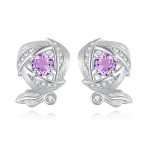 Amethyst Earrings
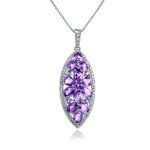 Amethyst Necklaces
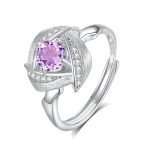 Amethyst Rings
 amethyst crystal healing
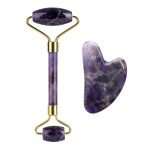 Amethyst Beauty & Wellness
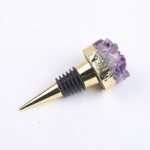 Crystal Home Decor
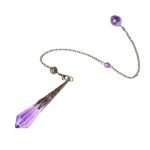 Spiritual & Divination Tools