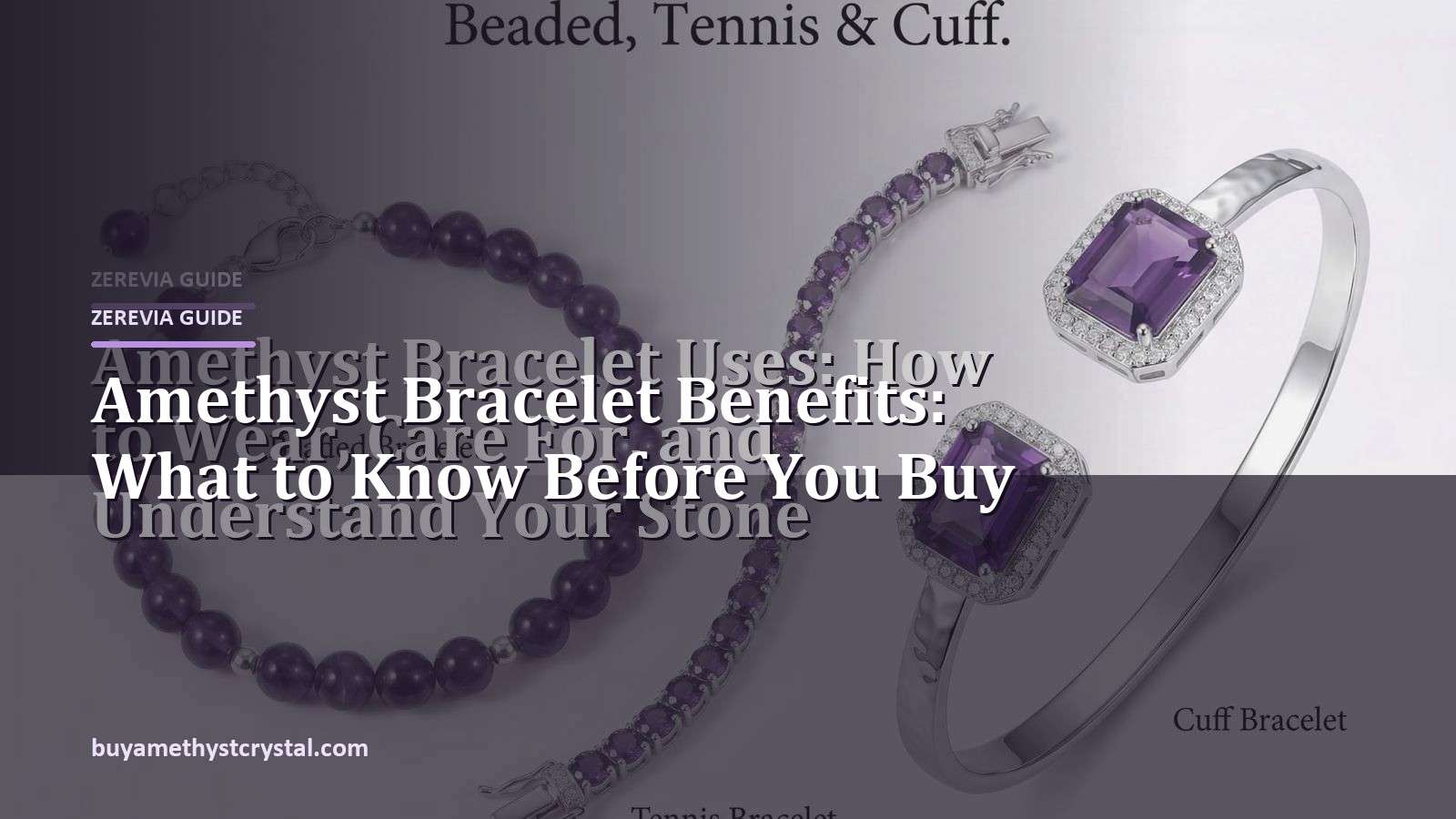
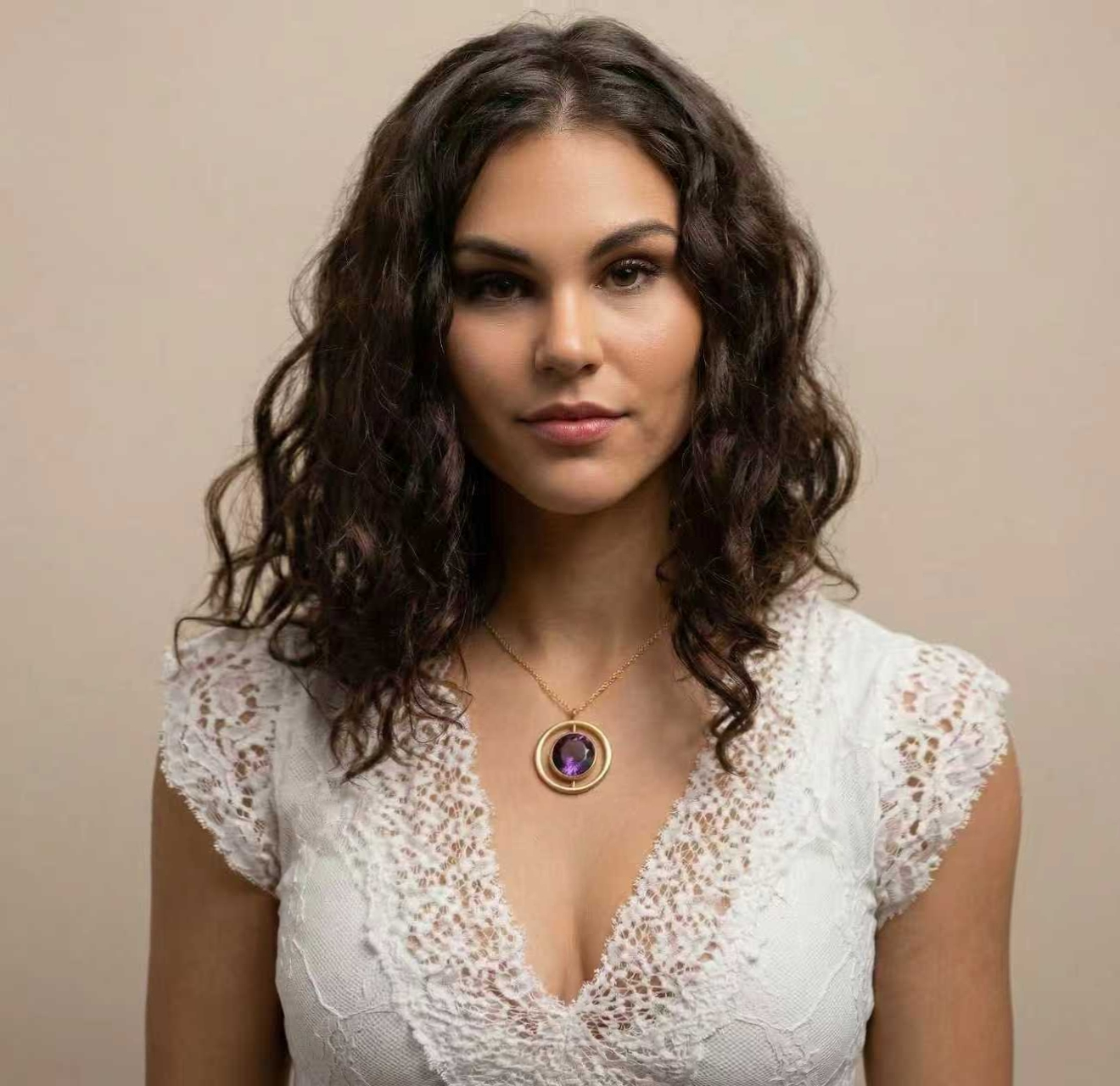
Amethyst Bracelet Benefits: What to Know Before You Buy
When someone searches for amethyst bracelet benefits, they usually want one of two things: a clear answer about what the stone is traditionally believed to do, or practical guidance on whether an amethyst bracelet is worth buying at all. This guide covers both. You’ll find what tradition and culture actually say about wearing amethyst, how different bracelet types compare, and the material details—100% natural amethyst, 925 sterling silver, durability—that determine whether a bracelet will hold up in your daily life. No vague promises, no invented grading systems, just the information you need to decide.
What “Amethyst Bracelet Benefits” Actually Means
The phrase “amethyst bracelet benefits” pulls together a lot of different expectations. Some people are looking for a calm daily ritual. Some want a February birthstone piece with personal meaning. Others want a wearable crystal they don’t have to think about once it’s on their wrist. All of these are reasonable reasons to search.
Here’s where I land on it. Traditional crystal practice associates amethyst with clarity, calm, and emotional steadiness—usually connected to the third eye and crown chakras in Indian philosophical tradition. These are cultural and personal-use traditions, not medical guarantees. I describe them here for context so you understand what the conversation around amethyst bracelet benefits actually refers to.
What is verifiable about amethyst: it’s a natural quartz mineral (SiO₂) colored by trace amounts of iron (Fe³⁺) activated by natural radiation over millions of years. It rates 7 on the Mohs hardness scale, which means it’s durable enough for jewelry but not indestructible. At Zerevia, our bracelets use 100% natural amethyst set in 925 sterling silver. Those are material facts you can confirm.
The most honest way to think about amethyst bracelet benefits is as a framework: tradition gives the cultural meaning, material quality gives the durability, personal ritual gives the intention, and practical wearability determines whether you’ll actually use it. If you want to go deeper into the cultural and mineralogical background, our guide to amethyst healing properties covers that in more detail.
Traditional and Cultural Associations of Amethyst
The name “amethyst” comes from the Greek amethystos, meaning “not intoxicated.” Ancient Greeks wore amethyst as a stone of temperance—they believed it could help keep a clear head. That association with mental clarity and emotional steadiness has carried through centuries of crystal tradition, even if the original Greek context is quite different from how people use crystals today.
In traditional crystal practice, amethyst is linked to the third eye chakra (Ajna, located between the eyebrows) and the crown chakra (Sahasrara, at the top of the head). The third eye is associated with intuition and inner knowing; the crown with awareness and broader perspective. People who wear amethyst bracelets as part of a personal ritual often describe it as a way to carry those intentions through their day—not as a medical intervention, but as a small, physical reminder.
I’ve had conversations with people who are completely skeptical about crystal traditions, and I get it. Someone once asked me flat out: “You really think stones do anything?” My honest answer was that I think real things have value. I don’t know whether amethyst carries some kind of measurable influence. But I do know that when I wear a piece of natural stone that was mined from a real place and set in real silver, I pay a little more attention to my own evening routine. That’s not mysticism. That’s just having something specific on your wrist instead of another forgettable accessory.
These amethyst bracelet meanings are personal and cultural. They’re described here so you can decide what resonates with you—not as promises.
Benefits of Wearing an Amethyst Bracelet Day to Day
One of the practical benefits of wearing an amethyst bracelet is that it’s the lowest-effort way to keep a crystal with you. A geode stays on a shelf. A tumbled stone lives in your pocket until you forget it’s there. A bracelet goes on your wrist in the morning and stays until you take it off at night.
Here’s what that looks like in practice:
- Material comfort. 925 sterling silver is nickel-free, which means it won’t cause the green-skin reaction that mystery alloys do. Most people with metal sensitivities can wear 925 silver without issues.
- Daily durability. Natural amethyst is 7 on the Mohs hardness scale—hard enough to resist scratches from everyday contact, though not from harder materials like topaz or corundum. With reasonable care, an amethyst bracelet holds up well for daily wear.
- Low-friction ritual. Buyers describe wearing their amethyst bracelet during commutes, at their desks, or through evening wind-down time. It becomes a personal touchstone—something that sits quietly on your wrist in the middle of routines you already have.
- Visual grounding. Unlike a phone notification or a to-do list, a natural purple stone on your wrist is a quiet visual anchor. Whether you assign spiritual meaning to it or not, there’s a reason people reach for it during a stressful meeting.
The amethyst stone bracelet benefits that matter most in daily life tend to be the least dramatic ones: it’s comfortable, it looks specific (not generic), and it doesn’t require any special effort to use.
Amethyst Bracelet Benefits by Type
Not all amethyst bracelets are the same stone. The main varieties you’ll encounter each have a different visual character and a slightly different traditional association. Choosing between them comes down to what you want to see on your wrist every day.
Dream Amethyst Bracelet
Dream amethyst is a banded combination of amethyst and white quartz, creating a two-tone stone with purple and white layers. The visual effect is distinctive—it looks less uniform than solid purple amethyst, which some buyers prefer. In traditional practice, dream amethyst is sometimes described as bridging calm (the amethyst layer) and clarity (the quartz layer). Whether or not that framing resonates with you, the contrast is genuinely interesting to look at.
Citrine and Amethyst Bracelet
Citrine is a quartz family relative—same mineral base, different trace elements producing warm gold tones instead of purple. A citrine and amethyst bracelet combines these two colors in alternating or paired beads. Traditional associations link citrine with creativity and motivation, while amethyst carries the calm-and-clarity associations. Practically speaking, the warm gold and deep purple contrast is one of the most visually striking combinations in natural stone jewelry.
Amethyst and Clear Quartz Bracelet
Clear quartz is sometimes called an “amplifier” in crystal tradition—the idea being that it intensifies the qualities of whatever stone it’s paired with. An amethyst and clear quartz bracelet makes a lighter, more understated piece than solid purple amethyst, which suits buyers who want a quieter look. The transparent-to-purple gradient can be especially pretty when the amethyst beads are a medium lavender rather than deep purple.
Each of these bracelet types gives you a different visual profile. Color contrast in natural stone will vary from piece to piece—that’s part of the point. If you want to explore different stone shapes beyond bracelets, our amethyst forms and shapes guide covers the full range.
Amethyst Bracelet Benefits for Women: Birthstone, Zodiac & Gifting
Amethyst is the official February birthstone, which makes an amethyst bracelet one of the most straightforward gift options for anyone born in that month. It’s also the traditional guardian stone for Aquarius (January 20 through February 18), which adds another layer of personal meaning for astrology-aware buyers. These astrological associations are cultural traditions, not scientific claims—but they’re real reasons people choose the stone.
Why a bracelet specifically for gifting?
- No size guessing. Unlike rings, bracelets don’t require knowing someone’s ring size. Many designs use adjustable closures, which solves the fit question entirely.
- Visible to the wearer. A pendant can be hidden under a shirt. A bracelet sits where you can see it—on your own wrist, during your own day. For someone who wants a piece to serve as a personal reminder, that visibility matters.
- Accessible price point. Compared to rings or necklaces with larger stones, a beaded amethyst bracelet tends to be an approachable first jewelry piece or a thoughtful “thinking of you” gift.
Common gifting moments: February birthdays, Valentine’s Day, graduation, a “just because” gesture for a friend going through a transition, or a self-purchase to mark a personal milestone. Zerevia bracelets ship with a gift box and meaning card, so they’re ready to give without extra wrapping.
For more on amethyst’s cultural background and how it’s been valued across traditions, see our guide to amethyst properties and meaning.
How to Choose the Right Amethyst Bracelet
Once you’ve decided an amethyst bracelet is what you want, the next question is how to evaluate what you’re actually buying. This is where a lot of online shopping goes sideways—not because sellers are lying, but because vague descriptions make it hard to compare.
Here’s what I look at:
| Criteria | What to Look For | What to Avoid |
|---|---|---|
| Stone material | 100% natural amethyst (quartz family) | Unlabeled “crystal” beads that may be glass or dyed quartz |
| Color | Natural color zoning—slight variation bead to bead | Perfectly uniform purple across every bead (may indicate dye) |
| Metal | 925 sterling silver with a 925 stamp | “Silver-tone” or unmarked alloy that may turn skin green |
| Sizing | Adjustable design or clear size chart with measurements | One-size-fits-all with no measurement details |
| Photography | WYSIWYG (what you see is what you get) per-piece photos | Generic stock images or heavily filtered colors |
| Origin transparency | Seller can name the sourcing country or region | “Natural amethyst” with no further detail—it’s a starting point, not a guarantee |
I’ve written before about how I check whether amethyst is real, and the short version is: feel the weight (real quartz is heavier than glass), hold it against your skin (genuine stone feels cool initially, then warms), look at the color distribution (natural amethyst is almost never perfectly even), and check the source. The same principles apply to beads, just on a smaller scale.
Color depth is a personal preference, not a quality tier. Lighter lavender amethyst has a softer look that pairs well with warm metals and casual wardrobes. Deeper purple—sometimes approaching what’s called emperor purple—has more visual impact and pairs well with silver. Both are real. Neither is inherently “better.” What matters is which one you’ll actually want to wear.
For a fuller breakdown of what determines amethyst quality and value, including the factors that don’t show up in most product descriptions, see our amethyst quality and value guide. If you’re curious about where amethyst comes from and why origin matters for color and crystal structure, the geological origins guide covers Brazilian versus Uruguayan sourcing in detail.
Caring for Your Amethyst Bracelet
One of the most important amethyst stone bracelet benefits to understand before you buy is also one of the least glamorous: knowing how to keep the color.
Amethyst’s purple comes from Fe³⁺ (iron in its trivalent state) within the quartz crystal structure. When this iron is exposed to sustained ultraviolet light—the kind found in direct, prolonged sunlight—it can undergo a reduction reaction. The result is irreversible color fading. The deep purple gradually shifts toward a lighter lavender, and it doesn’t come back.
I learned this the hard way through a buyer who messaged me about her crystal piece losing color. She’d placed it on her bedroom windowsill, south-facing, with direct afternoon sun hitting it for a couple of hours every day. The piece had gone from a rich imperial purple to a washed-out lavender in a matter of months. It was still real amethyst—just permanently lighter. That conversation changed how I write care instructions for everything we sell.
For your bracelet, the practical rules are simple:
- Avoid prolonged direct sunlight. Don’t leave your bracelet on a windowsill, in a car dashboard, or anywhere it gets hours of UV exposure. Brief outdoor wear is fine; consistent sunbathing is not.
- Moonlight cleansing is the safest traditional method. If you follow the ritual practice of cleansing your stones, placing your bracelet in moonlight overnight carries no UV risk and no chemical damage. It’s the approach I recommend.
- Store it when you’re not wearing it. A soft pouch or a compartment in your jewelry box protects it from scratches and from accidental sun exposure.
- Avoid harsh chemicals. Cleaning products, chlorine, and some perfumes can damage both the stone and the 925 silver over time.
For the full care and cleansing guide—including methods beyond moonlight—see our amethyst care and cleansing guide.
Frequently Asked Questions About Amethyst Bracelet Benefits
What are the benefits of wearing an amethyst crystal bracelet?
In traditional crystal practice, amethyst is associated with clarity, calm, and emotional steadiness—connected to the third eye and crown chakras. Practically speaking, a bracelet made from 100% natural amethyst in 925 sterling silver gives you a durable, wearable piece (Mohs 7 hardness) that integrates into daily routines. The “benefits” are a combination of cultural meaning, material quality, and personal use—not medical outcomes.
Is an amethyst bracelet good for everyday wear?
Yes, with reasonable care. Natural amethyst is 7 on the Mohs hardness scale, which resists most everyday scratches. 925 sterling silver is hypoallergenic and nickel-free. The main thing to avoid is prolonged UV exposure—don’t leave it in direct sunlight for extended periods, as this can cause irreversible color fading.
What is a dream amethyst bracelet and how is it different?
Dream amethyst is a naturally banded stone combining amethyst (purple) and white quartz, creating a two-tone appearance. Traditional practice describes it as bridging calm and clarity. Visually, it’s more textured and varied than solid purple amethyst—it comes down to whether you prefer a uniform purple or a layered, contrasting look.
Can I wear citrine and amethyst together?
Yes. Citrine is a close quartz family relative, and citrine and amethyst combination bracelets are popular for the visual contrast between warm gold and purple. In traditional practice, citrine is associated with motivation and creativity while amethyst carries calm-and-clarity associations—the two are seen as complementary. Layering or wearing a combo bracelet is purely a personal choice.
What zodiac signs benefit most from an amethyst bracelet?
In astrological tradition, amethyst is linked to Aquarius (January 20–February 18) as a guardian stone and to Pisces (February 19–March 20) through overlapping associations. It’s also the official February birthstone, which makes it a natural choice for anyone born that month. These are cultural and astrological associations, not scientific categories—but they’re meaningful to a lot of buyers choosing jewelry with personal significance.
Browse our amethyst jewelry collection—natural stones, 925 sterling silver, and accurate photos so you know exactly what’s arriving.
 Crystal Cluster
 Crystal Tower
 amethyst crystal ball
 Amethyst Caves for Sale
 Amethyst Bracelets
 Amethyst Earrings
 Amethyst Necklaces
 Amethyst Rings
 amethyst crystal healing
 Amethyst Beauty & Wellness
 Crystal Home Decor
 Spiritual & Divination Tools