
Zerevia · Placement Guide
Amethyst Feng Shui Placement: Where to Put It in Your Home
After reading, you’ll know exactly which room, direction, and crystal form works best for your specific feng shui goals—whether that’s better sleep, a calmer living room, or focusing energy in your wealth corner.
Amethyst feng shui placement starts with a simple question: what do you want this corner of your home to feel like? The answer shapes everything—room choice, crystal form, direction, and height. This guide walks through each decision so you can place your stone with real intention rather than guesswork.
If you’re new to crystals altogether, you might want to start with our overview of amethyst healing properties and traditional uses before diving into placement details below.
Why Amethyst Works for Feng Shui
Feng shui is a traditional Chinese system of organizing space to support the flow of life in a home. It uses color, shape, material, and placement as tools. Amethyst—a natural quartz crystal colored by iron (Fe³⁺) within its silicon dioxide structure—fits into this system for specific reasons, none of which require you to believe anything mystical.
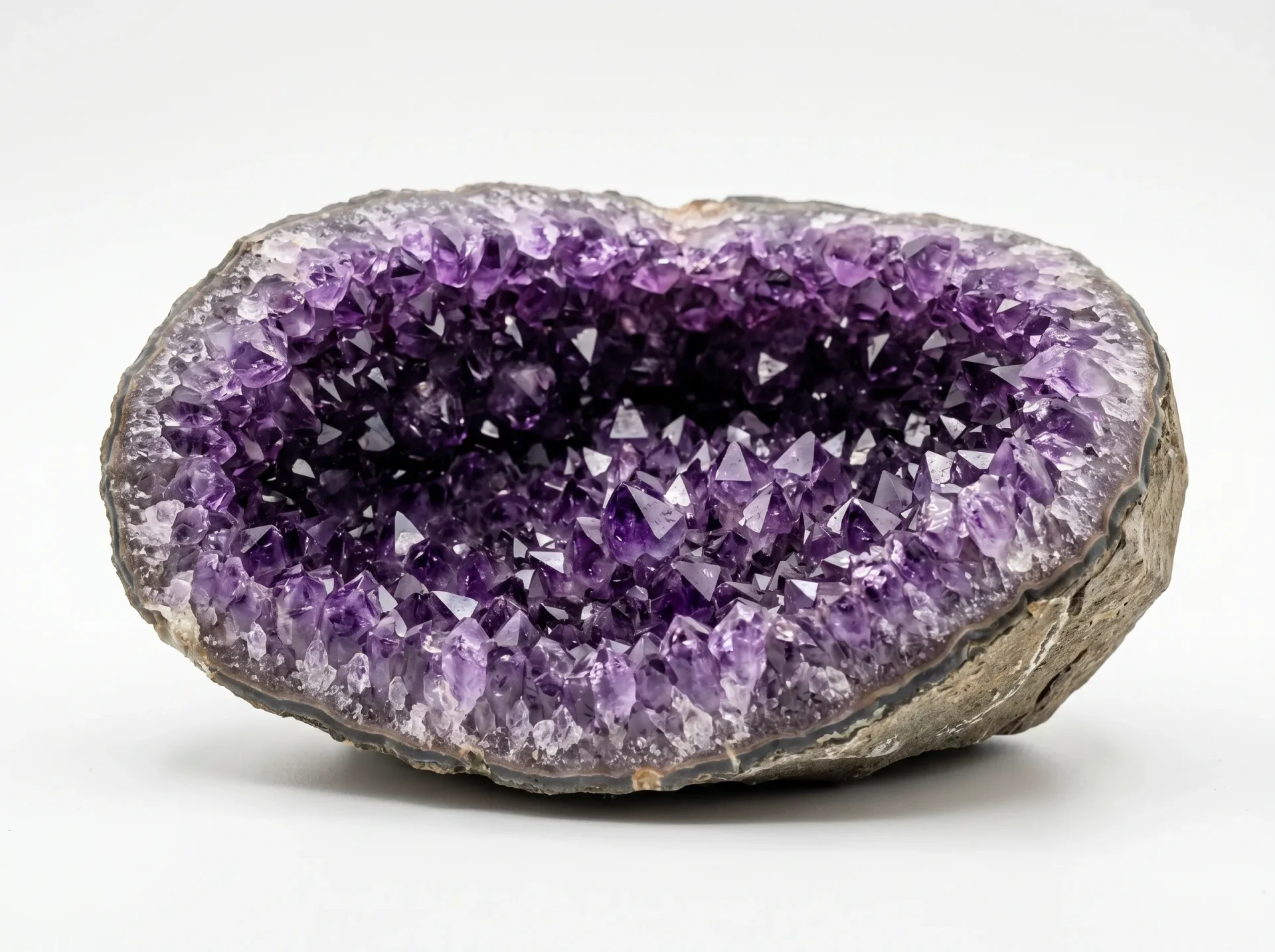
Its purple color is traditionally associated in feng shui with calm, clarity, and contemplation. That association has roots in centuries of Chinese and broader East Asian practice where purple held associations with spiritual awareness and quiet authority. Whether you connect to that tradition or simply like the way a deep purple geode looks on a shelf, the stone has a physical presence that interacts with light and space in a room.
Amethyst registers a 7 on the Mohs hardness scale—hard enough to sit undamaged on a shelf for years, heavy enough to feel substantial. That weight and durability matter when you’re choosing something to anchor a corner of your home. A flimsy decoration doesn’t hold a space the way a dense, naturally formed stone does.
For a deeper look at the science behind amethyst’s color and traditional associations, see our guide to amethyst feng shui and history.
Best Rooms for Amethyst Placement
Different rooms serve different functions, and feng shui practice matches crystal forms to those functions. Here’s how amethyst typically fits into each room of a home.
Bedroom
The bedroom is where most people first place an amethyst, and for good reason. In feng shui tradition, the bedroom is a yin space—meant for rest, not activity. Amethyst’s purple color is associated with calm and stillness, which aligns with that intention.
A small cluster or tumbled stone on the nightstand works well. If you prefer something with more presence, a geode on a dresser across from the bed can anchor the room without competing for attention in your direct eye-line. Towers and points, if you use them, are traditionally placed with the tip facing upward or toward the room’s center.
Living Room
The living room is a yang space—social, active, full of conversation. A large geode or cathedral geode works well here as a focal point. Place it where it catches natural light without sitting in direct sunlight (UV exposure will fade the purple over time). A cluster on a coffee table or bookshelf adds visual weight without overwhelming the room.
Home Office or Study
For a workspace, towers and obelisks are the traditional choice. Their vertical form is associated in feng shui with upward movement and focused direction. Place one on your desk, off to the side so it doesn’t block your working area. Spheres are another option for people who prefer a sense of mental completeness during work.
Entryway
The entryway is the mouth of qi in feng shui—where energy enters your home. A small tumbled stone or polished piece near the front door sets a calm first impression. It doesn’t need to be large; it needs to be intentional.
For a closer look at which crystal shapes suit different spaces, see our amethyst forms and shapes guide.
Amethyst in the Wealth Corner & Key Directions
Feng shui uses a simplified Bagua map to divide any room into areas connected to different aspects of life. You don’t need a compass to start—just a simple method:
For the wealth corner specifically, many practitioners recommend choosing a stone that feels substantial—not necessarily the largest piece you can find, but one with noticeable color depth and physical presence. Brazilian amethyst geodes tend to be larger and more affordable, making them a practical choice for filling a corner. Uruguayan pieces offer deeper, denser purple color but in smaller sizes. Your choice depends on whether you want visual impact from size or from color intensity. Our geological origins guide explains the differences in more detail.
How to Position Amethyst: Direction, Height & Grouping
Once you’ve chosen the room and the general corner, a few practical details help the placement feel deliberate rather than accidental.
- Direction of towers and points: In traditional feng shui, the tip of a tower or point is believed to direct energy. Point it toward the room’s center or upward. Avoid pointing it at a window, which is traditionally seen as letting energy leave the space.
- Height matters: Eye level or above gives a crystal prominence. Placing a geode or cluster on the floor—especially in a high-traffic area—risks damage and diminishes its visual presence. Use a sturdy shelf, table, or dedicated stand.
- Grouping with other crystals: Selenite is traditionally paired with amethyst for “cleansing” (the belief that selenite resets a stone’s energy). Clear quartz is grouped with amethyst to “amplify” its intention. These are ritual practices, not physics—but they add meaning for many people.
- Stability: Amethyst geodes and clusters can be heavy and uneven. Make sure any piece you place has a flat, stable base. Felt pads underneath protect both the stone and your furniture.
- Spacing: Give your stone visual breathing room. A geode crammed between books on a shelf doesn’t register as a deliberate feng shui placement—it registers as clutter.
What to Avoid: Common Placement Mistakes
Beyond UV, a few other placement choices can undermine both the stone and the intention:
- Bathrooms and kitchens: High humidity and steam can affect the matrix rock at the base of geodes and clusters. Over time, moisture can weaken the bond between crystals and their host rock. If you want crystal energy in a bathroom, consider a sealed selenite piece instead—though it too has moisture limits.
- Cluttered corners: Feng shui is fundamentally about the relationship between objects and space. A beautiful amethyst geode buried under mail, remotes, and charging cables doesn’t serve its purpose. Clear the space first, then place the stone.
- Right next to electronics: In bedrooms, placing amethyst directly beside a router, phone dock, or alarm clock contradicts the goal of a calm rest environment. This isn’t about the crystal—it’s about the overall feel of the space.
- High-traffic walkways: A geode near a doorway where people pass constantly risks being knocked over. Heavy pieces can cause real damage if they fall, both to the stone and to whatever lands in their path.
Choosing the Right Form for Your Goal
Different amethyst forms carry different visual weights and traditional associations. Matching form to intention is one of the more practical parts of feng shui amethyst placement.
Understanding amethyst quality and value can also help you choose—particularly when deciding between a large Brazilian piece with lighter color and a smaller Uruguayan piece with deeper purple for your wealth corner.
Cleansing & Setting Intention for Feng Shui
In feng shui and crystal tradition, cleansing a stone before placement is a common practice. The idea is to reset the stone’s “energy” before dedicating it to a specific space. Whether you connect with that belief or simply enjoy the ritual, the practical methods are straightforward.
Practical Cleansing Methods
- Moonlight: Place your amethyst in moonlight overnight—ideally during a full moon. This is the safest method for preserving color because it involves no UV exposure, heat, or moisture.
- Sound: A singing bowl or tuning fork held near the stone. The sound waves create vibration that practitioners believe clears accumulated energy. Practically, it’s a calming ritual that takes thirty seconds.
- Smoke: Pass the stone through sage or palo santo smoke for a few seconds. This is a traditional cleansing practice with roots in Indigenous and East Asian spiritual traditions. Make sure your space has ventilation.
Physical Cleaning
For dust and surface grime, use a soft brush or dry microfiber cloth. Avoid harsh chemicals, ultrasonic cleaners, and steam cleaning, especially on pieces with matrix rock or metal bases. A gentle wipe-down every few weeks keeps the stone looking its best.
Setting Intention
Intention setting is the part of feng shui practice that makes placement personal. The process is simple: hold the stone or stand near it, take a breath, and state—out loud or silently—what you want this corner of your home to support. “This corner is for rest.” “This space supports my work.” “This area welcomes abundance.”
There’s no right or wrong phrasing. The point is to make the placement deliberate rather than decorative. Many people find that the act of speaking an intention aloud creates a moment of focus that changes how they relate to the space afterward.
For more on the historical connection between amethyst and feng shui tradition, see our article on amethyst feng shui and history.
 Crystal Cluster
 Crystal Tower
 amethyst crystal ball
 Amethyst Caves for Sale
 Amethyst Bracelets
 Amethyst Earrings
 Amethyst Necklaces
 Amethyst Rings
 amethyst crystal healing
 Amethyst Beauty & Wellness
 Crystal Home Decor
 Spiritual & Divination Tools