
Zerevia care guide
Amethyst in Sunlight: Will It Fade? How to Protect Your Crystal
Understand why sunlight changes amethyst color, spot early warning signs, choose safe indoor placement, and decide what to do if fading has already started.
If you’ve just brought home a piece of amethyst or are wondering where to place your existing collection, you’re probably asking: can amethyst go in the sun? The short answer is that direct, prolonged sunlight will fade the purple color of amethyst, and that change is permanent. This guide explains the science behind amethyst fading, shows you how to recognize it, and gives you clear steps to protect your crystals.
Why Does Amethyst Fade in Sunlight?
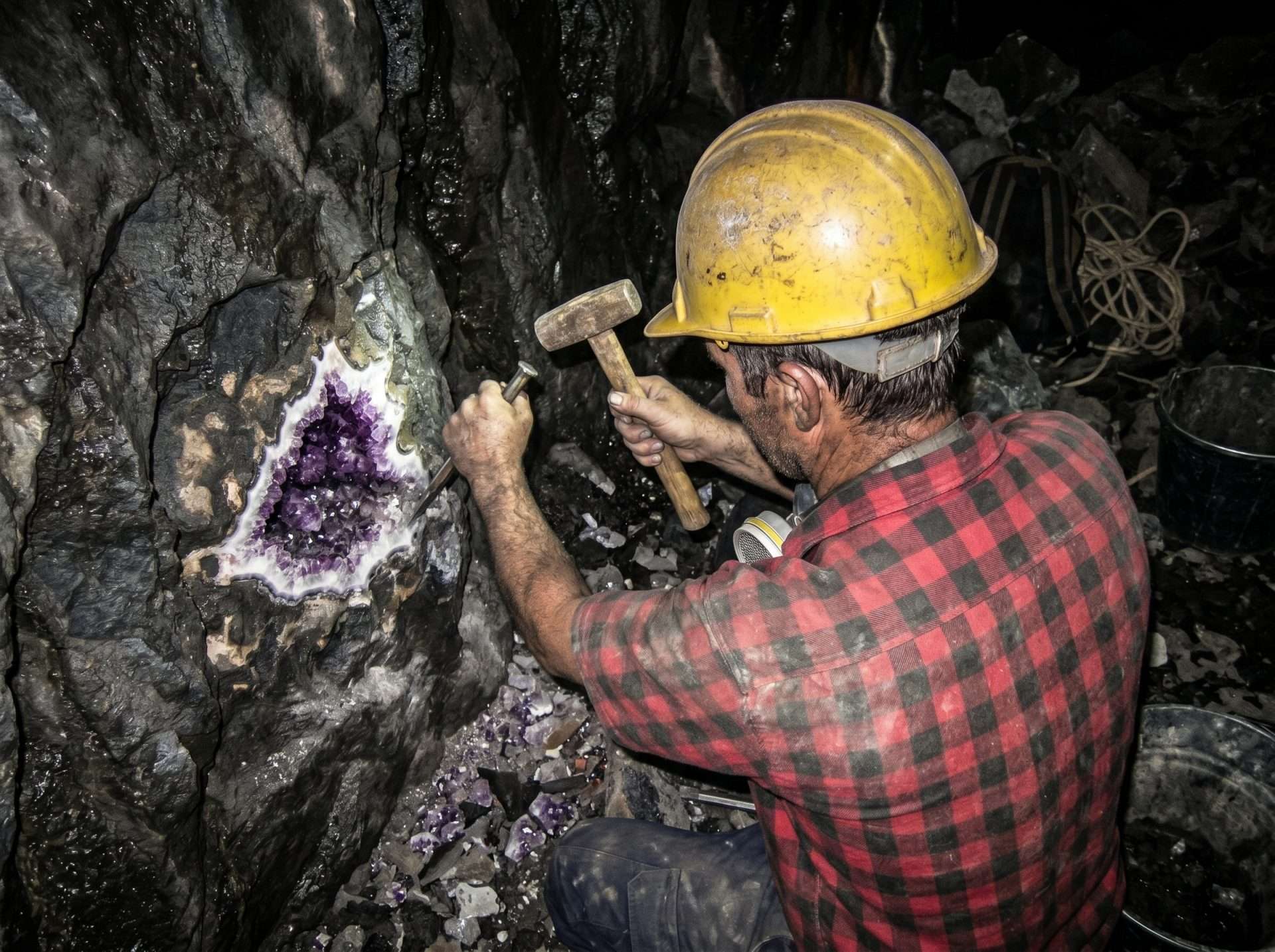
The color of amethyst isn’t paint or dye. It’s the result of a millions-of-years-old chemistry experiment. Trace amounts of ferric iron (Fe3+) get trapped in the quartz crystal lattice. Over geological time, natural gamma radiation activates those iron ions, creating the purple color centers we see.
I remember reading about this for the first time during my GIA coursework. There’s a specific, physical reason this stone is purple—it’s not because it “wants” to be. The process that created the color can, unfortunately, be undone by another type of light: ultraviolet (UV) radiation from the sun.
When amethyst sits in direct sunlight, the UV energy can reduce the Fe3+ ions back, weakening the color centers. This is a one-way street. A deeply saturated stone from Uruguay may hold its color longer than a lighter lavender piece from Brazil, but all natural amethyst is susceptible. For a deeper dive into how color and origin connect, see our quality and color depth guide.
How to Tell If Your Amethyst Is Fading
Fading is usually gradual, so it helps to know what to look for. It rarely happens evenly across the whole stone at once.
- Check the tips and edges first. The parts of the crystal most directly hit by light—like the pointed tip of a tower or the highest crystals in a cluster—will often lighten first.
- Look for a shift toward lavender, pinkish-gray, or near-white. A stone that was once a deep emperor purple might start looking more like a soft lavender. In severe cases, it can turn almost grayish-white.
- Note uneven patterns. Uneven fading is common. Parts of the stone in shadow will retain the original color while exposed areas lighten. Don’t confuse this with natural color zoning, which is normal and part of the stone’s character.
- Consider the environment. Heat accelerates UV damage. A south-facing windowsill, a sunny shelf, or a car dashboard are the highest-risk locations.
I once heard from a buyer whose beautiful deep purple crystal point had been sitting on a sunny windowsill for months. By the time she contacted me, the emperor purple had faded to a soft lavender. The color centers had been reduced by UV, and as I had to explain, that change was irreversible.
How to Protect Your Amethyst from Sun Damage
Prevention is everything. Here’s a simple, step-by-step approach to keep your amethyst safe.
- Avoid direct sunlight for extended periods. This is the most important rule. Do not place amethyst on windowsills that get hours of unfiltered sun, and avoid outdoor display altogether.
- Choose interior locations wisely. Place your crystal at least 3-4 feet away from bright windows. If your space gets strong afternoon sun, use sheer curtains to diffuse the direct rays.
- Rotate your display seasonally. If your home has strong seasonal sun angles (a spot might be shaded in winter but blasted in summer), consider moving your crystal to follow the shadows.
- Manage temporary exposure. If you need to move a crystal near a window for photos or an event, return it to a shaded spot afterward. Brief, incidental exposure is not the same as chronic daily sunbathing.
- Choose safe cleansing methods. Some traditional cleansing methods involve sunlight, but for amethyst, this is not recommended. Instead, use moonlight or sound-based methods like a singing bowl. For a full list of safe practices, see our guide to amethyst care and cleansing.
Best Indoor Placement for Amethyst
Finding the right spot is about balancing your crystal’s needs with your life and space.
- Living rooms: Shelves, mantels, or display cabinets that don’t get direct sun are ideal for geodes and clusters. They’re safe and can be appreciated as statement decor.
- Bedrooms: This is where I keep my first stone, a $12 piece on my nightstand. It works well because bedrooms typically have more controlled, indirect light. Dressers and bookshelves that don’t catch direct morning or afternoon sun are good choices.
- Home offices: A desk corner away from window glare is great for a small tower or palm stone. It’s present but protected.
- Bathrooms: Proceed with caution. If the window gets direct sun, it’s a risk. Steam can also affect geodes with matrix rock over time.
- Traditional Feng Shui: In Feng Shui tradition, the southeast corner of a room is considered the wealth corner and a common spot for crystals. If you follow this, just verify the chosen spot isn’t sun-blasted at any time of day.
For amethyst jewelry—rings, pendants, or bracelets made with 100% natural amethyst and 925 sterling silver—the care is simpler. When you’re not wearing it, store it in the gift box or a closed drawer. Don’t leave jewelry on a sunny vanity. The sterling silver is unaffected by UV, but the stone will fade just like a raw crystal would.
What to Do If Your Amethyst Has Already Faded
Let’s be direct: if UV exposure has faded your amethyst, you cannot reverse it. No cleansing ritual, moonlight bath, or charging method will bring back the purple. The iron color centers that were reduced by UV cannot be restored at home.
That said, the stone is still real amethyst. It’s still natural SiO2 with a Mohs hardness of 7. It hasn’t become fake or worthless; its color has simply changed due to physics and chemistry.
If the color change bothers you, you have a few options:
- Rehome the stone to a spot with less visual emphasis, where its new, softer color can still be appreciated.
- Consider it a lesson for future pieces. When buying new crystals, ask about color stability and keep the WYSIWYG photos so you can compare over time.
Does Indoor Lighting Affect Amethyst?
This is a common follow-up question, and a reasonable one. The good news is that standard indoor lighting is generally safe.
- LED and fluorescent lights emit very little UV compared to direct sunlight. Normal indoor lighting over months or years is not a significant fading risk for most amethyst.
- Grow lights and UV sterilization lamps are a different story. They are designed to emit UV wavelengths and can cause the same fading as sunlight. Keep amethyst well out of their direct range.
- Halogen bulbs emit more heat and some UV. Avoid placing amethyst directly under a halogen spotlight for extended periods.
When in doubt, use this simple test: if the light source feels noticeably warm on your skin from a few inches away and mimics the quality of sunlight, it likely carries some UV risk. For a comprehensive overview of ongoing care, our full amethyst care guide has you covered.
 Crystal Cluster
 Crystal Tower
 amethyst crystal ball
 Amethyst Caves for Sale
 Amethyst Bracelets
 Amethyst Earrings
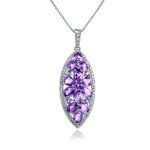 Amethyst Necklaces
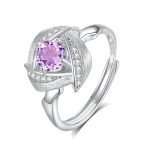 Amethyst Rings
 amethyst crystal healing
 Amethyst Beauty & Wellness
 Crystal Home Decor
 Spiritual & Divination Tools