Zerevia How-To Guide
Silver Amethyst Jewelry: How to Choose the Right Piece
A step-by-step guide to evaluating metal quality, gemstone authenticity, style, and care—so you can buy with confidence, whether it’s for yourself or someone you love.
Shopping for silver amethyst jewelry should feel straightforward. Two components matter most: the metal holding the stone, and the stone itself. When both are honest—real sterling silver, real amethyst—the piece lasts, feels good against skin, and actually looks the way you expected it to when you clicked “add to cart.” When either one is compromised, you end up with green fingers, a stone that looks different in person, or a setting that falls apart after three months.
This guide walks through four steps that separate a confident purchase from a gamble. No grading jargon, no vague promises. Just the observable details that tell you what you’re getting.
What to Know Before You Start
Every piece of silver amethyst jewelry has two stories: the metalwork and the gemstone. Understanding just a little about each one changes what you notice in a product listing—and what questions you know to ask.
Sterling silver is the standard for quality wearable jewelry. It’s strong enough for daily wear, resists skin reactions, and carries a recognizable hallmark. Amethyst, meanwhile, is a natural quartz with a color story that goes back millions of years: iron impurities activated by natural radiation produce the purple you see. That color is real chemistry, not dye.
The point isn’t to become an expert. It’s to know enough that you can spot when something doesn’t add up—and feel good about what you choose. If you want a broader overview of jewelry options, the amethyst jewelry collection page covers shapes, styles, and settings in one place.
Step 1: Understand the Silver — What “925” Really Means
Sterling silver is an alloy: 92.5% pure silver mixed with 7.5% other metals, usually copper, for structural strength. Pure silver on its own is too soft for jewelry—it bends, scratches, and loses shape. The alloy fixes that.
The “925” stamp is a hallmark. It appears on the inside of a ring band, the clasp of a necklace, or the post of an earring. It’s a compact way of saying: this meets an international standard. If a listing says “silver-toned,” “silver-plated,” or “silver-finished,” that’s a different thing entirely. Plating is a thin layer of silver over a base metal, and it wears off—sometimes within weeks of regular wear.
Why Nickel-Free Matters
925 sterling silver is nickel-free by standard composition. This is the detail that prevents the “green finger” problem people associate with cheap rings. When a ring turns your skin green, it’s usually because the metal contains high copper content or nickel underneath a thin plating. Genuine 925 sterling silver, properly made, avoids that reaction for most wearers.
If you have known metal sensitivities, it’s worth confirming with the seller that the piece is solid 925—not plated over a nickel base. A seller who can answer that question clearly is a seller worth buying from.
Step 2: Evaluate the Amethyst — Beyond “Purple Stone”
Not every purple stone in a jewelry listing is natural amethyst. Some are glass, some are synthetic quartz, and some are dyed stones that look convincing in photos but feel off in person. Here’s what to look for.
Confirm It’s Natural
The product description should say “100% natural amethyst.” If it doesn’t, ask. A seller who can’t answer the question “is this stone natural or treated?” is telling you something important about the rest of their sourcing.
Read the Color
Natural amethyst has color zoning—areas where the purple is deeper, lighter, or interrupted by near-colorless zones. This is a feature, not a flaw. It’s the visible fingerprint of millions of years of crystal growth. A perfectly uniform, saturated purple that looks the same at every angle is more likely to be dyed or synthetic.
I learned to trust uneven color early on. The first time I picked up a stone at a mineral show and saw that the purple shifted from deep violet at one end to a pale lavender near the base, the dealer watched me turn it over and said, “That’s how you know it grew in the ground.” He was right. Real stones carry their history on the surface. If you want to understand how different shades relate to origin and quality, the amethyst quality and value guide breaks down what color depth and clarity actually mean.
Check the Cut and Shape
Cut affects how the stone catches light and sits in the setting. Rounds and ovals are classic for rings and pendants. Pear and marquise shapes elongate the finger. Cabochons—smooth, unfaceted cuts—show off color depth differently than faceted stones, and they suit settings that emphasize the stone’s natural character. The amethyst forms and shapes guide covers the visual differences in more detail.
Watch for Inclusions
Tiny internal features—feather-like patterns, small needle-shaped marks—are signs the stone formed naturally. They’re not defects. They’re the mineral equivalent of a fingerprint. If the product photos show a stone that looks completely glass-clear with zero variation, that’s worth a second look, not because perfect clarity is impossible, but because it’s unusual enough to warrant a question.
Step 3: Match the Style to the Wearer
Once the materials check out, the question becomes personal: what kind of piece fits the life it’s going into?
Rings
A silver amethyst ring can be a daily-wear staple or a deliberate statement piece. For everyday wear, consider band width and stone height—lower-profile settings catch on fewer things. Adjustable bands solve the sizing question entirely, which matters especially for gifts when you don’t know the recipient’s exact ring size. If you do know, a US ring size chart is your friend.
Pendants and Necklaces
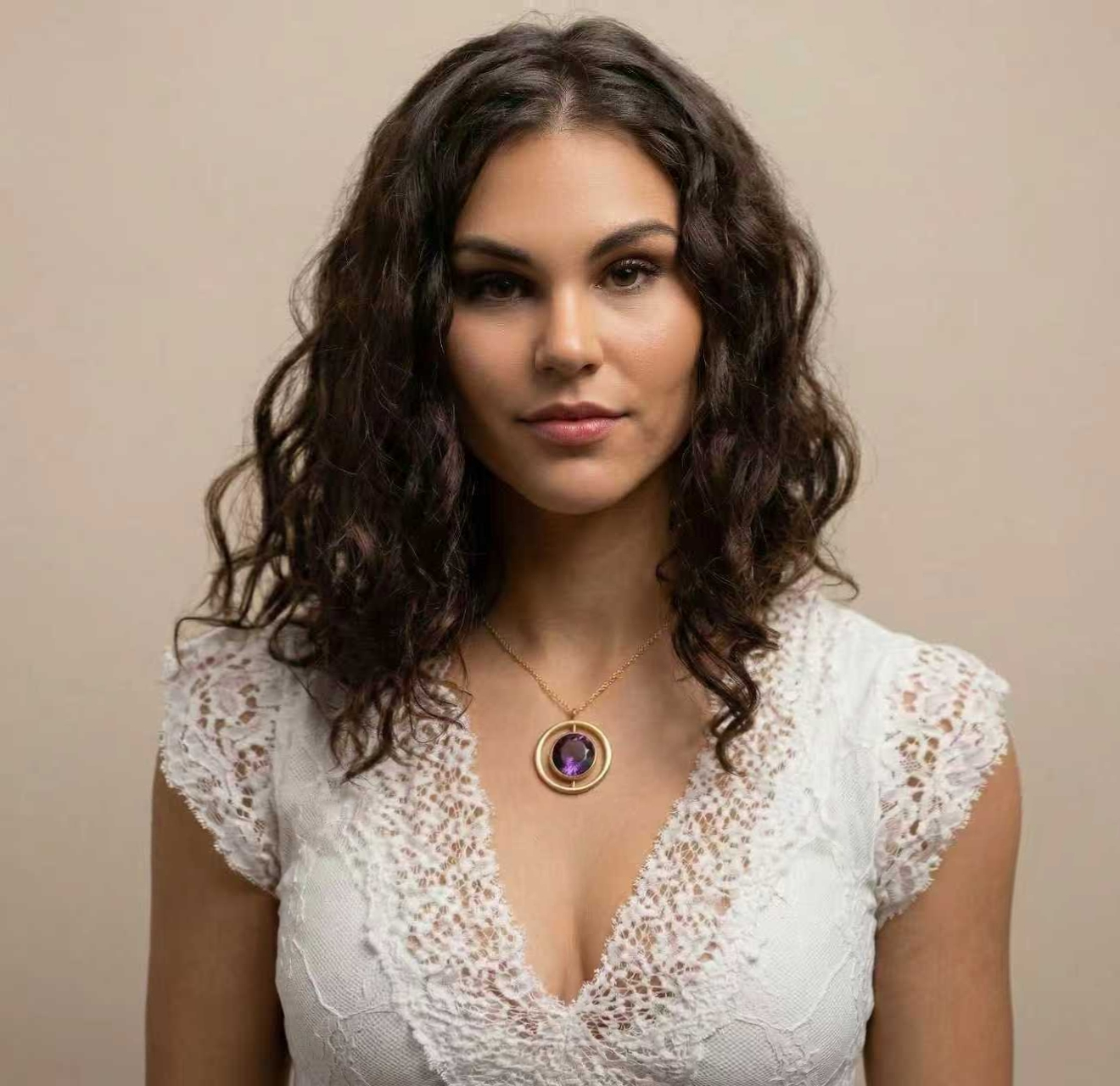
Chain length changes everything. A 16-inch chain sits at the collarbone; 18 inches drops just below; 20 inches and longer layer well over clothing. A simple solitaire amethyst pendant on a sterling silver chain is one of the most versatile pieces you can own or give—it works with a t-shirt or a dress.
Earrings
Weight matters more than people expect. A pair of amethyst studs in sterling silver is light enough for all-day wear. Drop earrings add movement and visibility but check the backing type—screw-backs and lever-backs are more secure than simple push-backs.
Bracelets
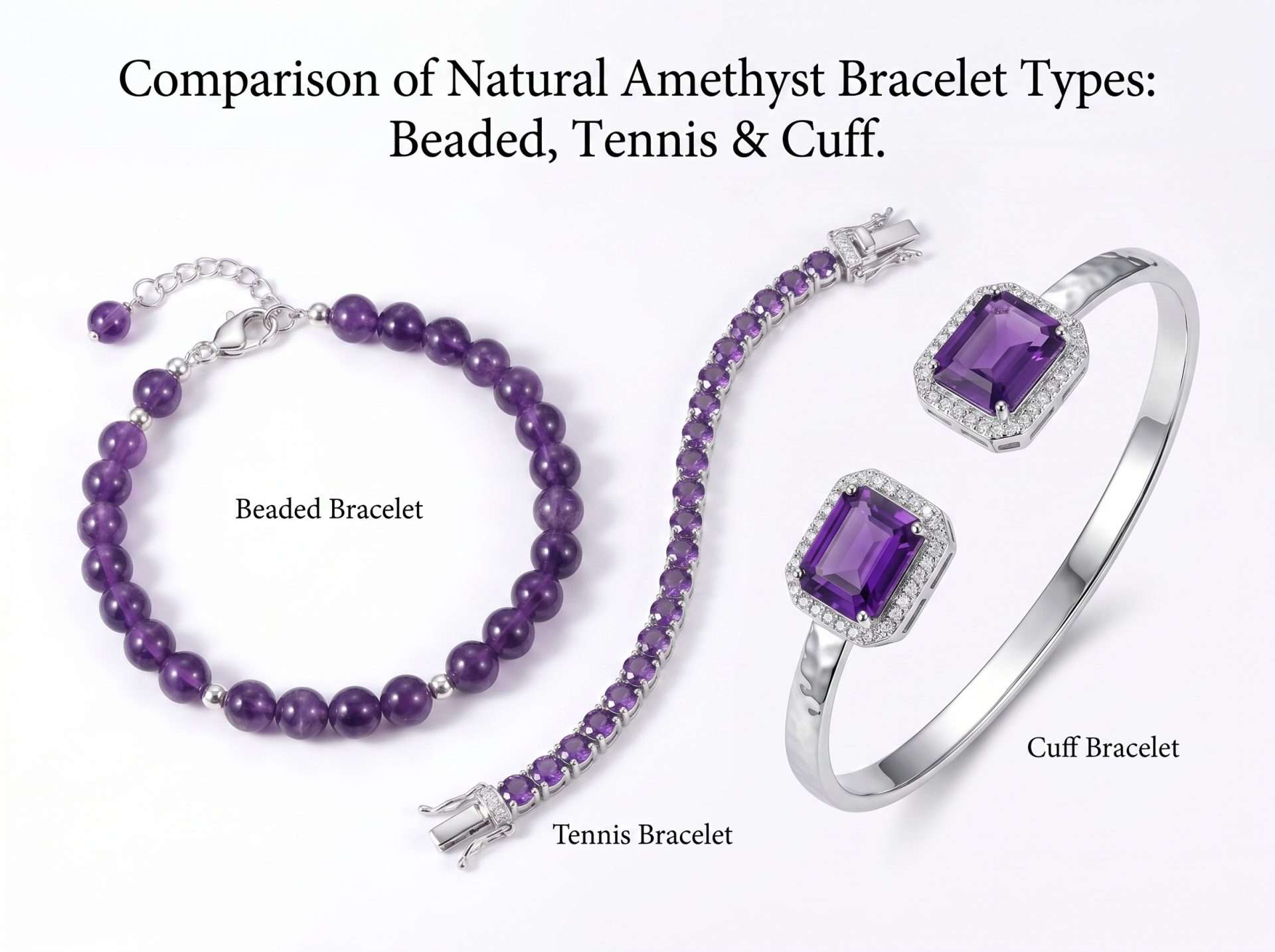
Wrist size and clasp security are the two details that determine whether a bracelet stays in rotation or lives in a drawer. Tennis-style bracelets with uniform stones look polished; beaded or chain-link styles read more casual.
As a Gift
Amethyst is the official February birthstone, which makes it a natural choice for February birthdays, Valentine’s Day, or any occasion where you want the gift to carry a layer of personal meaning. Traditionally, amethyst has been associated with calm, clarity, and centeredness—qualities that make it a thoughtful choice when you want the gift to say “I thought about this.” You can read more about those traditional associations in the guide to amethyst healing properties, which frames them as tradition and personal ritual rather than medical promise.
Step 4: Check the Details and Care Requirements
You’ve confirmed the silver. You’ve evaluated the stone. You’ve chosen a style. Before you buy, there are a few more practical checks that separate a piece you’ll wear for years from one that disappoints.
Product Photos
Look for multiple angles. Can you see the stone’s color variation, the setting detail, and the back of the piece? A seller who photographs the same item from four or five angles is telling you they want you to know what you’re getting. This is the “what you see is what you get” principle—WYSIWYG—and it matters more with jewelry than almost any other product category, because every natural stone is unique.
Setting Security
How is the stone attached? A prong setting (small metal claws gripping the stone) or a bezel setting (a metal rim encircling the stone) is more secure than glue alone. Product descriptions should mention the setting type. If they don’t, ask.
Making Your Final Decision
Here’s the framework in short:
- Start with the metal: Is it 925 sterling silver? Can you see the stamp or confirm it in the description?
- Check the stone: Is it 100% natural amethyst? Does the color show natural variation? Are there multiple photos?
- Match the style: Does the piece fit the wearer’s daily life—comfort, size, occasion?
- Verify the details: Setting type, clasp security, product photos, care instructions.
- Trust the seller: Can they answer basic questions about materials? Do they describe their pieces with specifics rather than vague adjectives?
The right silver amethyst jewelry is the one that meets your quality criteria and feels like it belongs to the person who’ll wear it. That’s a decision you’re now equipped to make on your own terms. If you want to understand where different amethyst qualities come from before you choose, the guide to amethyst geological origins covers what documented sourcing actually means.
Frequently Asked Questions
Ready to Find Your Piece?
Browse Zerevia’s silver amethyst jewelry collection, crafted with 925 sterling silver and 100% natural amethyst. Every item includes accurate photos so you know exactly what you’re choosing. Shop amethyst jewelry →
 Crystal Cluster
 Crystal Tower
 amethyst crystal ball
 Amethyst Caves for Sale
 Amethyst Bracelets
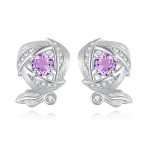 Amethyst Earrings
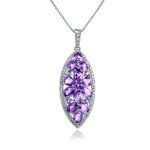 Amethyst Necklaces
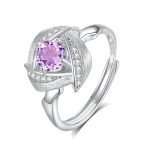 Amethyst Rings
 amethyst crystal healing
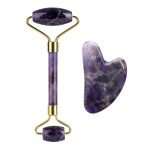 Amethyst Beauty & Wellness
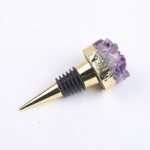 Crystal Home Decor
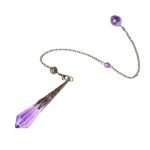 Spiritual & Divination Tools