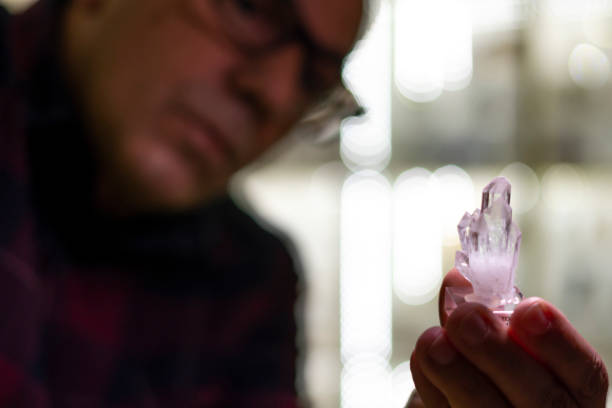
Amethyst crystals are not suitable for everyone to collect.

In today’s mineral market, amethyst crystal is almost hailed as the “perfect all-rounder.” It is the first choice for beginners, a favorite of jewelers, and even touted in many guides as “the first stone everyone must own.”
Walk into any crystal shop and the salesperson will recommend it without hesitation. But after reviewing specimens across dozens of suppliers and fielding buyer questions about fading, chipping, and disappointing inclusions, I’d push back on that consensus: amethyst crystal is beautiful, but it is not a “cure-all” for everyone — and the sooner you know that, the better your decision will be.
mineral butThis is not out of disdain for the mineral, but rather based on a deep respect for the physical and chemical properties of silicon dioxide.
If you’re considering acquiring your first specimen or debating whether to wear it as everyday jewelry, please stop. Ask yourself: Is this amethyst right for me? To answer this question, we need to strip away the romantic marketing rhetoric and conduct a rational crystal suitability guide from the perspectives of lattice structure, hardness coefficient, and photochemical reactions.

The Paradox of Light: If you like sunlit windowsills
This is a common pitfall for many novice collectors.
You just bought a deep, rich purple geode, and to showcase its beauty, you placed it on the south-facing windowsill where it gets the best sunlight. Sunlight shines through the crystal, refracting into a mesmerizing halo. Beautiful, isn’t it?
But from a mineralogical microscopic perspective, this is a slow “murder.”
Amethyst crystal has a very special origin. It comes from the bombardment of trace amounts of iron impurities in the crystal lattice by natural gamma radiation deep in the Earth’s crust, which causes electrons to jump and form unstable “color centers.”
This physical process is reversible.
Strong ultraviolet radiation provides energy to the crystal lattice, causing electrons to jump back to their original positions. The result is that the color gradually fades. If you live in an area with strong sunlight or are accustomed to displaying your collection in direct sunlight, after a few months or even years, your once deep amethyst crystal may turn into a cloudy gray or even degenerate into an ordinary white crystal.
Conclusion: If your display space cannot avoid strong direct sunlight, or if you expect a color that remains unchanged even after being exposed to outdoor sunlight, amethyst crystal is not your best choice.
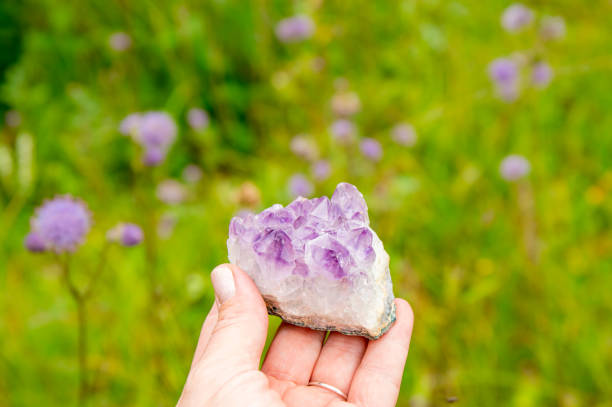
Myths about hardness: If you’re looking for an “indestructible” everyday companion
On the Mohs Hardness Scale, amethyst crystal scores 7.
Many popular science articles will tell you, “7 is a very high number, harder than steel, and suitable for everyday wear.” This statement is only half true. Hardness refers to the ability to resist scratches, not the ability to resist impacts.
As a macrocrystalline quartz, amethyst is brittle. More importantly, it has a conchoidal fracture. This means that if it is struck by a hard object at a specific angle (like your ring accidentally hitting a granite countertop), it will not deform like metal but will shatter like glass, producing a sharp fracture.
In contrast, diamonds (hardness 10) or rubies and sapphires (corundum, hardness 9) are much more resistant to the effects of daily high-frequency wear.
In conclusion: If your work environment involves a lot of physical activity and hand contact, or if you are an easygoing person who wants your jewelry to accompany you “up mountains and down to the sea,” then wearing a large amethyst crystal as an everyday ring may be risky. It is more suitable as a pendant, earring, or a decorative piece for static display.
Aesthetic differences: If you pursue “industrial-grade perfection”
This is the most common psychological letdown when choosing the right crystal.
Amethyst crystals in nature grow in complex geological environments filled with hydrothermal fluctuations, crustal compression, and impurity intrusions. This inevitably results in them often bearing unique “birthmarks.”
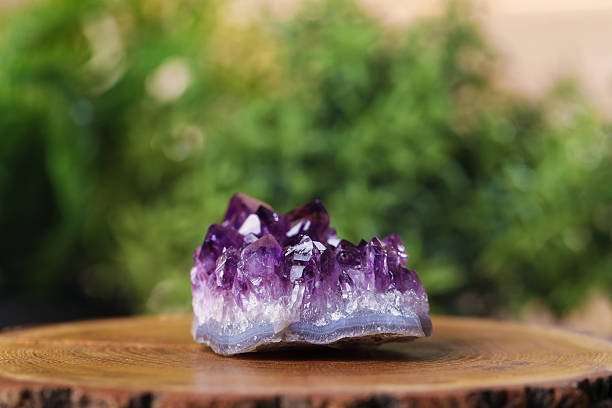
Color Zoning: In genuine natural amethyst, the color is often not evenly distributed. You can often see alternating light and dark stripes or a phenomenon where only the tip of the crystal is purple and the base is white.
Inclusions: Crystals often contain gas-liquid inclusions or inclusions of other minerals such as goethite and lepidocrocite.
For perfectionists who crave minimalism, purity, and uniform color, these geological features might appear as flawed “second-rate” products. Cheap beads on the market with a color as uniform as grape juice are often synthetic crystals or glass imitations.
In conclusion, if you cannot accept the cotton-like texture inside a gemstone or consider uneven coloring a quality issue, then natural amethyst crystal may disappoint you. You might be better suited to synthetic gemstones or other minerals with higher clarity.
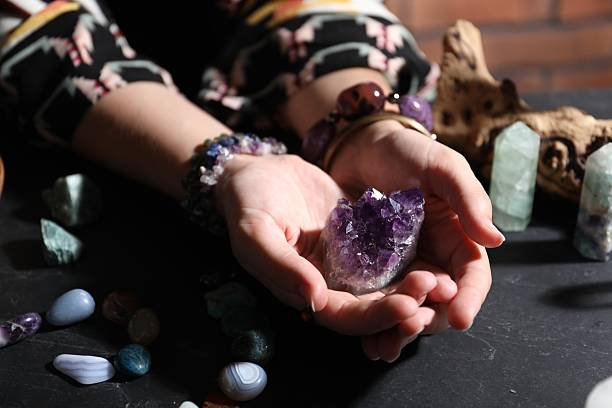
Space and Maintenance: When Nature’s Gift Becomes a Burden
When discussing amethyst crystals, we cannot ignore the breathtaking geodes.
Amethyst geodes from Brazil and Uruguay can weigh tens or even hundreds of kilograms. Although they appear magnificent, they require extremely specific environmental conditions for actual collection.
A Nightmare for Dust: The interior of a geode is filled with countless tiny crystals, making it the perfect hiding place for dust. Without regular professional cleaning (usually requiring a high-pressure air gun or specific cleaning solutions), the surface of the crystals will be covered with a layer of grayish grime, completely losing its luster.
Safety: This is a heavy block of silicon dioxide. Without a stable base or placed on an unstable shelf, it poses a potential physical threat to children and pets in the home.
When you’re drawn to those beautifully edited home decor photos online, please be sure to consider the real costs of cleaning and maintenance.
Rational passion is the only kind that lasts.
The purpose of writing this article is not to discourage anyone, but to establish a more mature perspective on collecting.
Amethyst crystal is a masterpiece of nature. Its fragility, its imperfections, and its sensitivity to light are all part of its scientific properties. True appreciation is not about blindly attributing “superpowers” to it, but about understanding its mineralogical background and giving it the most appropriate place.
If you can accept that it cannot be exposed to direct sunlight, requires careful handling, and appreciate the unique textures inside left by millions of years of geological activity, then it will be the most fascinating item on your collection shelf.
After all, in the world of minerals, there is no best stone, only the stone that is most suitable for you.
FAQ: Frequently Asked Questions Regarding the Applicability of Amethyst Crystal
1. Will Amethyst crystal fade when exposed to light?
This depends on the type of light source. Ordinary household LED lights or incandescent bulbs generally do not contain ultraviolet (UV) light and are therefore safe for amethyst crystal. However, prolonged exposure to strong spotlights, fluorescent lamps, or direct sunlight containing UV light can damage the unstable color centers within the amethyst, causing the color to fade. It is recommended to avoid direct sunlight when displaying amethyst indoors.
2. Since amethyst is brittle, is it suitable for making engagement rings?
From a mineralogical perspective, amethyst crystal is not the best choice for an engagement ring. Although its Mohs hardness of 7 is not low, its cleavage and conchoidal fracture make it prone to chipping when impacted by hard objects. Engagement rings are usually worn daily, facing a higher risk of physical damage. If you are particularly fond of purple, it is recommended to choose a design with a more secure setting (such as a bezel setting) or as a cocktail ring for occasional wear.
3. How can I tell if the amethyst crystal I bought is natural or synthetic?
This brings us back to the core of choosing the right crystal—observing its “imperfections.” Natural amethyst typically exhibits color zoning, meaning stripes of varying shades of color, and often contains inclusions of gas or liquid or minute mineral impurities.
Synthetic amethyst, on the other hand, is usually overly uniform and perfect in color or extremely pure internally. If you see a large, deep purple, flawless stone that is unusually inexpensive, it is most likely not natural.
About This Article
Written by Serena Delaney, Amethyst Researcher & Buyer at Buy Amethyst Crystal. Content is based on direct specimen evaluation, published research from the GIA and IGS, and buyer questions collected from our community. Where conclusions are observational rather than laboratory-verified, this is noted in the text.
Last reviewed: March 2026
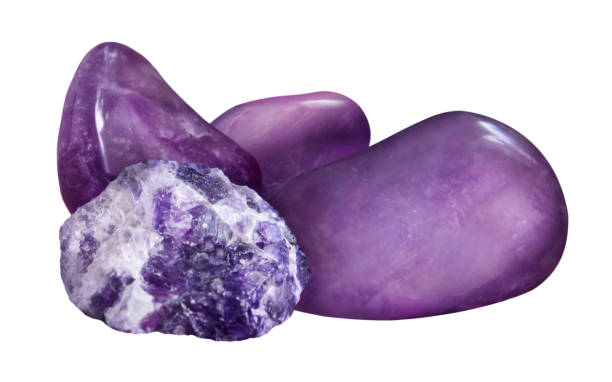
 Crystal Cluster
 Crystal Tower
 amethyst crystal ball
 Amethyst Caves for Sale
 Amethyst Bracelets
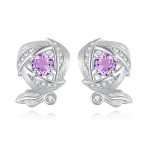 Amethyst Earrings
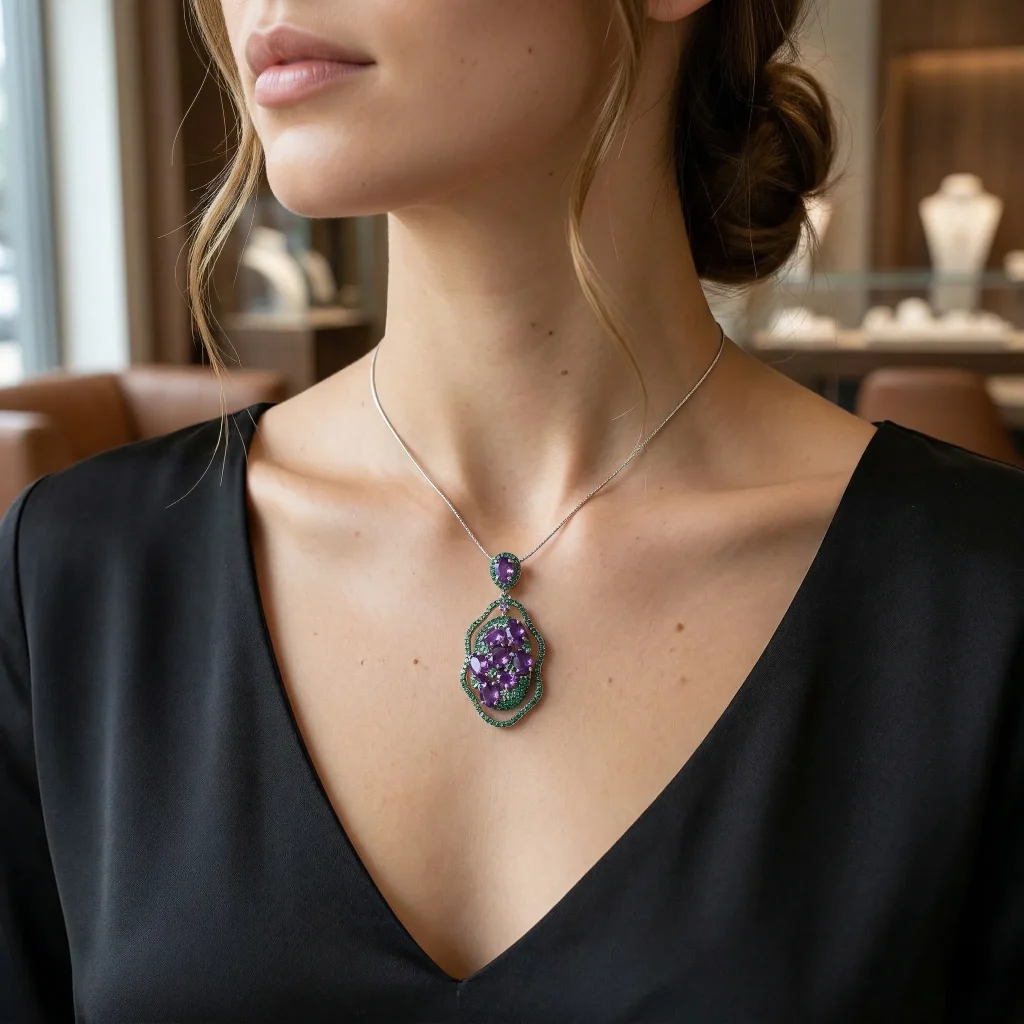
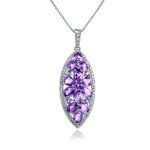 Amethyst Necklaces
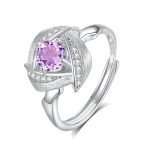 Amethyst Rings
 amethyst crystal healing
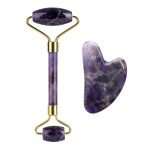 Amethyst Beauty & Wellness
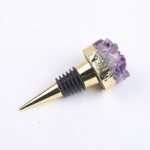 Crystal Home Decor
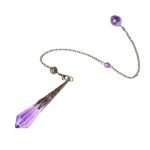 Spiritual & Divination Tools