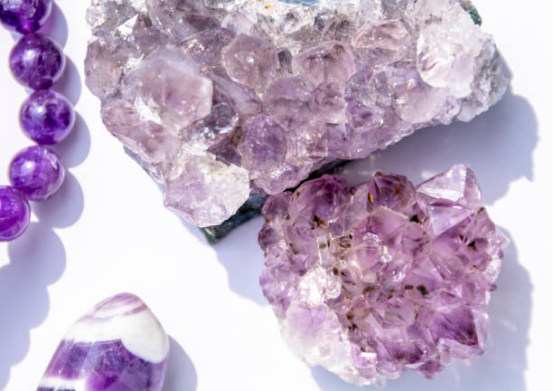
How to Identify Real Amethyst Crystal? 5 Key Tips to Avoid Imitations

“A flawless, impossibly cheap, deep purple crystal might look great on an Instagram feed, but after completing GIA gemology coursework and handling hundreds of stones, it sets off every alarm I have. The market is flooded with synthetic lab-grown quartz and dyed glass passed off as the real deal. Today, I’m going to show you how to look at a stone so you actually know what you’re buying.” — Serena
In recent years, amethyst has become the undisputed starting point for anyone looking to bring natural stones into their home. A simple search online will reveal a flood of shiny purple geodes, towers, and tumbled stones.
But here is the reality: many of these seemingly beautiful pieces are fakes. If you are buying an amethyst to act as a physical anchor for a busy mind, a piece of dyed glass isn’t going to do much for you. So, how do you tell real from fake amethyst? Here are five practical ways to identify authentic stones.
1. Look at the Color (Seek the Zoning)
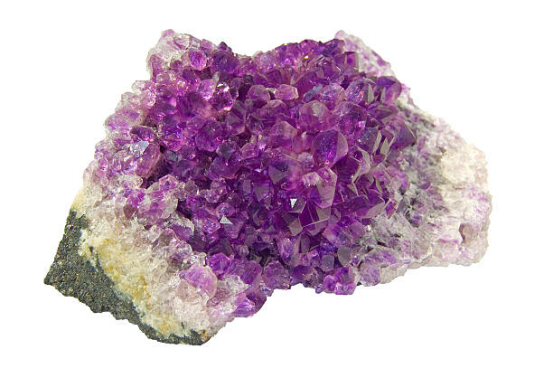
The color of a natural amethyst crystal is rarely as uniform as a perfectly mixed paint palette. Its purple color is created by trace amounts of iron ($Fe^{3+}$) and millions of years of natural earth radiation.
Because of this slow, chaotic growth process, real amethyst almost always exhibits Color Zoning. This means the purple will range from light lavender to a deep, dark violet within the same stone, occasionally tinged with red or blue flashes (especially in high-grade Uruguayan stones). You will also often see a white quartz base where the crystal attached to the host rock.
The Fake Red Flag: Imitations—especially dyed glass or synthetic lab-grown amethyst—often appear too perfectly purple. If the color is completely uniform from tip to base, or if it looks like a bright “grape candy” color, you should be wary.
2. Find the “Flaws” (Earth’s Fingerprints)
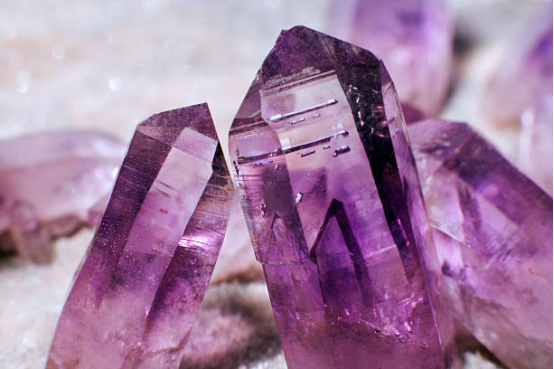
The jewelry industry has taught us that “cleaner and clearer” is better. In the world of natural healing crystals, the opposite is true. True amethyst exhibits a subtle inner beauty: small bubbles, feather-like internal fractures, hazy textures, and even visible mineral inclusions like golden Goethite needles.
These are not “defects”; they are Earth’s fingerprints. They prove your crystal was formed in a volcanic cavity millions of years ago.
The Fake Red Flag: Synthetic amethyst grown in a lab over a few weeks will be completely “spotless” inside. Dyed glass might contain tiny, perfectly spherical air bubbles, but it will lack the complex, random geometry of natural inclusions. If it looks like it was produced by a machine, it probably was.
3. The Temperature and Scratch Test
If you hold an amethyst crystal, try placing it against the inside of your wrist or cheek. Because natural quartz is dense and conducts heat slowly, it will feel noticeably cold to the touch and take a while to warm up to your body temperature.
Furthermore, Amethyst has a Mohs hardness of 7. This means it is harder than glass (which is a 5.5). A real amethyst can easily scratch a piece of standard glass.
The Fake Red Flag: Resin, plastic, or glass imitations typically feel “flat” or room-temperature to the touch and will warm up in your hand very quickly. They will also fail the scratch test against real glass.
4. The Optical & UV Test
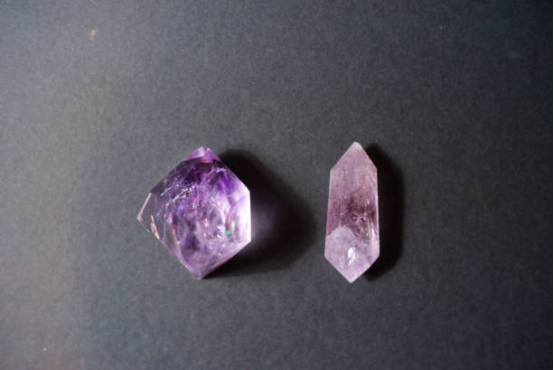
You don’t have to be a geologist to perform a basic optical test. Simple tools like a UV lamp (blacklight) can help you make a preliminary assessment.
Natural amethyst crystal may exhibit a very slight color shift under ultraviolet light, but it rarely exhibits exaggerated, bright fluorescence.
The Fake Red Flag: Dyed imitations will often exhibit an unnaturally bright, glowing fluorescence under a UV light because of the chemical dyes used to color the cracks. (Note: Never leave your real amethyst in direct sunlight, as natural UV rays will permanently fade its beautiful purple color!)
5. Choose the Right Channel: Beware the $20 Giant Geode
It may sound cliché, but it must be emphasized: when buying amethyst, do not just shop by price. Those “unreasonably low” price tags on massive geodes or perfectly clear towers are the biggest red flags on the market. The price of natural amethyst is influenced by extraction difficulty, ethical sourcing, clarity, and origin (Brazil vs. Uruguay). It is accessible, but a massive 5-pound deep purple geode will never be $20.
What to look for in a seller:
- Full Transparency: Reputable sellers disclose the origin of the stone and whether it has been heat-treated.
- WYSIWYG (What You See Is What You Get): Because every natural crystal is unique, trustworthy sellers will provide multi-angle photos of the exact crystal you are buying, rather than using a generic, heavily filtered stock photo.
(Want to master crystal grading? Read our comprehensive Amethyst Quality & Grading Guide.)
Quick Reference: Authenticity Check
| Detection Dimension | Natural Amethyst Crystal Features | Common Symptoms of Fakes / Synthetics |
|---|---|---|
| Color & Tone | Natural gradients (Color Zoning), white quartz roots, uneven purple distribution. | Color is too uniform, “grape candy” bright, or dye concentrates in the cracks. |
| Internal Structure | Contains natural feather fractures, hazy areas, and mineral inclusions. | 100% flawless and transparent, or contains perfect, round air bubbles (glass). |
| Touch & Temp | Heavy and feels cold to the touch; takes time to warm up. | Feels light, warm, or room temperature (plastic/resin/glass). |
| Hardness | Mohs Hardness 7 (Can scratch glass). | Mohs Hardness 5.5 or lower (Cannot scratch glass). |
| Sourcing | Seller provides exact photos (WYSIWYG), clear origins, and realistic pricing. | Abnormally cheap prices, blurry stock photos, generic descriptions. |
Final Words
Identifying whether an amethyst crystal is real or fake isn’t just about scientific skill; it’s about observation and intuition. Once you hold a real, 4-billion-year-old piece of the Earth in your hands, you will instantly recognize the difference in weight, temperature, and energy.
Everyone who encounters their first genuine amethyst crystal usually feels a sense of wonder and grounding peace. In our eyes, it may not be “flawless,” but those natural imperfections are exactly what resonate with our own human experience.
Rather than rushing to buy a cheap, mass-produced imitation, take the time to carefully select your own “stone of destiny.” If you’re looking for a trustworthy source, explore our curated, ethically sourced Amethyst Crystal Collection. We operate on a strict WYSIWYG policy with authentic, unedited photos—ensuring every crystal lover can purchase with absolute confidence.
Frequently Asked Questions (FAQ)
Does real amethyst have bubbles inside?
No. Perfectly round air bubbles are a telltale sign of manufactured glass. While real amethyst often contains natural “flaws” like feather-like fractures, hazy clouds, or mineral needles, it will never contain spherical air bubbles trapped inside.
If my amethyst fades in the sun, does that mean it is fake?
Actually, it’s the opposite! Natural amethyst is photosensitive. Prolonged exposure to direct UV sunlight will permanently alter its iron ions, fading its vibrant purple color into a pale grey. (This is why you should keep it away from windowsills). If a crystal sits in the blazing sun for years and never loses its color, it might be synthetic.
If my crystal scratches glass, does that mean it’s 100% real amethyst?
Not 100%, but it is a great first step. Amethyst has a Mohs hardness of 7, which means it will easily scratch standard glass (hardness 5.5). While this test successfully rules out plastic, resin, and glass fakes, keep in mind that lab-grown synthetic amethyst also has a hardness of 7. You must combine the scratch test with visual checks for natural color zoning and inclusions to be certain.
For a second pass before buying, use this real vs fake amethyst checklist.
 Crystal Cluster
 Crystal Tower
 amethyst crystal ball
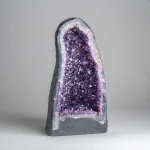 Amethyst Caves for Sale
 Amethyst Bracelets
 Amethyst Earrings
 Amethyst Necklaces
 Amethyst Rings
 amethyst crystal healing
 Amethyst Beauty & Wellness
 Crystal Home Decor
 Spiritual & Divination Tools