
Polished Amethyst Stone: How to Choose, Use, and Spot Real from Fake
A polished amethyst stone is any amethyst piece that has been shaped and smoothed—tumbled into a pocket-sized oval, carved into a sphere, set as a cabochon in a sterling silver ring, or cut into a pointed tower for a shelf. It is the opposite of raw amethyst, which keeps its original mineral shape: rough edges, matrix rock, and all. If you are searching for a polished amethyst stone, you are probably looking for something you can hold, wear, or display without it scratching your furniture or snagging your sweater.
This guide covers how to tell real from fake, what makes chevron amethyst different, how people actually use polished amethyst in daily life, and when you should (and shouldn’t) try polishing a stone yourself. I will also share what I have learned from years of buying, studying, and occasionally making mistakes with these stones.
What Is a Polished Amethyst Stone?
Polished amethyst covers a wide range of forms, and the term sometimes causes confusion. Here is a quick breakdown:
- Tumbled stones are small, smooth, oval-shaped pieces shaped in a rock tumbler over several days. They are the most common entry point for first-time buyers—affordable, easy to carry, and good for holding during quiet moments.
- Palm stones are larger, flatter tumbled pieces designed to sit comfortably in your hand.
- Spheres are polished into a perfect round shape, traditionally associated with completeness and placed on stands for display.
- Towers and obelisks are carved and polished into a pointed column—flat on the bottom, tapering to a point on top. They serve as desk pieces or shelf accents.
- Cabochons are flat-backed, domed-top polished pieces used in jewelry settings—rings, pendants, and earrings.
The key distinction is this: polished means any amethyst that has been shaped and smoothed by human hands, whether in a tumbler or on a lapidary wheel. Raw amethyst, by contrast, retains its natural mineral form—rough edges, host rock, and crystal faces included. Neither is better; they serve different purposes. If you want a fuller comparison of forms, our amethyst forms and shapes guide covers every category in detail.
One variety worth noting separately is chevron amethyst, which has a distinctive banded appearance that sets it apart from standard polished stones. We will get to that shortly.
Real vs Fake Amethyst Stone: How to Tell the Difference
This is the question I hear most often, and it is the right question to start with. Dyed glass, colored quartz, and reconstituted plastic pieces all circulate under the label “amethyst,” and some of them look convincing at first glance.
Here are the tests I have come to rely on. These are not secret—they are just things most sellers do not volunteer:
- Weight. Real quartz (amethyst is a variety of quartz, Mohs hardness 7) is noticeably heavier than glass and significantly heavier than plastic. Pick it up. If it feels unexpectedly light for its size, that is a flag.
- Temperature. Press the stone against your cheek or the inside of your wrist. Real mineral feels cool on contact and warms slowly against your skin. Glass is also cool, but it tends to cool more uniformly and reach body temperature faster.
- Color zoning. This is the most reliable visual test. Natural amethyst has uneven color distribution—some areas deeper purple, some lighter, sometimes with white or translucent patches. Perfectly uniform purple throughout is suspicious. Real stones have color zoning; imitations tend to look too consistent.
- Inclusions and matrix. Tiny feather-like internal features, needle-shaped inclusions, or bits of the host rock (matrix) attached to the base are signs of a natural stone. Flawless, glass-clear purple with zero internal features should prompt more questions.
- Origin disclosure. A trustworthy seller can tell you where the stone came from—Brazil, Uruguay, or another documented source. The phrase “natural amethyst” by itself does not prove anything. Ask where it was mined.
I keep a version of this list on my phone because I still use it at mineral shows. The origin question is the hardest one—not technically, but because you have to find someone willing to answer it. If you want a deeper dive into what separates quality amethyst from lower-grade material, our amethyst quality and value guide covers grading factors like color depth, clarity, and crystal formation.
Chevron Amethyst Stone: What Makes This Banded Variety Different
Chevron amethyst gets its name from the V-shaped banding pattern visible on its surface—alternating layers of purple amethyst and white quartz that form chevron or zigzag stripes. It is a naturally occurring variety, not a treatment or dye pattern, and it is one of the easier polished stones to identify once you know what to look for.
Chevron amethyst is most commonly found in polished form: tumbled stones, palm stones, spheres, and cabochons. The banding is most visible when the stone is sliced or polished to reveal the internal layering. Compared to a standard polished amethyst, which shows solid or zoned purple, chevron amethyst has a distinctive striped or V-pattern that makes it immediately recognizable.
In traditional crystal practice, chevron amethyst is associated with clarity of thought and inward focus. Some people choose it specifically for journaling or quiet reflection. As with all traditional crystal associations, this is a matter of personal ritual rather than scientific proof—but if the pattern speaks to you, that is reason enough to choose it.
One thing to watch for: dyed quartz imitations sometimes mimic the banded look with paint or surface dye. Genuine chevron amethyst banding runs through the stone, not just on the surface. If you can see the pattern continuing into the interior when you look at the edges or a translucent area, that is a good sign. For more on identifying different amethyst types, the forms and shapes guide is a useful reference.
Polished Amethyst Jewelry: Rings, Bracelets, and Necklaces
Polished amethyst is the standard form used in jewelry—cabochon-cut stones set into sterling silver or gold settings, faceted stones for more traditional jewelry designs, and beaded polished stones strung into bracelets. Here is what to look for in each category.
Real Amethyst Stone Ring
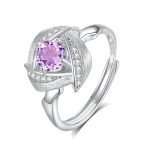
A real amethyst stone ring typically features a cabochon or faceted stone set in 925 sterling silver. “925” means the metal is 92.5% silver mixed with 7.5% copper for durability—it is the standard for quality silver jewelry, and it is nickel-free, which means no green fingers and no nickel reactions for most wearers.
If you are buying online and unsure about ring size, look for adjustable ring designs. An open-band adjustable ring can be gently squeezed or widened to fit different finger sizes, which eliminates the most common reason people return rings. For rings with a fixed band, make sure the seller provides a ring size chart.
Real Amethyst Stone Bracelet
Beaded amethyst bracelets are popular and come in a range of bead sizes—typically 6mm to 10mm. When evaluating a real amethyst stone bracelet, check that the beads show some variation in color and transparency. Uniform, overly saturated purple beads may be dyed or reconstituted stone rather than natural material.
Real Amethyst Stone Necklace
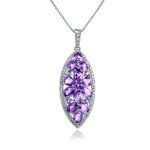
A polished amethyst pendant in sterling silver is a classic February birthstone gift. Amethyst has been the traditional birthstone for February for centuries, which makes a real amethyst stone necklace a meaningful choice for birthdays, Valentine’s Day, or simply marking a personal moment. In astrology tradition, amethyst is also considered the guardian stone for Aquarius (January 20–February 18), which extends the gift-giving window.
For all jewelry purchases, look for sellers who specify “100% natural amethyst” and “925 sterling silver” in their product descriptions—these are the baseline material claims you should expect. A gift box and meaning card are nice additions but not guarantees of quality on their own.
Amethyst Meaning: Love, Calm, and How People Actually Use It
Amethyst has carried symbolic meaning for a very long time. In ancient Greek tradition, the name comes from amethystos—”not intoxicated”—and the stone was associated with sobriety and clear thinking. In relationships, amethyst has traditionally symbolized emotional clarity, loyalty, and calm communication. When people ask about amethyst stone meaning in love, the historical answer is not about attraction or passion—it is about steadiness. The tradition says it supports honest expression and emotional balance between partners.
Then there is the question of amethyst for anxiety. I want to be careful here because this is where crystal marketing often crosses a line. I will not tell you that amethyst cures anxiety. No stone cures anxiety.
What I can tell you is what I have experienced and what I hear from buyers. Someone once asked me directly: “You really think stones work?” I said something like this: “I don’t know if stones have the kind of mystical energy people talk about. I really don’t. But I know that when I have a piece of real amethyst on my nightstand—something that came from a specific place and was handled with care—I spend a minute or two looking at it before I fall asleep instead of scrolling my phone. That minute matters to me.”
That is how most people I know actually use polished amethyst. Not as a medical intervention, but as a small, real object in a room that otherwise has too many screens. The practical version of “how to use amethyst stone benefits” looks like this:
- Bedside placement. A small tumbled stone or palm stone on the nightstand as part of a wind-down routine.
- Holding during transitions. Keeping a tumbled stone in a jacket pocket or bag to hold during stressful moments—something tactile to anchor attention.
- Intention setting. A brief, personal practice of holding the stone and naming what you want to focus on. The stone is not doing the work; you are. It is a physical reminder.
- Incorporating into existing routines. Placing a stone near a meditation cushion, next to a journal, or on a desk where you take breaks.
In traditional Indian philosophy, amethyst is linked to the third eye chakra (Ajna, located between the eyebrows, associated with intuition) and the crown chakra (Sahasrara, at the top of the head, associated with awareness). These are traditional associations, not medical claims, but they inform how many people choose to place and use their stones.
For a deeper look at traditional meanings and their history, our amethyst healing properties page covers the cultural and historical background in more detail.
How to Polish Amethyst Stone (and When You Probably Shouldn’t)
The search for “how to polish amethyst stone” usually comes from one of two directions: either you have a raw piece you want to smooth, or you are curious about how polished stones are made. Here is the honest version of both.
How it is done professionally. Tumbled stones are made in a rock tumbler—a machine that slowly rotates a barrel filled with stones, water, and progressively finer abrasive grit. The process takes one to two weeks, moving through coarse grit (to shape) to medium, fine, and finally a polishing compound. For cabochons or flat surfaces, lapidary workers use silicon carbide sandpaper in stages from 220 grit up through 1,200 grit or finer, then finish with a cerium oxide polish.
Should you try it at home? Honestly, most people get better results buying a pre-polished stone. Rock tumbling requires patience, multiple grit stages, and a willingness to wait two weeks for a batch. Hand-polishing with sandpaper works for small pieces but produces uneven results unless you have practice and consistent technique. If you want a polished amethyst stone, buying one that is already finished saves time and gives you predictable quality.
The more important warning is about what happens after polishing. Polished or raw, amethyst has a specific vulnerability: UV fading. The purple color in amethyst comes from Fe³⁺ (iron ions) in the quartz crystal structure, activated by natural radiation over millions of years. Sustained UV exposure—meaning direct sunlight—causes those iron ions to reduce, and the purple fades. This is permanent. It cannot be reversed.
I learned this the hard way through a buyer who placed her polished crystal point on a south-facing windowsill. Two hours of direct afternoon sun every day. Within a few months, her deep imperial purple had faded to a pale lavender. The stone was still real amethyst, still had the same structure—but that specific color was gone. I wrote UV care warnings into every product description after that.
Basic care for a polished amethyst stone: wipe with a soft cloth, clean with mild soap and water if needed, avoid ultrasonic cleaners, and keep it out of direct sunlight. Moonlight cleansing—placing the stone on a windowsill overnight under moonlight—is the safest ritual method and will not damage the color. For full care and cleansing instructions, see our amethyst care and cleansing guide.
How to Choose the Right Polished Amethyst Stone for You
After reading everything above, you might still be wondering which polished amethyst stone actually makes sense for your situation. Here is a decision framework I use when buyers ask me.
Start with use case:
| Use Case | Best Form | Why |
|---|---|---|
| Home display or statement piece | Geode, sphere, or tower | Visual impact; serves as both decor and conversation piece |
| Portable ritual or desk companion | Tumbled stone or palm stone | Fits in a pocket or sits next to a keyboard; tactile and discreet |
| Wearable daily | Jewelry (ring, bracelet, necklace) | 100% natural amethyst in 925 sterling silver; no special placement needed |
| Gift (birthday, Valentine’s, housewarming) | Birthstone jewelry or a meaningful tumbled stone with a card | February birthstone connection; easy to personalize |
Choose by color depth and origin:
I often ask people: “Do you want something large, or something deeply colored?” Brazilian amethyst tends to come in larger pieces with color ranging from lavender to medium purple—it is a good choice when you want a visual statement piece at a reasonable price point. Uruguayan amethyst typically has finer crystal structure and deeper color, sometimes reaching that dense, nearly blue-toned imperial purple. It costs more, but if you place a Uruguayan piece next to a Brazilian piece of similar size, you will see the difference in about two seconds.
Neither origin is better. It depends on what you want, where you plan to put it, and how much color depth matters to you. For a detailed comparison, our amethyst geological origins guide breaks down the differences with documented sourcing information.
Choose by placement:
- Bedroom: Smaller, personal pieces—tumbled stone, palm stone, or a small cabochon ring. Something that does not demand attention but is there when you reach for it.
- Living room: A geode or cluster as a statement piece. Size matters here—a geode with visible crystal interior and good color depth makes a natural focal point.
- Office or desk: A tumbled stone or small tower that sits near your workspace without taking up too much room.
Consider care needs upfront. Every polished amethyst stone, regardless of form, should be kept out of direct sunlight. If you are buying for a windowsill spot, reconsider the location rather than the stone. Moonlight cleansing is safe, and a soft cloth keeps polished surfaces dust-free. That is the entire maintenance routine.
When buying online, look for sellers who practice accurate photography and show each stone individually. The acronym WYSIWYG—”what you see is what you get”—matters most when you are choosing something for its color and character. One-of-a-kind product photos mean you are looking at the actual piece you will receive, not a stock photo that might not match.
Frequently Asked Questions
What is the difference between a polished and a tumbled amethyst stone?
Tumbled is a subset of polished. All tumbled stones are polished—shaped and smoothed in a rock tumbler—but “polished” also includes spheres, towers, cabochons, and palm stones. When someone says “polished amethyst stone,” they could mean any of these forms. When they say “tumbled amethyst,” they mean specifically the small, oval-shaped pieces from a tumbler.
How can I tell if my polished amethyst stone is real?
Three practical tests: First, weight—real quartz is heavier than glass and much heavier than plastic. Second, temperature—genuine mineral feels cool on contact and warms slowly against your skin. Third, color zoning—natural amethyst has uneven purple distribution with lighter and darker patches. Perfectly uniform color is a red flag. Also ask the seller about the stone’s origin. A seller who can name the source region (Brazil, Uruguay, etc.) is more likely to be selling documented material.
Does polished amethyst fade in sunlight?
Yes. UV light causes irreversible fading in amethyst. The purple color comes from Fe³⁺ ions in the crystal structure, and sustained UV exposure reduces those ions, permanently lightening the color. Keep your polished amethyst out of direct sunlight—especially south-facing windows with afternoon sun. Moonlight cleansing is safe; sun exposure is not. I have seen this happen to a buyer’s piece, and the color loss cannot be undone.
What does amethyst symbolize in love and relationships?
Traditionally, amethyst is associated with emotional clarity, loyalty, and calm communication between partners. The name comes from the Greek amethystos, meaning “not intoxicated,” and the stone has historically symbolized sobriety of thought and honest expression. These are historical and cultural associations, not guarantees—but they inform why many people choose amethyst jewelry as a relationship gift.
How do people traditionally use polished amethyst for calm or focus?
Common personal practices include: placing a tumbled stone on a nightstand as part of a wind-down routine; holding a palm stone during quiet moments or stressful transitions; keeping a small stone at a desk for brief pauses during the day; and incorporating the stone into an existing meditation or journaling practice. These are personal rituals grounded in tradition, not medical treatments. The value is in the pause—the stone gives you a reason to stop for a moment.
Can I polish raw amethyst at home?
Technically, yes. A rock tumbler with progressive grit stages (coarse, medium, fine, polish) will shape and smooth raw amethyst over one to two weeks. For smaller pieces, silicon carbide sandpaper from 220 to 1,200+ grit followed by a cerium oxide polish can work. However, results are inconsistent for beginners—expect uneven surfaces, possible micro-fractures, and a loss of the natural character that made the raw stone interesting in the first place. Most buyers get better value purchasing a pre-polished stone.
Ready to find your polished amethyst? Browse our documented-origin amethyst collection with accurate photography, care guidance, and honest descriptions for every piece.
 Crystal Cluster
 Crystal Tower
 amethyst crystal ball
 Amethyst Caves for Sale
 Amethyst Bracelets
 Amethyst Earrings
 Amethyst Necklaces
 Amethyst Rings
 amethyst crystal healing
 Amethyst Beauty & Wellness
 Crystal Home Decor
 Spiritual & Divination Tools