
Zerevia buying guide
Amethyst Benefits for Male: A Complete Guide for Buyers & Collectors
Traditional associations, practical selection criteria, and honest care advice for men choosing their first—or next—amethyst piece.
When people search for amethyst benefits for male users, they are usually looking for something specific: a clear, no-nonsense explanation of what this purple quartz actually offers, minus the mystical hand-waving. This guide covers the traditional associations that men report finding meaningful, the practical criteria for choosing the right piece, and the care habits that keep your crystal looking the way it did the day it arrived.
Everything here is framed as tradition, personal ritual, and buyer experience—not medical proof. That distinction matters, and it is the reason I started Zerevia in the first place.
What Does Amethyst Traditionally Offer Male Users?
Amethyst has been worn and collected by men for centuries—from ancient Greek soldiers who carried it as a talisman to modern collectors who place it on a nightstand or office desk. The traditional amethyst healing properties most commonly associated with men include emotional steadiness, mental clarity, and a sense of quiet grounding. None of this is clinically proven. But it is a long tradition, and many buyers describe their experience in similar terms.
My own entry point was unremarkable. I bought a $12 amethyst at a small shop—color a bit pale, matrix a dull gray, handwritten label reading “amethyst — for calm nights.” I did not believe the stone had special powers. I still do not entirely believe that. But I put it on my nightstand, and that night was the first in months I slept without waking at 3 a.m.
That does not prove anything. What it did was make me curious enough to start researching whether the stone was real, and that curiosity led me to Fe3+ color mechanics, sourcing differences between Brazil and Uruguay, and eventually GIA coursework. The point is not that amethyst will fix your sleep. The point is that a real, well-chosen stone can become something you pay attention to—and that act of attention has its own value.
“I think real things have value.” That is how I once answered someone who asked me whether I thought crystals actually worked. He pushed back. I added: “When there is a piece of real stone from a documented origin sitting on my nightstand, I spend a quiet minute looking at it before bed instead of scrolling through my phone. That helps me. That is enough.”
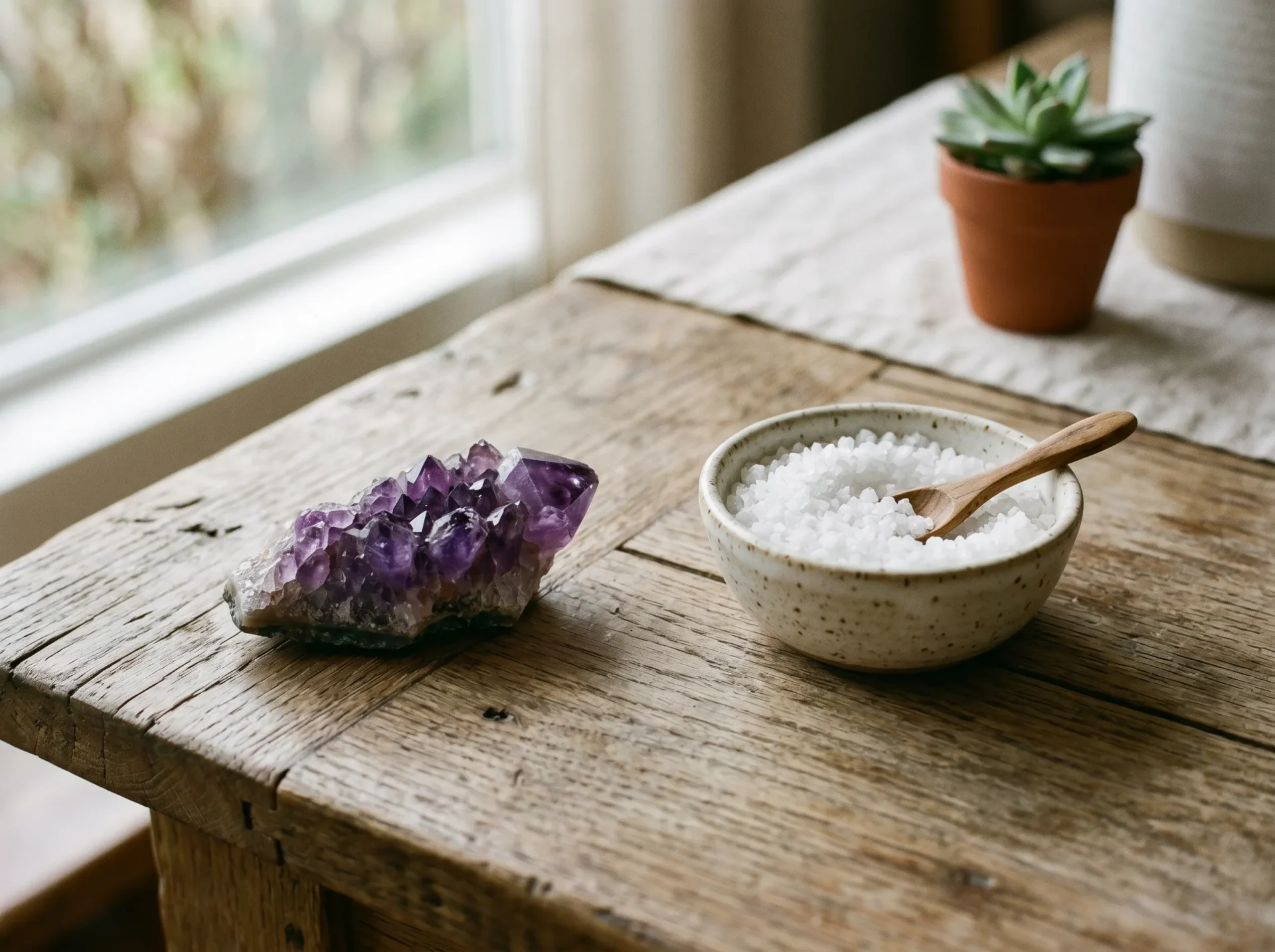
For men specifically, the traditional framework is not complicated. In chakra traditions, amethyst is associated with the third eye (Ajna) and crown (Sahasrara)—the centers linked to intuition, perspective, and broader awareness. In feng shui practice, placing an amethyst geode in a study or office is thought to support focus and decision-making. These are traditions and rituals, not prescriptions. But they give the stone a context beyond decoration, which is something many male buyers find useful.
Traditional Benefits of Amethyst for Men
Let’s walk through the specific benefits most commonly reported by male buyers and collectors. Each of these is framed as tradition or personal observation—use what resonates, discard what does not.
Calm Under Pressure
The most frequent reason men give for choosing amethyst is stress management. Traditionally, the stone is associated with quieting an overactive mind. Some buyers keep a small tumbled stone in a pocket during high-stakes workdays. Others place a larger piece on a desk or nightstand as a physical reminder to pause. No one is claiming the stone emits calming frequencies. What many men describe is the ritual of holding or looking at something real, solid, and unchanging—and finding that helpful during a chaotic day.
Focus and Clear Decision-Making
Amethyst has long been linked to mental clarity. In traditional practice, placing it in a workspace is thought to support concentration and reduce mental noise. Whether this is placebo, ritual, or something else, many male collectors describe a preference for having a stone within sight during focused work. The effect, if there is one, seems to be about the physical anchor rather than any invisible property of the crystal itself.
Personal Symbolism
For collectors and men who are less interested in the spiritual language, amethyst can simply represent something: growth, discipline, integrity, or a specific period of life. A stone bought during a career transition, a geode chosen for a new home, a ring received as a gift—these carry meaning because of the context, not because the mineral emits a particular frequency.
February Birthstone and Gift Value
Amethyst is the official birthstone for February, which makes it a straightforward gift for men born that month. It also works well as a housewarming gift, a birthday marker, or a symbolic gesture for someone beginning something new. The key is choosing the right form for the recipient—which brings us to the practical selection criteria below.
Choosing the Right Amethyst for Male Collectors and Buyers
The amethyst you choose depends on how you plan to use it. A man who wants a piece for his office desk has different needs than someone looking for a wearable accessory or a large statement piece for a living room. Here is how to think through the options.
Match the Form to the Use Case
Amethyst comes in many forms—raw crystals, polished towers, geodes, clusters, spheres, tumbled stones, and jewelry. Our amethyst forms and shapes guide covers each type in detail, but here is a quick decision framework for male buyers:
Understand Origin Differences
The two dominant amethyst sources are Brazil and Uruguay, and the differences between them are real and visible. Brazilian amethyst tends to come in larger pieces with a broader color range—from pale lavender to medium purple. Uruguayan amethyst is generally smaller but denser, with deeper color that can approach what the trade calls emperor purple or Siberian purple.
When someone asks me which is better, I usually ask them: “Do you want something big, or do you want something with deep color?” Because at the same price point, the Brazilian piece will be significantly larger, while the Uruguayan piece will have a color intensity you can see from across the room. Neither is better. It depends on whether you value size for visual impact or depth for color concentration. Our geological origins guide breaks this down further.
Quality Factors Worth Knowing
When evaluating an amethyst piece, a few concrete markers matter more than marketing terms:
- Color zoning: Real amethyst has uneven color distribution—some areas deeper, some lighter, sometimes with white or gray zones. Perfectly uniform purple is usually not a good sign for natural stone.
- Documented origin: Sellers who can tell you the country or region of origin are generally more reliable than those who simply write “natural amethyst.”
- Accurate photography: What you see should match what you receive. Look for sellers who photograph individual pieces (WYSIWYG) rather than using stock images.
- Weight and dimensions: Real quartz is noticeably heavier than glass or plastic of the same size.
The grading term “AAAA” appears in many amethyst listings, but it has no standardized definition. There is no international grading system for amethyst the way there is for diamonds. If a seller uses AAAA, ask what specific criteria that refers to in their store. For a deeper look at how we evaluate quality, see our quality and value guide.
How to Care for Your Amethyst
Care is where most amethyst damage happens—not from rough handling, but from something much more ordinary: sunlight.
I learned this the hard way through a buyer’s experience. She placed her crystal point on a south-facing bedroom windowsill, where it got about two hours of direct afternoon sun daily. Within a few months, the deep emperor purple had faded to a washed-out lavender. The stone was still real, still quartz, still amethyst—but that specific color depth was gone forever.
Practical Care Habits
- Placement: Display your amethyst away from windows that get direct sun. Indirect room light is fine; direct UV is not.
- Cleaning: Wipe gently with a soft, dry cloth. For deeper energetic cleansing (if that is part of your practice), moonlight and sound baths are safe methods that will not affect color.
- Storage: If you store your amethyst, keep it in a cool, dark place—cloth bag or padded box works well.
- Avoid chemicals: Harsh cleaners, bleach, and ultrasonic jewelry cleaners can damage the surface. Mild soap and water is the safest physical cleaning method for jewelry pieces.
For a complete rundown of cleansing traditions and practical care, our care and cleansing guide covers moonlight baths, sound cleansing, and what to avoid.
Frequently Asked Questions About Amethyst for Men
Find the Right Amethyst for Your Space or Style
Every piece in our collection comes with documented origin, individual photography (WYSIWYG), and honest care guidance. Whether you are looking for a raw crystal for your desk, a geode for your living room, or a sterling silver ring for daily wear, you can explore our amethyst collection and choose with confidence.
 Crystal Cluster
 Crystal Tower
 amethyst crystal ball
 Amethyst Caves for Sale
 Amethyst Bracelets
 Amethyst Earrings
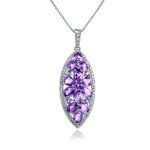 Amethyst Necklaces
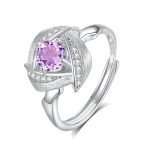 Amethyst Rings
 amethyst crystal healing
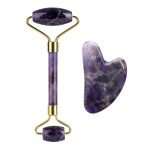 Amethyst Beauty & Wellness
 Crystal Home Decor
 Spiritual & Divination Tools